Major Hindu festivals: an overview
Diwali, Holi, Navaratri and more: why they are celebrated and how families take part. Dates change every year.
No festival matches these filters. Try fewer filters or a different word.
 Next: 17 Nov 2026
Hindu, Kerala (Ayyappa devotees)
Makaravilakku and the Mandala season
Each year millions of pilgrims climb to the Sabarimala temple of Ayyappa in the Western Ghats. They keep a 41-day vrat of simplicity, wear black or blue, call each other “Swami”, and carry an irumudi (two-part bundle) on the head. The season ends with Makaravilakku, when the Makara Jyothi is seen on a distant hill.
 Next: 19 Nov 2026
Hindu, West Bengal
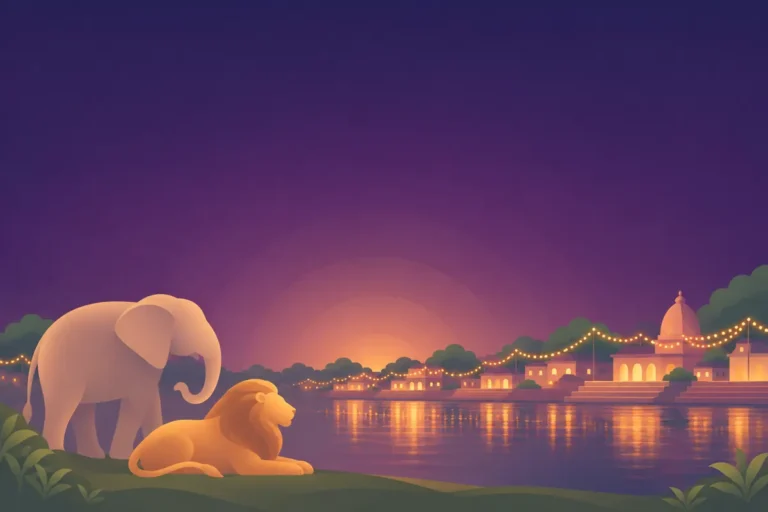
Jagaddhatri Puja
Jagaddhatri, “the holder of the world”, is a form of Durga seated on a lion with an elephant beneath it. Her puja is celebrated with great splendour in Chandannagar and Krishnanagar in West Bengal, with huge images, light displays and processions.
 Next: 20 Nov 2026
Hindu (Vaishnava)
Dev Uthani Ekadashi
Dev Uthani Ekadashi marks the day Vishnu wakes from his four-month sleep (Chaturmas). The quiet season ends: weddings and other auspicious events may begin again, and many homes celebrate the marriage of the tulsi plant to Vishnu.
 Next: 21 Nov 2026
Hindu (Vaishnava)
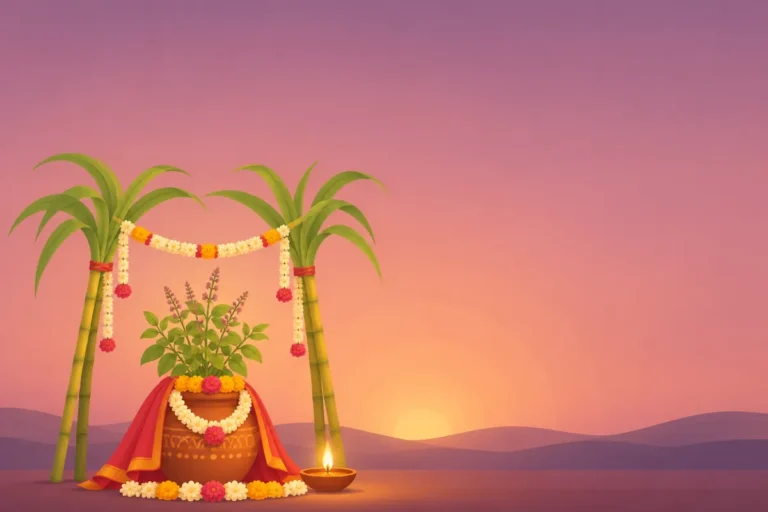
Tulsi Vivah
Tulsi Vivah is a ceremonial wedding of the holy basil plant (tulsi) to Vishnu, usually in the form of a shaligram stone or of Krishna. Families decorate the tulsi like a bride, hold a full wedding ritual and share sweets, and the season of human weddings begins.
 Next: 24 Nov 2026
Sikh, also honoured by many Hindus
Guru Nanak Gurpurab
Guru Nanak Gurpurab celebrates the birth of Guru Nanak, the founder of Sikhism, in 1469. Gurdwaras hold a continuous reading of the Guru Granth Sahib, early-morning processions, kirtan and langar, the free community meal open to everyone.
 Next: 24 Nov 2026
Sikh
Guru Tegh Bahadur Shaheedi Divas
This day remembers the martyrdom of Guru Tegh Bahadur, the ninth Sikh Guru, executed in Delhi in 1675 by order of the Mughal emperor Aurangzeb for defending the freedom of others to practise their faith. Gurdwara Sis Ganj Sahib marks the place.
 Next: 24 Nov 2026
Hindu, Tamil Nadu and Kerala
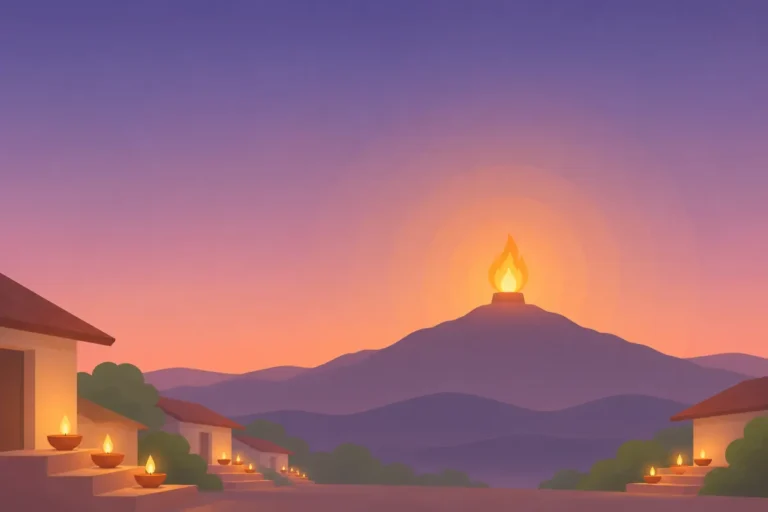
Karthigai Deepam
Karthigai Deepam is the Tamil festival of lamps. Every home lights rows of clay lamps at dusk. At Tiruvannamalai, a great fire, the Maha Deepam, is lit on top of the Arunachala hill and can be seen for miles, honouring Shiva as an endless column of light. Kerala keeps the same night as Thrikkarthika.
 Next: 24 Nov 2026
Hindu, Sikh and Jain
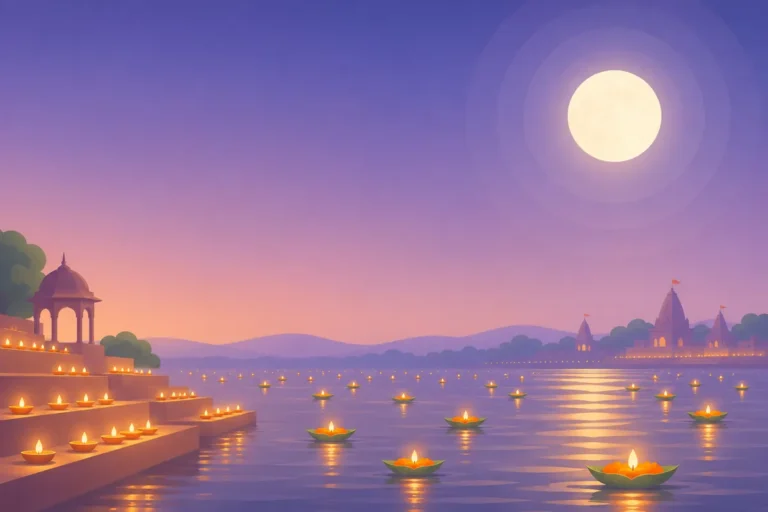
Kartik Purnima
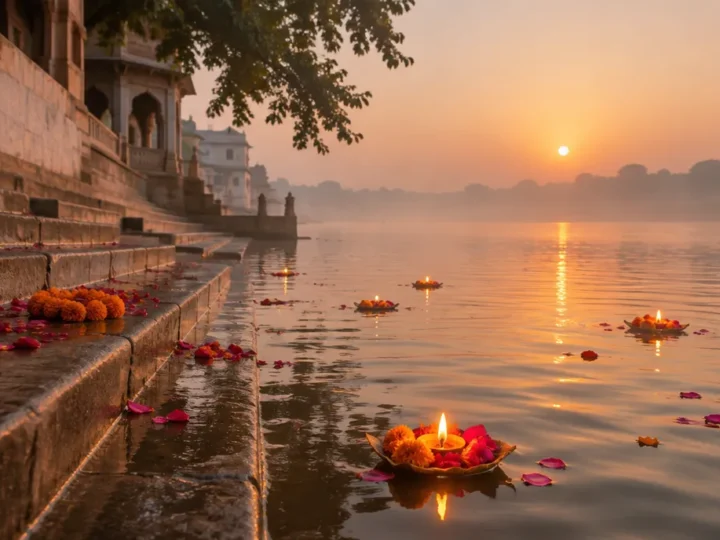
Kartik Purnima ends the holy month of Kartik with river bathing, lamps and fairs. In Varanasi it is Dev Deepawali, when the ghats are lit with countless diyas. Sikhs celebrate Guru Nanak’s birth on this day, and Jains go on pilgrimage to Shatrunjaya.
 Next: 24 Nov 2026
Hindu (Vaishnava), especially in Manipur, Assam, Vraj and Bengal
Raas Leela (Raas Purnima)
Raas celebrates the circle dance of Krishna with Radha and the gopis on a moonlit night in Vrindavan. On Raas Purnima, temples and communities stage the Raas Leela in dance and drama, from the graceful Manipuri Raas to the great festival of Majuli island in Assam.
 Next: 1 Dec 2026
Hindu, Odisha
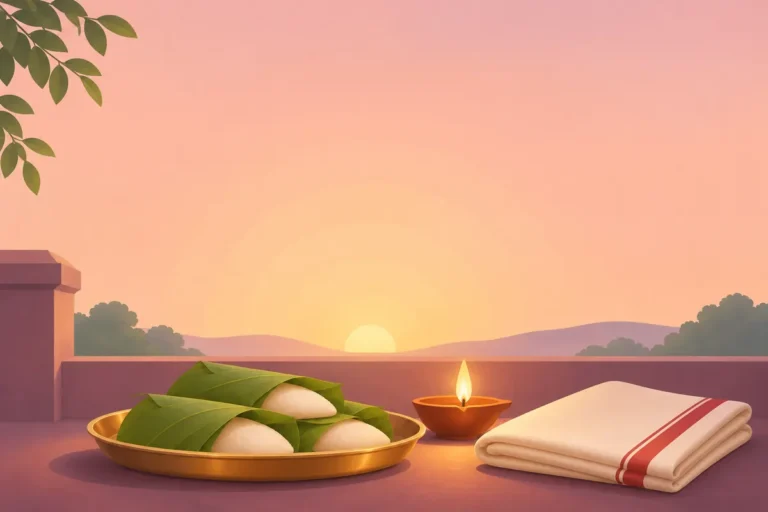
Prathamastami
Prathamastami is an Odia family festival honouring the eldest child of the family. The mother’s family gives new clothes, and the child is blessed with lamps and prayers for long life. The sweet enduri pitha is made for the day.
 Next: 7 Dec 2026
Hindu, Nepal
Bala Chaturdashi
On Bala Chaturdashi, families who have lost someone in the past year keep an overnight vigil with lamps at the Pashupatinath temple, and the next morning scatter seven kinds of grain (satbeej) through the forest of Mrigasthali for the peace of the departed.
 Next: 14 Dec 2026
Hindu, especially in Mithila (Bihar and Nepal) and Ayodhya
Vivah Panchami
Vivah Panchami celebrates the wedding of Rama and Sita. In Janakpur, Nepal, Sita’s birthplace, and in Ayodhya, the wedding is re-enacted over several days with processions, music and rituals at the Janaki and Kanak Bhawan temples.
 Next: 15 Dec 2026
Hindu, Maharashtra and Karnataka
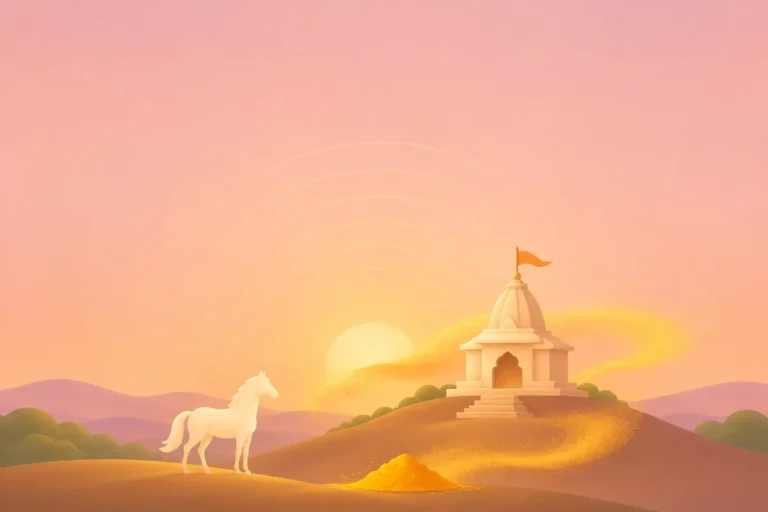
Champa Shashthi
Champa Shashthi honours Khandoba, a form of Shiva and the family deity of many in Maharashtra and Karnataka. The six-day festival ends with celebrations at Jejuri, where devotees throw turmeric (bhandar) in the air until the temple turns gold.
 Next: 16 Dec 2026
Hindu
Dhanurmas
Dhanurmas, called Margazhi in Tamil, is a month of early-morning devotion. Before dawn, temples ring with prayers, women draw kolams, and devotees sing Andal’s Tiruppavai and Manikkavasagar’s Tiruvempavai. In North India the same period (Kharmas) is usually avoided for weddings and new beginnings.
 Next: 20 Dec 2026
Hindu
Gita Jayanti
Gita Jayanti marks the day Krishna is believed to have spoken the Bhagavad Gita to Arjuna on the battlefield of Kurukshetra. Devotees recite the Gita, hold discourses and quizzes, and Kurukshetra hosts the International Gita Mahotsav.
 Next: 20 Dec 2026
Hindu (Vaishnava), especially South India
Vaikuntha Ekadashi
On Vaikuntha Ekadashi the Vaikuntha Dwaram, “the gate of Vishnu’s heaven”, is opened in Vishnu temples. Devotees fast, stay awake through the night and pass through the northern gate at dawn. Srirangam and Tirumala draw enormous crowds.
 Next: 23 Dec 2026
Hindu, especially Maharashtra, Karnataka, Andhra Pradesh and Gujarat
Datta Jayanti
Datta Jayanti celebrates the birth of Dattatreya, revered as a form uniting Brahma, Vishnu and Shiva and as the first guru. Devotees gather at Datta temples such as Ganagapur, Audumbar and Narsobawadi, read the Guru Charitra and sing bhajans.
 Next: 23 Dec 2026
Cultural, Santiniketan, West Bengal
Poush Mela
Poush Mela is the winter fair of Santiniketan, founded by Debendranath Tagore and continued by Rabindranath Tagore at Visva-Bharati. It is known for Baul folk singers, crafts, local food and rural culture.
 Next: 24 Dec 2026
Newar, Kathmandu valley
Yomari Punhi
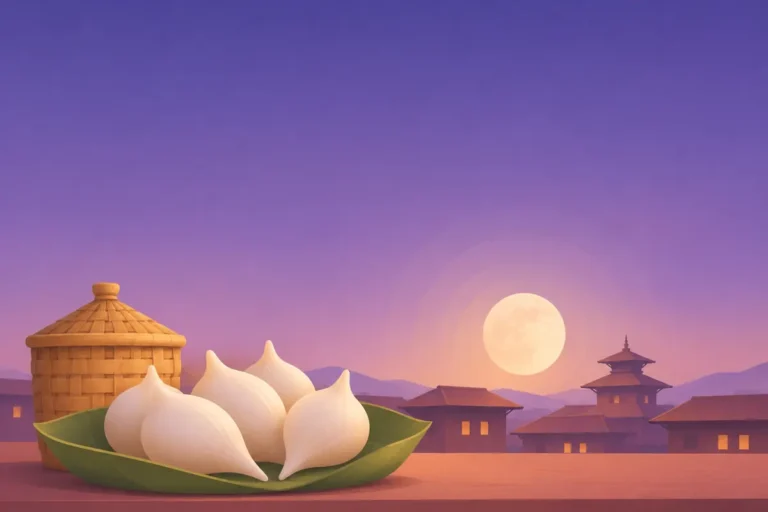
Yomari Punhi is a Newar harvest festival named after yomari, steamed rice-flour dumplings shaped like a fig and filled with chaku (molasses) and sesame. Families offer yomari to Annapurna and Kubera in their granaries, and children go from house to house singing for them.
 Next: 30 Dec 2026
Buddhist and Himalayan communities: Tamang, Gurung, Sherpa, Tibetan and others
Lhosar
Lhosar means “new year” in Tibetan-related languages. In Nepal and across the Himalaya, communities celebrate their own Lhosar with monastery prayers, prayer flags, traditional dress, songs and dances, and family feasts.
 Next: 2 Jan 2027
Kerala, civic
Mannam Jayanthi
Mannam Jayanthi marks the birthday of Mannathu Padmanabhan (1878–1970), social reformer and founder of the Nair Service Society. He campaigned for social reform, education and temple entry, and took part in the Vaikom Satyagraha.
 Next: 7 Jan 2027
Hindu
Hanuman Jayanti
Hanuman Jayanti celebrates the birth of Hanuman, the devoted servant of Rama, admired for his strength, courage, humility and wisdom. Devotees visit temples before dawn, recite the Hanuman Chalisa, offer sindoor and oil, and many fast for the day.
 Next: 13 Jan 2027
Punjabi Hindu and Sikh, celebrated by Punjabis of all backgrounds
Lohri
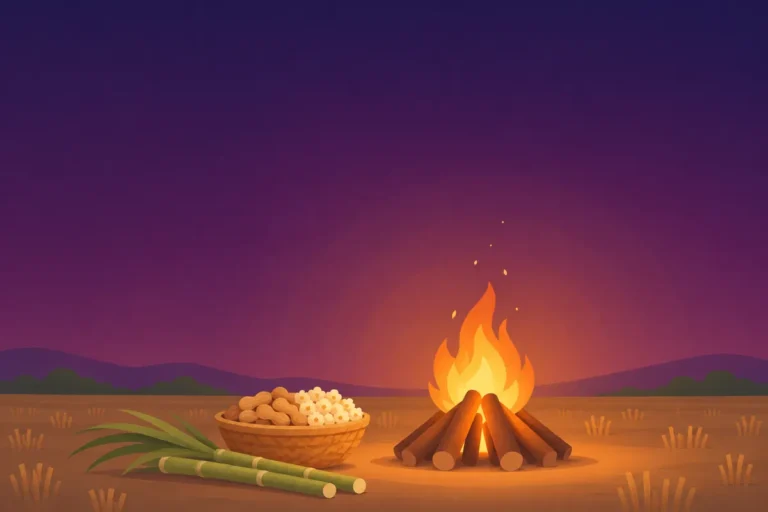
Lohri is Punjab’s midwinter bonfire festival. Families and neighbours gather around a fire at night, throw in sesame, popcorn, peanuts and rewri, sing folk songs and dance bhangra and giddha. A family’s first Lohri after a wedding or the birth of a child is celebrated with special joy.
 Next: 13 Jan 2027
Hindu, celebrated by Tamils everywhere
Pongal
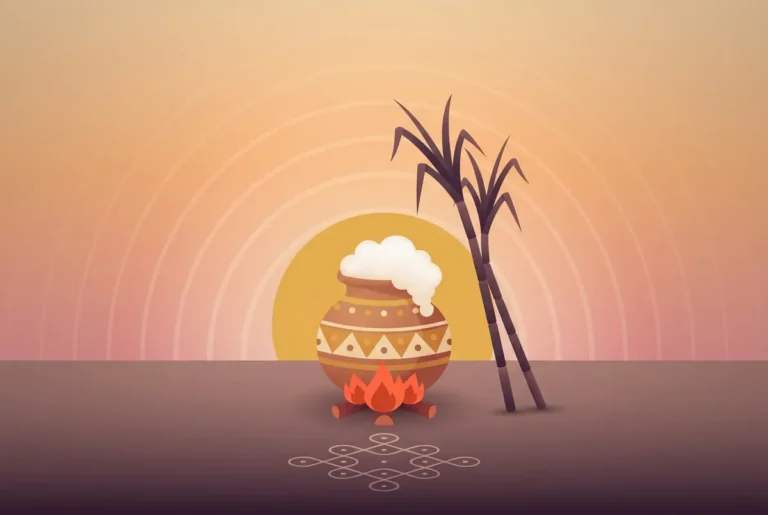
Pongal is the Tamil harvest festival. Its name means “to boil over”: on the main day families cook new rice with milk and jaggery in a clay pot until it bubbles over, shouting “Pongalo Pongal!”. The festival thanks the sun, the rain, the cattle and the farmers.
 Next: 14 Jan 2027
Assamese, Hindu and celebrated across communities in Assam
Magh Bihu
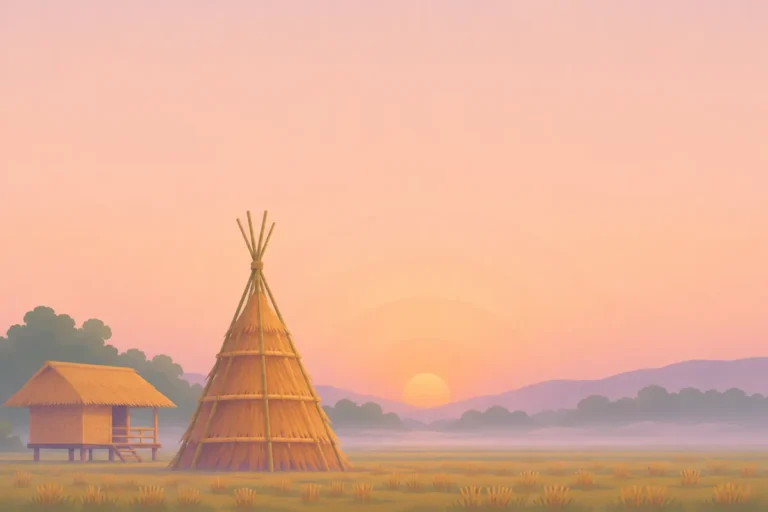
Magh Bihu, also called Bhogali Bihu, “the Bihu of feasting”, is Assam’s winter harvest festival. On Uruka night, communities build huts of bamboo and hay called bhelaghar, feast together and stay up; next morning they burn a tall bonfire, the meji, and share pitha and laru.
 Next: 14 Jan 2027
Hindu, celebrated across India and Nepal
Makar Sankranti
Makar Sankranti is one of the few Hindu festivals fixed by the sun rather than the moon. It marks the sun’s journey northwards, the end of the coldest days and the winter harvest. People bathe in holy rivers, give to charity, fly kites and share sweets of sesame and jaggery.
 Next: 14 Jan 2027
Hindu, but celebrated by almost everyone in Gujarat
Uttarayan
In Gujarat, Makar Sankranti is Uttarayan, two days when the whole state seems to move onto its rooftops. From dawn to dusk families fly kites, cut each other’s lines with shouts of “Kai po che!”, eat undhiyu and chikki, and at night release lanterns into the sky.
 Next: 15 Jan 2027
Sikh
Guru Gobind Singh Gurpurab
This Gurpurab celebrates the birth of Guru Gobind Singh, the tenth Sikh Guru, born in Patna in 1666. He founded the Khalsa, wrote poetry and hymns, and named the Guru Granth Sahib as the eternal Guru. Gurdwaras hold Akhand Path, kirtan, nagar kirtans and langar.
 Next: 15 Jan 2027
Hindu, Nepal; a major new year for the Tharu and Magar communities
Maghe Sankranti
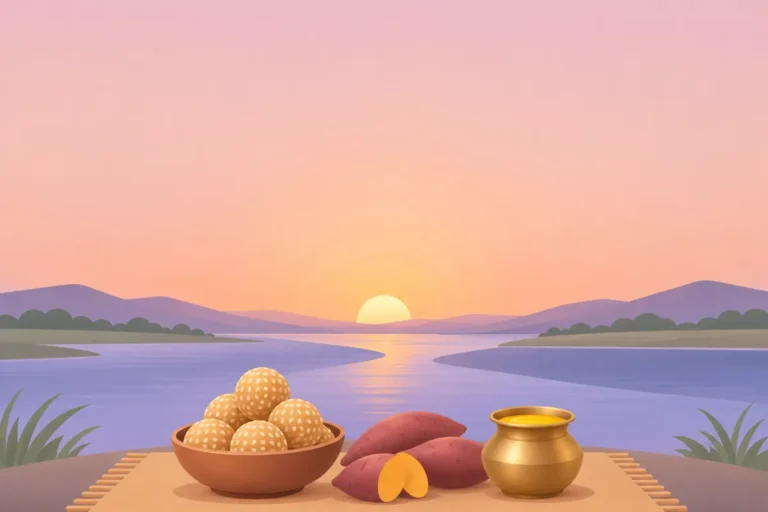
Maghe Sankranti is Nepal’s winter festival marking the sun’s northward turn. Families bathe at holy river confluences, eat warming foods like sesame, molasses, ghee and sweet potatoes, and married daughters visit their parents. For the Tharu people it is their new year, Maghi.
 Next: 22 Jan 2027
Hindu, Tamil (Murugan devotees)
Thaipusam
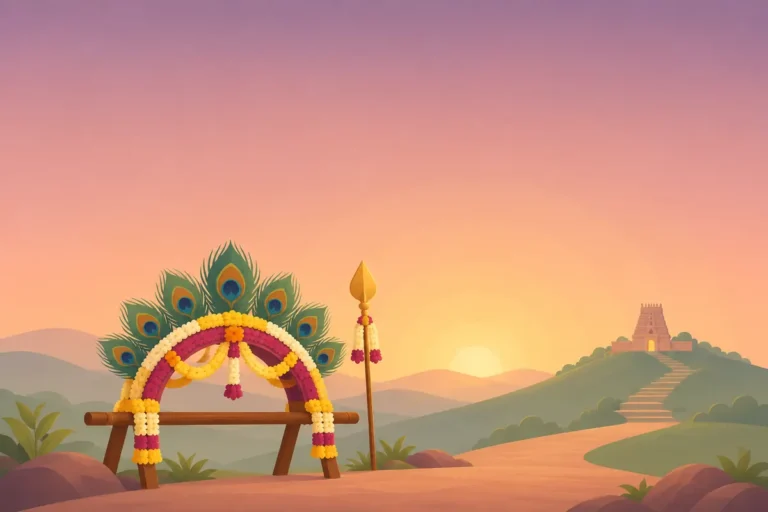
Thaipusam honours Murugan (Kartikeya), the son of Shiva and Parvati. Devotees prepare with fasting and prayer, then carry kavadi, decorated arches or pots of milk, to Murugan temples, some with skewers through their skin as acts of devotion. Huge pilgrimages take place at Palani in Tamil Nadu and Batu Caves in Malaysia.
 Next: 23 Jan 2027
Civic, India; especially Bengal and Odisha
Netaji Jayanti (Parakram Diwas)
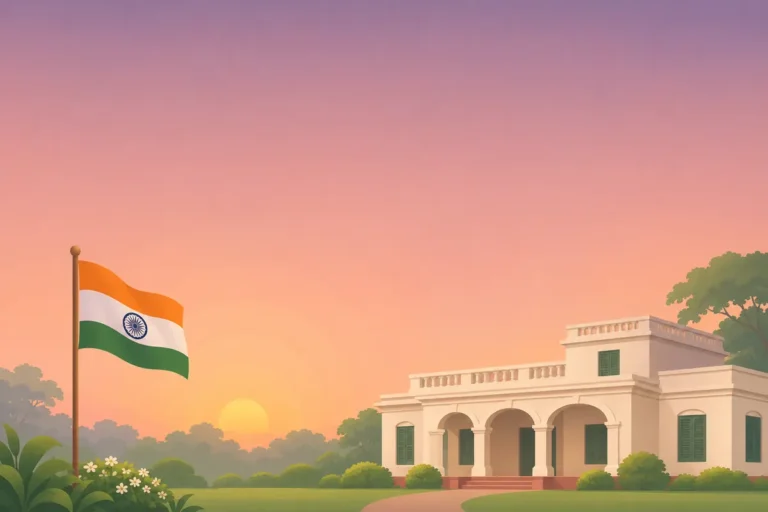
Netaji Jayanti marks the birthday of Subhas Chandra Bose, the freedom fighter who led the Indian National Army. Since 2021 India observes it as Parakram Diwas, the “Day of Courage”. Bengal and Odisha hold processions, flag hoisting and tributes, especially at his birthplace in Cuttack and his house in Kolkata.
 Next: 31 Jan 2027
Tai Ahom, Assam
Me-Dam-Me-Phi
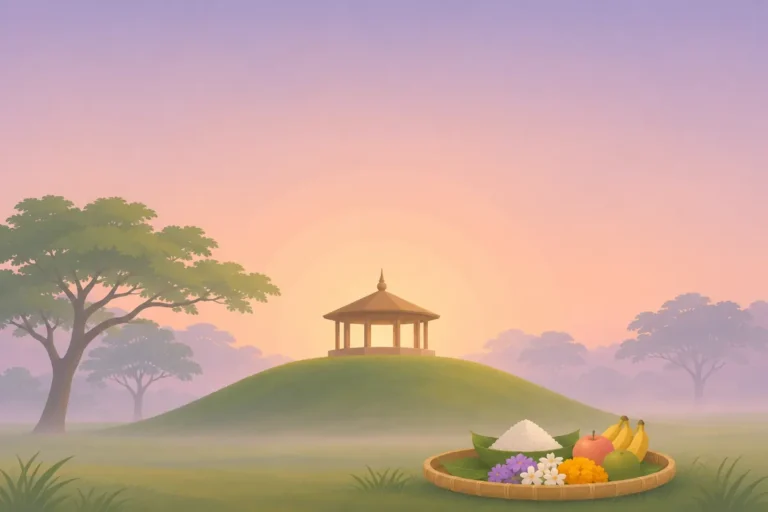
Me-Dam-Me-Phi is the ancestor-worship festival of the Tai Ahom people of Assam. “Me” means offering, “Dam” the ancestors and “Phi” the gods. Families and communities make offerings to departed ancestors and to deities, and remember the Ahom heritage.
 Next: 10 Feb 2027
Hindu, Maharashtra, Goa and Konkan
Maghi Ganesh Jayanti
Maghi Ganesh Jayanti is regarded in Maharashtra as Ganesha’s birthday, a quieter celebration than Bhadrapada Ganeshotsav. Devotees visit Ganesh temples such as the Ashtavinayak shrines and offer sesame (til) sweets, as the day is also called Tilkund Chaturthi.
 Next: 11 Feb 2027
Hindu; spring kite flying is shared more widely in Punjab
Vasant Panchami
Vasant Panchami welcomes spring and honours Saraswati, the goddess of knowledge, music and the arts. People wear yellow, worship books and instruments, and in many families young children write their first letters. In Punjab and northern India it is a day of yellow kites.
 Next: 13 Feb 2027
Hindu
Ratha Saptami
Ratha Saptami honours Surya, the sun god, who is pictured turning his chariot of seven horses northwards. It is seen as the sun’s birthday and the start of warmer days. Devotees bathe at sunrise with arka (calotropis) leaves on the head and body and offer water to the sun.
 Next: 19 Feb 2027
Maharashtra, all communities
Shivaji Jayanti
Shivaji Jayanti celebrates the birth of Chhatrapati Shivaji Maharaj, the founder of the Maratha kingdom, born at Shivneri fort. Maharashtra holds processions, recreations of his life, lectures and visits to his forts.
 Next: 20 Feb 2027
Ravidassia, Sikh and Hindu devotees
Guru Ravidas Jayanti
Guru Ravidas Jayanti celebrates the birth of Guru Ravidas, the fifteenth-century poet-saint of the Bhakti movement from Varanasi, whose hymns are included in the Guru Granth Sahib. His teaching that all people are equal before God, whatever their caste, inspires millions.
 Next: 22 Feb 2027
Hindu, Thiruvananthapuram, Kerala
Attukal Pongala
On Attukal Pongala, women in very large numbers gather around the Attukal Bhagavathy temple in Thiruvananthapuram. Kilometres of streets are lined with makeshift hearths, and at the signal from the temple, they cook pongala, a sweet rice offering, in clay pots for the goddess. It has been recorded as one of the largest gatherings of women in the world.
 Next: 6 Mar 2027
Hindu (especially Shaiva traditions)
Maha Shivaratri
Maha Shivaratri, “the great night of Shiva”, is kept with fasting, prayer and staying awake through the night. Devotees bathe the Shiva linga with water, milk and honey, offer bael leaves and chant “Om Namah Shivaya”. Temples are open all night and filled with bells and music.
 Next: 21 Mar 2027
Hindu
Holi
Holi is the spring festival of colours. On the eve, bonfires remember the story of Prahlad and Holika; the next day people of all ages throw coloured powder and water at each other, then share sweets and visit family and friends.
 Next: 22 Mar 2027
Hindu (Gaudiya Vaishnava), in Bengal, Odisha and Assam
Dol Jatra
Dol Jatra is the Bengali, Odia and Assamese festival of colours. Images of Radha and Krishna are carried on a decorated swing or palanquin and smeared with coloured powder (abir), and devotees sing and dance through the streets. It is also the birthday of Sri Chaitanya Mahaprabhu.
 Next: 22 Mar 2027
Hindu, Tamil
Panguni Uthiram
Panguni Uthiram celebrates divine weddings: of Shiva and Parvati, Murugan and Deivanai, Rama and Sita, and Andal and Ranganatha in Vaishnava tradition. Temples hold wedding festivals (kalyanam), and Murugan devotees carry kavadi to his shrines.
 Next: 24 Mar 2027
Sikh
Hola Mohalla
Hola Mohalla is a Sikh festival of martial skill and community, started by Guru Gobind Singh at Anandpur Sahib. Nihang Sikhs in blue robes show horsemanship, swordsmanship and gatka; there are mock battles, poetry, kirtan and enormous langars for the visiting crowds.
 Next: 27 Mar 2027
Hindu, in Maharashtra, Madhya Pradesh and parts of Rajasthan
Ranga Panchami
Ranga Panchami is a second day of colours, five days after Holi. In Maharashtra and Madhya Pradesh, especially Indore, streets fill with colour, music and processions called Gair, and water and gulal are sprayed into the air.
 Next: 30 Mar 2027
Hindu, especially in Rajasthan, Gujarat and North India
Sheetala Ashtami
Sheetala Ashtami honours Sheetala Mata, the goddess who is believed to protect children from fevers and poxes. Families cook the day before and eat only cold, stale food on the day; no fire is lit in the kitchen. The name Basoda means “stale food”.
 Next: 1 Apr 2027
Civic, Odisha
Utkal Divas (Odisha Day)
Utkal Divas marks the formation of Odisha as a separate province on 1 April 1936, the first Indian state created on the basis of language. Odias celebrate with cultural programmes, tributes to leaders such as Madhusudan Das, and pride in Odia language and arts.
 Next: 6 Apr 2027
Newar and Nepali Hindu, Kathmandu
Ghode Jatra
Ghode Jatra is Kathmandu’s horse festival. The Nepal Army holds horse races and displays at Tundikhel, and in the old city, images of local deities are carried in procession. It is believed the galloping horses drive away a demon said to lie beneath the parade ground.
 Next: 7 Apr 2027
Hindu
Chaitra Navratri
Chaitra Navratri is the spring Navratri, nine nights of worship of the goddess Durga in her nine forms. It begins with the new year in many calendars and ends on Ram Navami, Rama’s birthday. Many fast, set up kalash and sow barley, and honour young girls as the goddess on Ashtami or Navami.
 Next: 7 Apr 2027
Sindhi Hindu
Cheti Chand
Cheti Chand is the Sindhi New Year and the birthday of Jhulelal, the patron saint of Sindhis, linked with the river Indus. Sindhi communities everywhere hold processions, carry a Baharana (an offering of a lamp, sweets and fruit) to rivers and lakes, and sing devotional songs.
 Next: 7 Apr 2027
Hindu, Maharashtra and Goa (Konkani)
Gudi Padwa
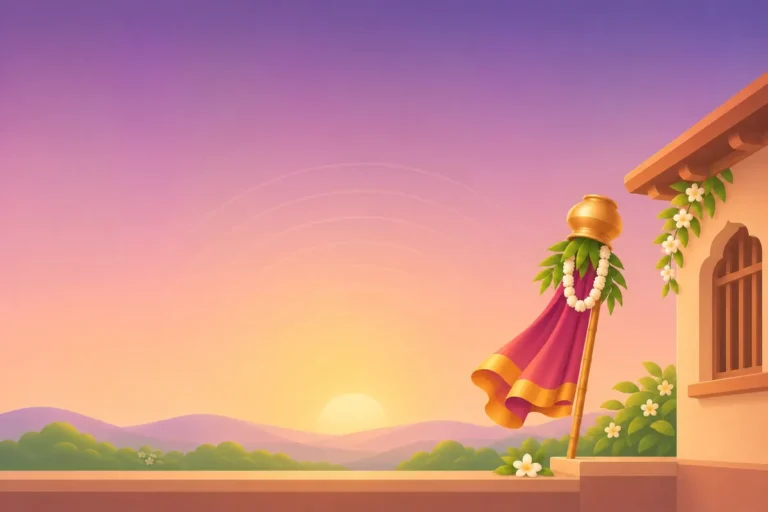
Gudi Padwa is the Marathi and Konkani New Year. Families raise a gudi outside the house: a bamboo pole topped with an upturned pot and a bright silk cloth, neem leaves, flowers and a sugar garland. The day begins with a bitter-sweet neem paste and ends with shrikhand and puran poli.
 Next: 7 Apr 2027
Hindu, Karnataka, Andhra Pradesh and Telangana
Ugadi
Ugadi, from yuga-adi, “the beginning of an age”, is the New Year for Telugu and Kannada speakers. Homes are decorated with mango leaves and rangoli, families eat Ugadi pachadi, a chutney of six tastes, and listen to the reading of the new year’s almanac, the Panchanga Shravanam.
 Next: 14 Apr 2027
Nepali, Hindu and Buddhist
Nepali New Year (Navavarsha)
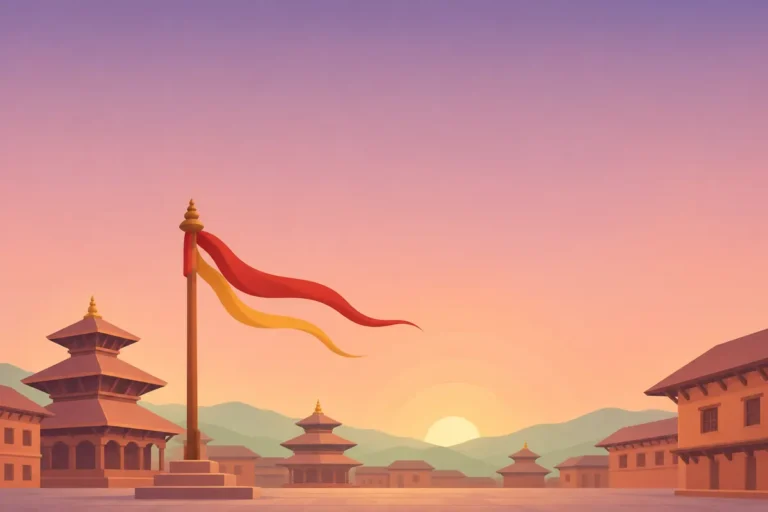
Navavarsha is the start of Nepal’s official calendar year, Bikram Sambat. Families gather, visit temples and celebrate with friends. In Bhaktapur the new year is marked by Bisket Jatra, when huge chariots are pulled through the town and a tall pole (lingo) is raised and pulled down.
 Next: 14 Apr 2027
Hindu, Odisha
Pana Sankranti
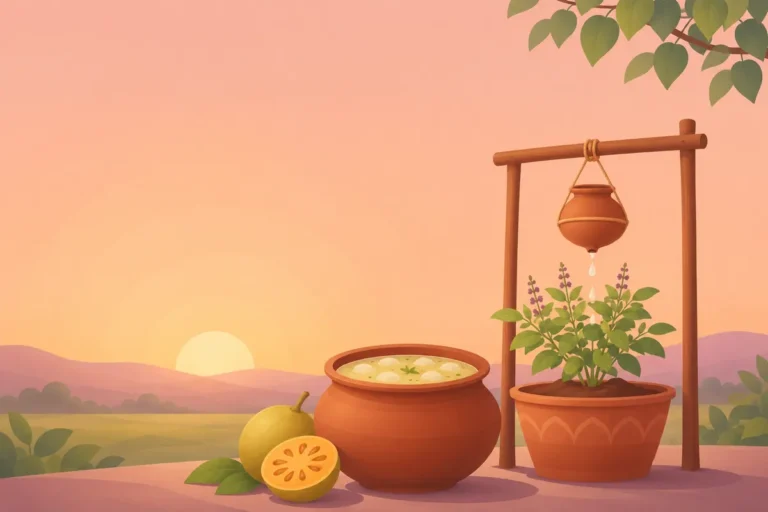
Pana Sankranti is the Odia New Year. It is named after pana, a cooling drink of bel fruit, curd, jaggery and spices that families share. A small pot of water with a hole is hung above the tulsi plant so that it drips through the hot season.
 Next: 14 Apr 2027
Hindu, Tamils everywhere
Puthandu
Puthandu is the Tamil New Year. Families draw kolam at the entrance, place a tray of fruits, flowers, gold and a mirror to see first in the morning, visit temples and eat a meal that includes mango pachadi, sweet, sour and bitter, for a year of every taste.
 Next: 14 Apr 2027
Sikh and Hindu; the Punjabi new year and harvest festival
Vaisakhi
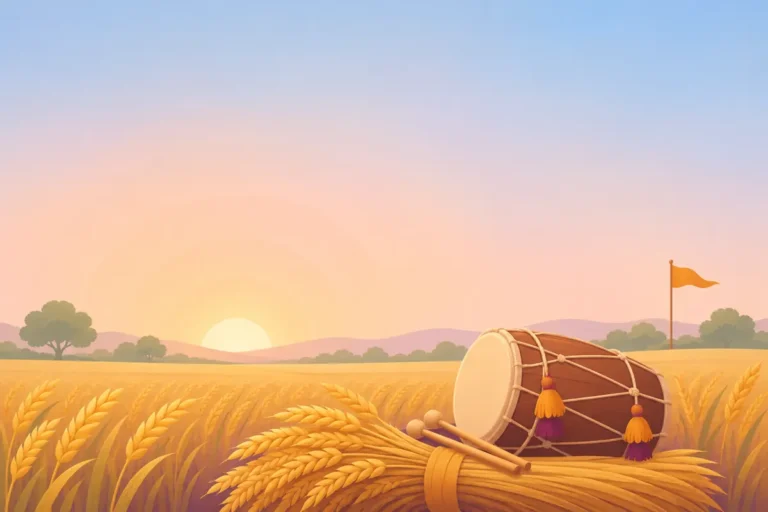
Vaisakhi is the spring harvest festival of Punjab and the most important day in the Sikh calendar after the Gurpurabs: in 1699 Guru Gobind Singh created the Khalsa at Anandpur Sahib. Gurdwaras hold kirtan, nagar kirtans fill the streets, and farmers celebrate the wheat harvest with bhangra and fairs.
 Next: 15 Apr 2027
Assamese, celebrated across communities in Assam
Bohag Bihu
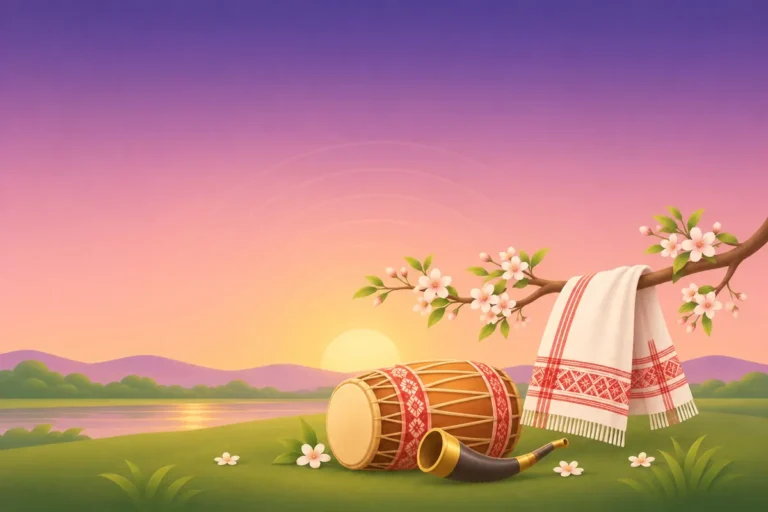
Bohag Bihu, or Rongali Bihu, “the Bihu of joy”, is the Assamese New Year and spring festival. Cattle are bathed on Goru Bihu, people visit elders and give gamosa (woven cotton towels), and groups perform Bihu dance and songs to the dhol and pepa (buffalo-horn pipe).
 Next: 15 Apr 2027
Bengali, celebrated by Bengalis of all faiths
Pohela Boishakh
Pohela Boishakh is the Bengali New Year. People wear new clothes, greet each other with “Shubho Noboborsho”, and shopkeepers open a new account book, the haal khata, offering sweets to their customers. In Dhaka the day begins with songs at dawn and a colourful procession.
 Next: 15 Apr 2027
Hindu
Ram Navami
Ram Navami celebrates the birth of Rama, the seventh avatar of Vishnu and hero of the Ramayana. Temples hold readings of the Ramayana, bhajans and a celebration at midday, the time of Rama’s birth. In the South it is also celebrated as the wedding of Rama and Sita.
 Next: 15 Apr 2027
Hindu, Kerala and Tulu Nadu
Vishu
Vishu is Kerala’s spring festival and traditional new year. Its heart is the Vishukkani, “the first sight”: an arrangement of rice, golden cucumber, fruits, gold, a mirror, a lamp and yellow konna flowers before an image of Krishna, seen first thing in the morning with eyes closed until the moment of seeing.
 Next: 17 Apr 2027
Hindu, Thrissur, Kerala
Thrissur Pooram
Thrissur Pooram is Kerala’s most spectacular temple festival. Around the Vadakkunnathan temple, the Paramekkavu and Thiruvambady groups parade caparisoned elephants, compete in kudamattam (the rapid changing of colourful parasols), perform the great percussion ensembles Ilanjithara Melam and Madathil Varavu, and end with fireworks.
 Next: 20 Apr 2027
Hindu, Tamil
Chithra Pournami
Chithra Pournami honours Chitragupta, the divine record-keeper who notes every person’s good and bad deeds. Families pray for forgiveness and give to charity. At Tiruvannamalai pilgrims walk around the Arunachala hill, and in Madurai the Chithirai festival reaches its climax.
 Next: 20 Apr 2027
Hindu, Thigala community, Bengaluru
Bengaluru Karaga
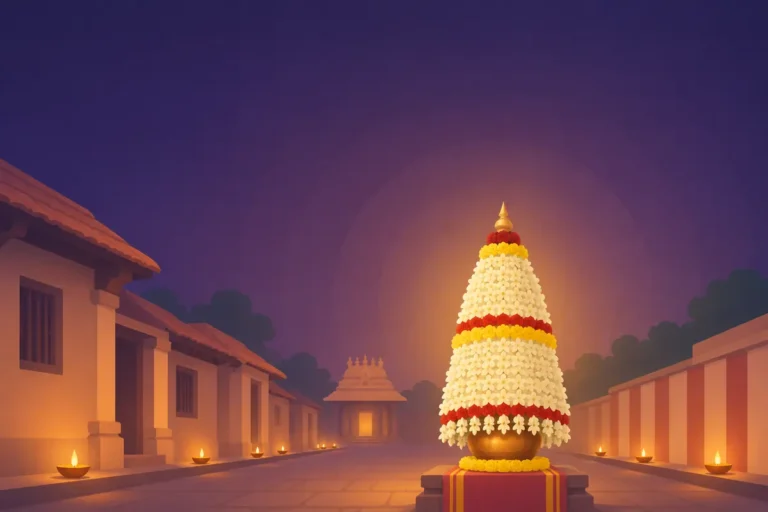
Bengaluru Karaga is one of the city’s oldest festivals, centred on the Dharmaraya Swamy temple. On the full-moon night a priest dressed as a woman carries the karaga, a tall flower-covered pot representing Draupadi, on his head through the old city until dawn, accompanied by Veerakumaras with swords.
 Next: 1 May 2027
Civic, Maharashtra
Maharashtra Day
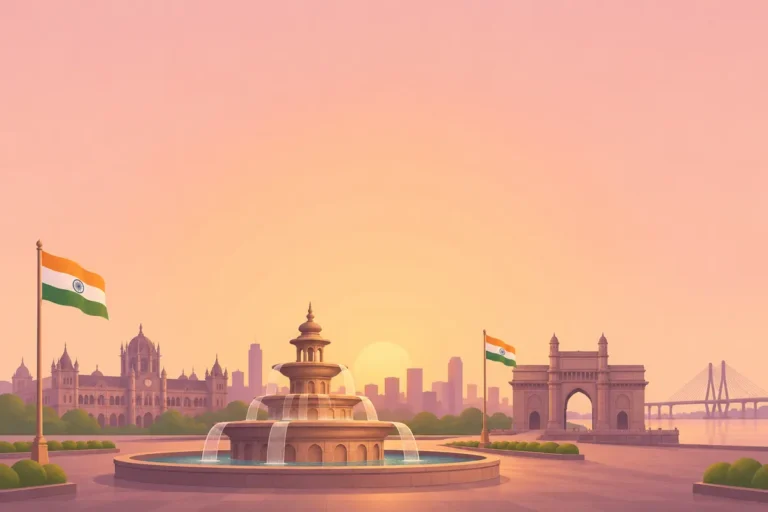
Maharashtra Day marks the founding of the state of Maharashtra on 1 May 1960, when the former Bombay State was divided along language lines into Maharashtra and Gujarat. Parades, cultural events and remembrance of the Samyukta Maharashtra movement mark the day.
 Next: 6 May 2027
Hindu, Nepal
Mata Tirtha Aunsi (Mother’s Day, Nepal)
Mata Tirtha Aunsi is Nepal’s Mother’s Day, “the day of seeing the mother’s face”. Children visit their mothers with sweets and gifts and receive blessings. Those who have lost their mothers go to Mata Tirtha pond near Kathmandu to bathe and remember them.
 Next: 8 May 2027
Hindu
Parshuram Jayanti
Parshuram Jayanti celebrates the birth of Parashurama, the sixth avatar of Vishnu, a Brahmin warrior who carried an axe given by Shiva. He is honoured especially in Kerala, Konkan and among many Brahmin communities, who hold processions and worship.
 Next: 9 May 2027
Hindu and Jain
Akshaya Tritiya
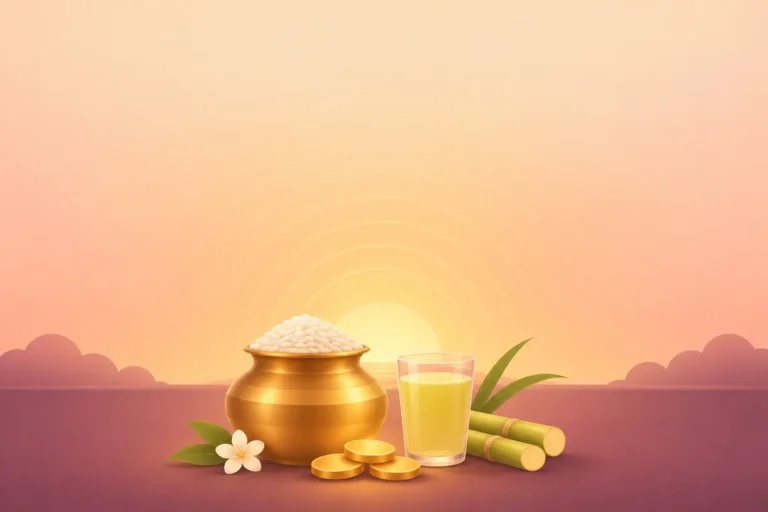
Akshaya means “never diminishing”. Akshaya Tritiya is believed to be so auspicious that anything good begun on it will grow and last, so it is a favourite day for weddings, new ventures, charity and buying gold. Jains celebrate it as the day Rishabhanatha, the first Tirthankara, broke his long fast with sugarcane juice.
 Next: 9 May 2027
Bengali cultural celebration
Rabindra Jayanti
Rabindra Jayanti celebrates the birth of Rabindranath Tagore, poet, composer, painter and Nobel laureate, author of the national anthems of India and Bangladesh. Schools, cultural groups and families sing Rabindrasangeet, recite his poems and stage his dance-dramas.
 Next: 10 May 2027
Hindu (Advaita Vedanta and Smarta traditions)
Adi Shankaracharya Jayanti
Shankara Jayanthi honours Adi Shankaracharya, the philosopher-saint from Kaladi in Kerala who taught Advaita Vedanta, wrote commentaries on the Upanishads, Gita and Brahma Sutras, and founded the great monasteries (mathas). Mathas and devotees hold readings, discourses and worship.
 Next: 18 May 2027
Hindu (Vaishnava)
Narasimha Jayanti
Narasimha Jayanti celebrates the appearance of Narasimha, the man-lion avatar of Vishnu, who protected the young devotee Prahlad from his father Hiranyakashipu. Devotees fast until evening, the time of his appearance, and worship at Narasimha temples such as Ahobilam and Simhachalam.
 Next: 20 May 2027
Buddhist; honoured by many Hindus
Buddha Purnima
Buddha Purnima, known around the world as Vesak, remembers the birth, enlightenment and passing of the Buddha. Buddhists visit monasteries and stupas, offer flowers, light lamps, listen to teachings, keep extra precepts and practise generosity and kindness to all living beings.
 Next: 4 Jun 2027
Hindu, mainly kept by married women
Vat Savitri
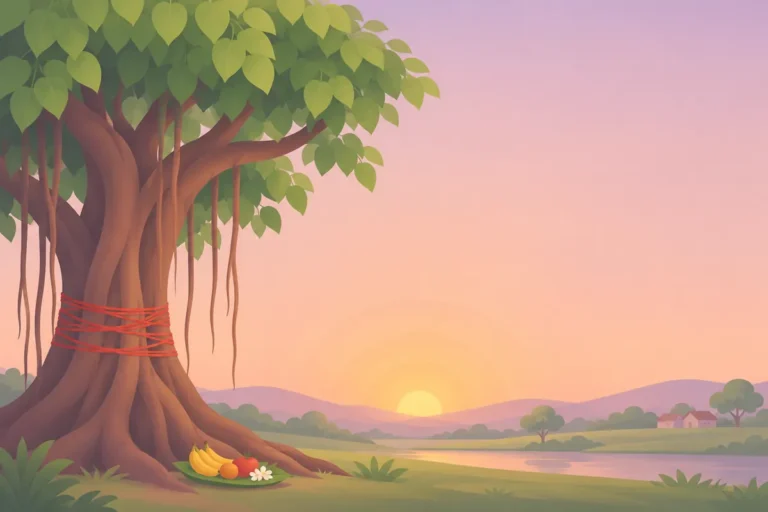
On Vat Savitri, married women fast and worship the banyan tree (vat), tying threads around its trunk and praying for their husbands’ long life and well-being. The day remembers Savitri, who through her love and wisdom brought her husband Satyavan back from Yama, the lord of death.
 Next: 10 Jun 2027
Hindu, Bengal
Jamai Shashthi
Jamai Shashthi is a Bengali family festival honouring sons-in-law (jamai). Mothers-in-law worship the goddess Shashthi, protector of children, and then welcome their daughters’ husbands with blessings, gifts and a lavish meal.
 Next: 10 Jun 2027
Newar Hindu and Buddhist, Kathmandu valley
Sithi Nakha
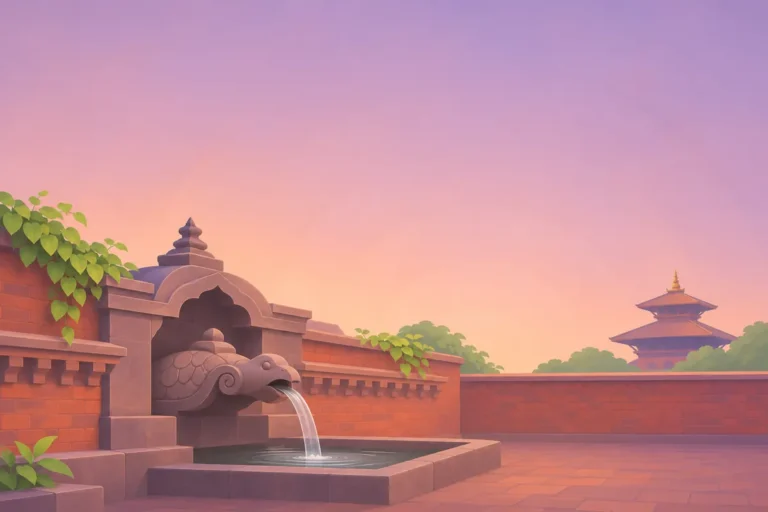
Sithi Nakha is a Newar festival that prepares for the monsoon. Families clean wells, ponds and water spouts, worship their lineage deity and Kumar (Kartikeya), and eat wo (lentil cakes) and other dishes. It also marks the end of the season for certain traditional activities until after the rains.
 Next: 13 Jun 2027
Hindu
Ganga Dussehra
Ganga Dussehra celebrates the descent of the river Ganga from heaven to earth. Devotees bathe in the Ganga, especially at Haridwar, Varanasi, Prayagraj and Rishikesh, believing it washes away ten kinds of sin, and evening aartis on the ghats are especially grand.
 Next: 14 Jun 2027
Hindu (Vaishnava)
Nirjala Ekadashi
Nirjala Ekadashi is the strictest of the twenty-four Ekadashi fasts: devotees go without food and even water (nirjala) from sunrise to the next sunrise. It is believed to bring the merit of all the year’s Ekadashis. Many also give water, fans and food to others in the summer heat.
 Next: 14 Jun 2027
Hindu, Odisha
Raja Parba
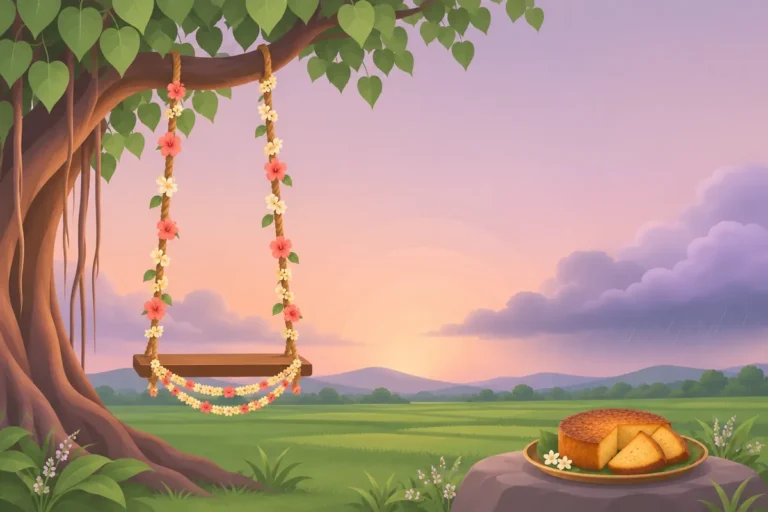
Raja Parba is Odisha’s festival of womanhood and of the earth. It is believed that Mother Earth rests and is renewed before the rains, so ploughing stops for three days. Young women wear new clothes, play on swings hung from trees, sing Raja songs and eat poda pitha.
 Next: 18 Jun 2027
Hindu (Jagannath tradition)
Snana Purnima
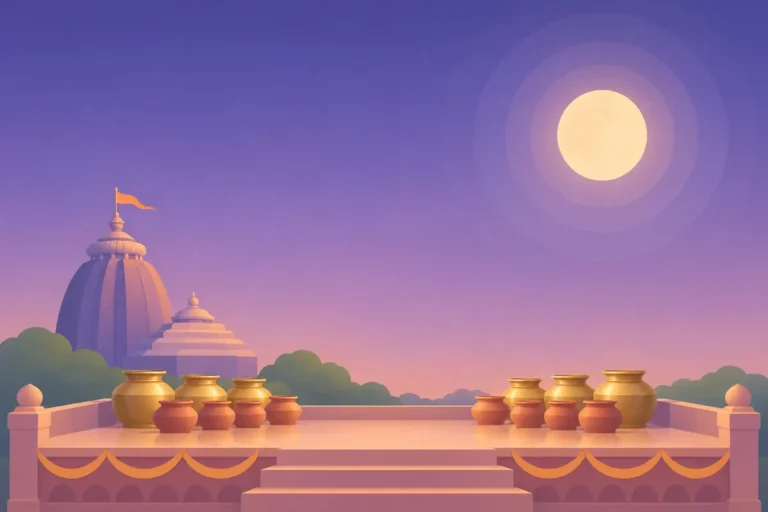
On Snana Purnima, the deities of Jagannath, Balabhadra, Subhadra and Sudarshan are brought out of the temple in Puri and bathed in public on a high platform with 108 pots of water from a sacred well. After the bath they dress in the Hati Besha (elephant attire) and then withdraw from view for about two weeks.
 Next: 22 Jun 2027
Hindu (Shakta and Tantric traditions), Assam
Ambubachi Mela
Ambubachi Mela is held at the Kamakhya temple on Nilachal hill in Guwahati, one of the most important Shakti Peethas. The goddess is believed to undergo her yearly menstrual cycle, so the temple closes for three days and reopens on the fourth, when pilgrims receive pieces of cloth as blessings.
 Next: 30 Jun 2027
Nepali, all communities
Asar Pandhra (National Paddy Day)
Asar 15 is Nepal’s National Paddy Day, when farmers plant rice in the monsoon-soaked fields. It is a day of mud, song and celebration: people plant seedlings together, sing asare songs, splash each other in the paddies, and eat beaten rice (chiura) with curd (dahi).
 Next: 5 Jul 2027
Hindu (Jagannath tradition)
Rath Yatra
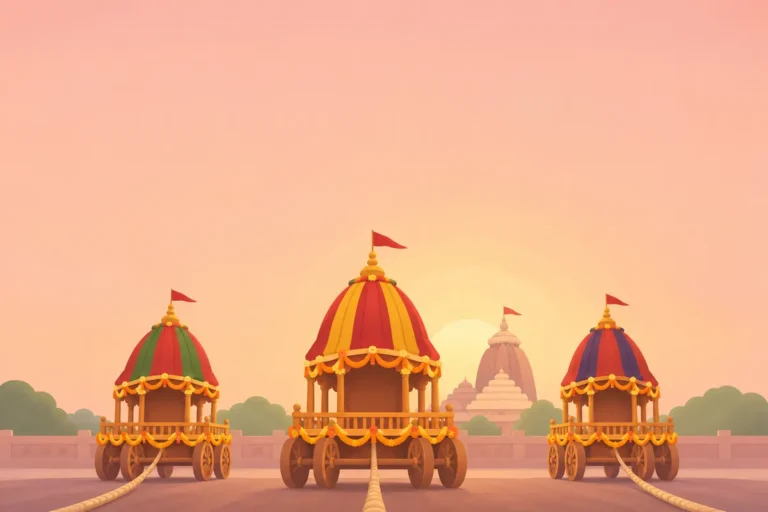
At Rath Yatra, Jagannath, his brother Balabhadra and sister Subhadra leave the temple in Puri on three enormous wooden chariots, pulled through the streets by vast crowds to the Gundicha temple. It is one of the world’s oldest chariot festivals and is now celebrated in cities across the world.
 Next: 14 Jul 2027
Hindu (Vaishnava)
Devshayani Ekadashi
Devshayani Ekadashi marks the day Vishnu goes into his four-month sleep (Chaturmas). In Maharashtra it is Ashadhi Ekadashi, the climax of the Pandharpur Wari, when lakhs of warkaris arrive on foot to see Vitthal after walking for nearly three weeks, singing abhangs.
 Next: 14 Jul 2027
Hindu, Gujarat
Gauri Vrat and Jaya Parvati Vrat
Gauri Vrat is a Gujarati vow kept by young girls, and Jaya Parvati Vrat by young women, in honour of Parvati. They sow wheat or barley in a small pot (javara), worship it, eat food without salt, and on the last night stay awake together (jagran) with games and songs.
 Next: 18 Jul 2027
Hindu, Buddhist and Jain
Guru Purnima
Guru Purnima is a day to honour teachers, spiritual guides and all who pass on knowledge. Hindus honour the sage Vyasa, said to have been born on this day; Buddhists remember the Buddha’s first sermon at Sarnath; and Jains remember Mahavira accepting his first disciple.
 Next: 1 Aug 2027
Newar, Kathmandu valley
Ghanta Karna
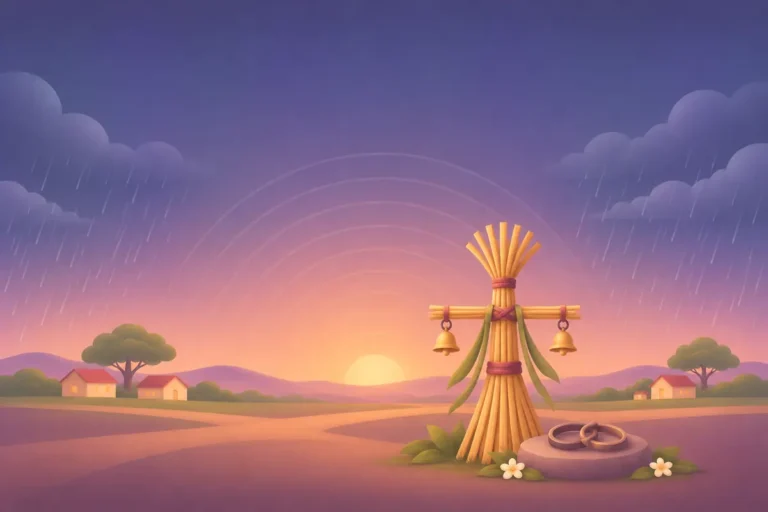
Ghanta Karna is a Newar festival to drive away evil after the rice planting. Children build effigies of the demon Ghanta Karna at crossroads and collect money from passers-by; in the evening the effigy is dragged to a river and burned or thrown away. People wear iron rings for protection.
 Next: 2 Aug 2027
Hindu, Tamil Nadu and Kerala
Aadi Amavasai and Karkidaka Vavu
Aadi Amavasai in Tamil Nadu and Karkidaka Vavu in Kerala are among the most important days to honour ancestors. Families bathe at the sea or rivers and offer tarpanam and bali (rice balls) for the departed at places such as Rameswaram, Kanyakumari, Aluva and Varkala.
 Next: 3 Aug 2027
Hindu, Tamil Nadu
Aadi Perukku
Aadi Perukku celebrates the rising rivers of the monsoon, especially the Kaveri. Families, mostly women, gather at riverbanks and water tanks to offer prayers, flowers, lamps and mixed rice dishes to the river and to pray for prosperity and good harvests.
 Next: 4 Aug 2027
Hindu, especially in North India
Hariyali Teej
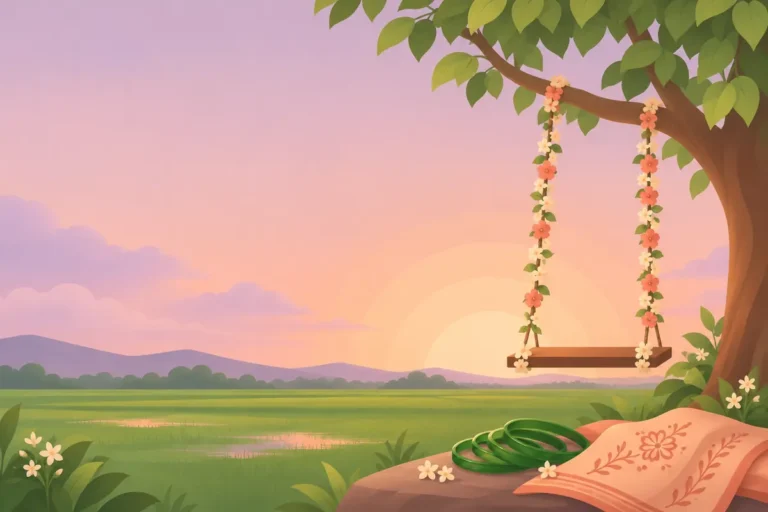
Hariyali (green) Teej celebrates the monsoon and the union of Shiva and Parvati. Women dress in green, apply mehendi, swing on decorated swings hung from trees, sing Teej songs and keep a fast for marital happiness. In Rajasthan the Teej Mata procession in Jaipur is famous.
 Next: 6 Aug 2027
Hindu
Nag Panchami
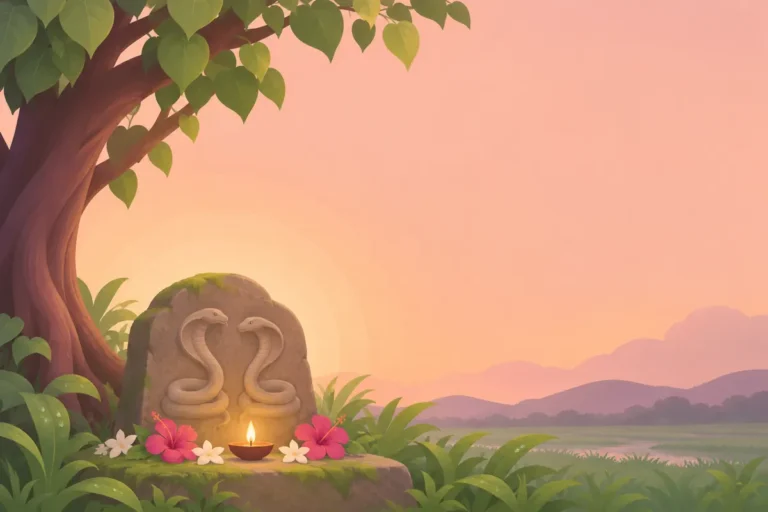
Nag Panchami honours snakes (nagas) as sacred beings linked with Shiva, Vishnu and the earth. Families worship images or drawings of snakes, offer milk at snake shrines or anthills, and pray for protection. Today many communities choose to worship images rather than live snakes.
 Next: 13 Aug 2027
Hindu, South India
Varalakshmi Vratam
Varalakshmi Vratam is a South Indian vow in which married women worship Varalakshmi, the boon-giving form of Lakshmi, for the well-being of their families. A kalash decorated as the goddess with a face, sari and jewels is worshipped, and women tie a sacred yellow thread on the wrist.
 Next: 16 Aug 2027
Hindu, South India
Avani Avittam
Avani Avittam, also called Upakarma, is the day when men of communities that wear the sacred thread (poonal or yajnopavitam) change it in a group ceremony, after a ritual bath and prayers. It traditionally marked the start of the year’s Vedic study.
 Next: 17 Aug 2027
Hindu, Nepal
Janai Purnima
On Janai Purnima, men who wear the sacred thread (janai) change it after ritual bathing and prayers. Everyone has a protective thread (raksha bandhan or doro) tied on the wrist by a priest. Newar families eat kwati, a soup of nine sprouted beans, and many pilgrims go to Gosainkunda lake.
 Next: 17 Aug 2027
Hindu, coastal Maharashtra, Goa and Gujarat
Narali Purnima
Narali Purnima is the coconut full moon. Fishing communities of the Konkan coast, especially the Kolis, offer coconuts to the sea and pray to Varuna, the god of the waters, for a safe and plentiful season as the monsoon storms ease and boats return to sea.
 Next: 17 Aug 2027
Hindu, also celebrated by Jains, Sikhs and many others
Raksha Bandhan
On Raksha Bandhan, sisters tie a rakhi, a decorated thread, on their brothers’ wrists, apply tilak and pray for their well-being. Brothers give gifts and promise to protect their sisters. Today cousins, close friends and even neighbours tie rakhis to celebrate the bond.
 Next: 18 Aug 2027
Newar and Nepali Hindu
Gai Jatra
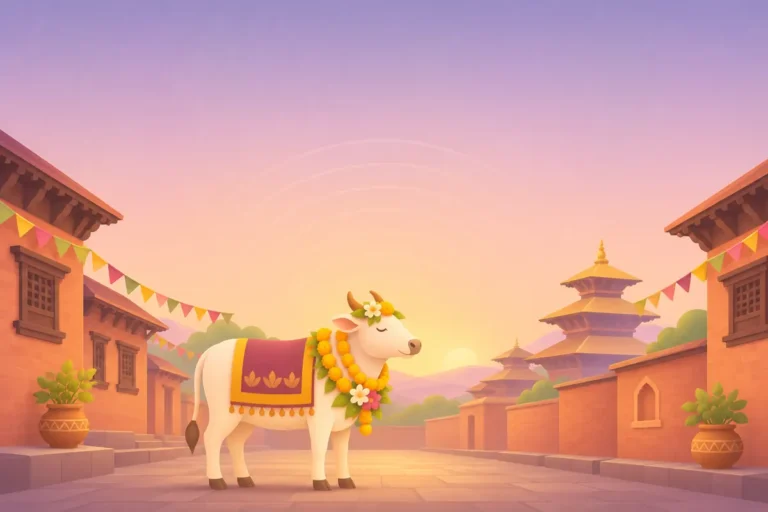
Gai Jatra, the “cow procession”, is held in the Kathmandu valley by families who lost a loved one in the past year. A cow, or a child dressed as a cow, leads the family through the streets, as cows are believed to help the departed reach heaven. Over time it has also become a festival of satire, comedy and street performance.
 Next: 18 Aug 2027
Kerala, all communities
Chingam 1 (Malayalam New Year)
Chingam 1 is the first day of the Malayalam (Kollam) calendar year. It marks the end of the hard monsoon month of Karkidakam and the start of the season of Onam. Many Keralites visit temples, wear new clothes and begin new ventures. It is also observed as Farmers’ Day in Kerala.
 Next: 19 Aug 2027
Hindu, North India
Kajari Teej
Kajari Teej is the second of the monsoon Teej festivals. Women fast, worship the neem tree and the moon, sing kajari folk songs about the rains and separation, and break their fast after seeing the moon. Sattu sweets are a speciality.
 Next: 21 Aug 2027
Hindu, Gujarat and North India
Bol Choth
Bol Choth honours cows and calves. Women worship a cow and her calf and, for the day, avoid wheat and products made from cow’s milk, eating millet and other grains instead. The day remembers the story of Bahula, a cow who kept her word.
 Next: 23 Aug 2027
Hindu, Gujarat
Randhan Chhath
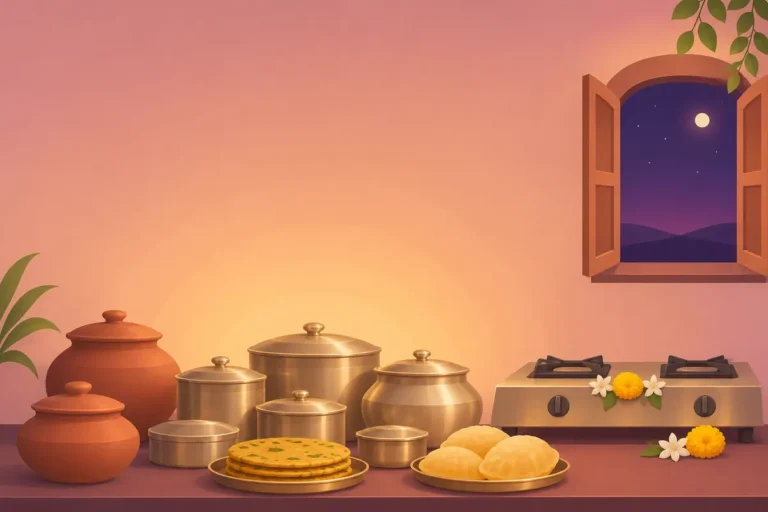
Randhan Chhath, “the cooking sixth”, is a Gujarati cooking day. Families cook a large spread of dishes to eat cold the next day, Sheetala Satam, when no fire is lit in the kitchen in honour of Sheetala Mata. At night the stove is cleaned and worshipped.
 Next: 24 Aug 2027
Hindu
Janmashtami
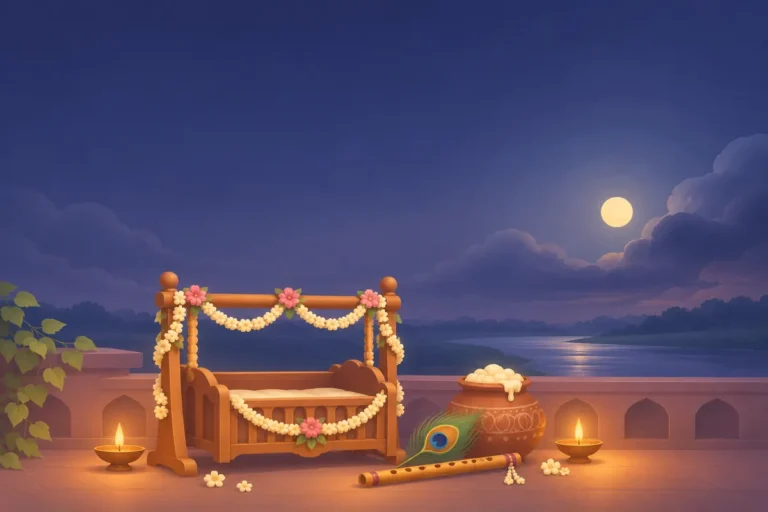
Janmashtami celebrates the birth of Krishna at midnight in a prison cell in Mathura. Devotees fast, decorate cradles, sing bhajans and wait for midnight, when the image of baby Krishna is bathed, dressed and rocked in a swing. The next day, Dahi Handi teams in Maharashtra form human pyramids to break pots of curd.
 Next: 26 Aug 2027
Hindu, Maharashtra and Goa
Dahi Handi (Gopalkala)
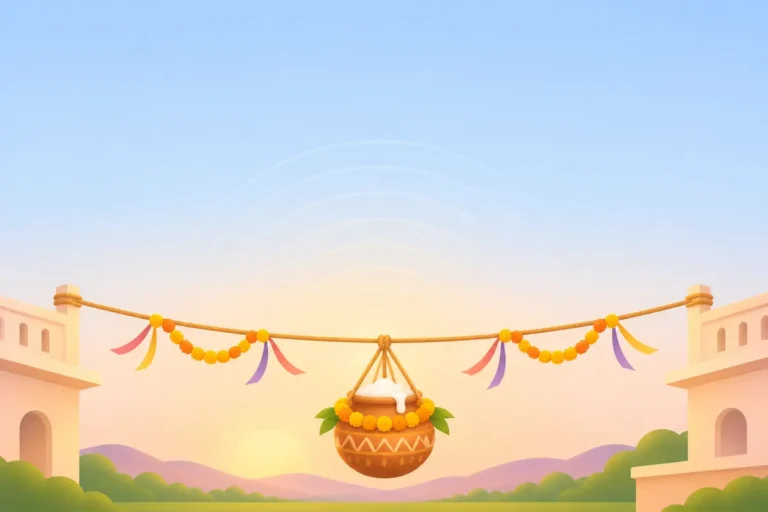
Dahi Handi re-enacts the child Krishna’s love of butter and curd. Teams called Govindas form human pyramids to reach and break a clay pot of curd hung high above the street, while crowds cheer and spray water. In Mumbai and Thane the competitions draw huge audiences.
 Next: 28 Aug 2027
Kerala, civic
Ayyankali Jayanthi
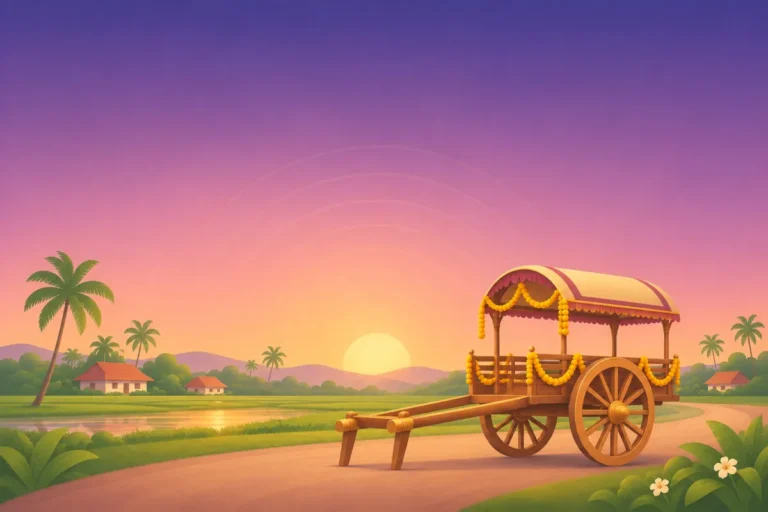
Ayyankali Jayanthi honours Ayyankali (1863–1941), the reformer who fought for the rights of Dalit communities in Kerala. He famously rode a bullock cart along roads closed to his community and led struggles for access to schools and fair wages.
 Next: 31 Aug 2027
Hindu, Nepal
Kushe Aunsi (Father’s Day, Nepal)
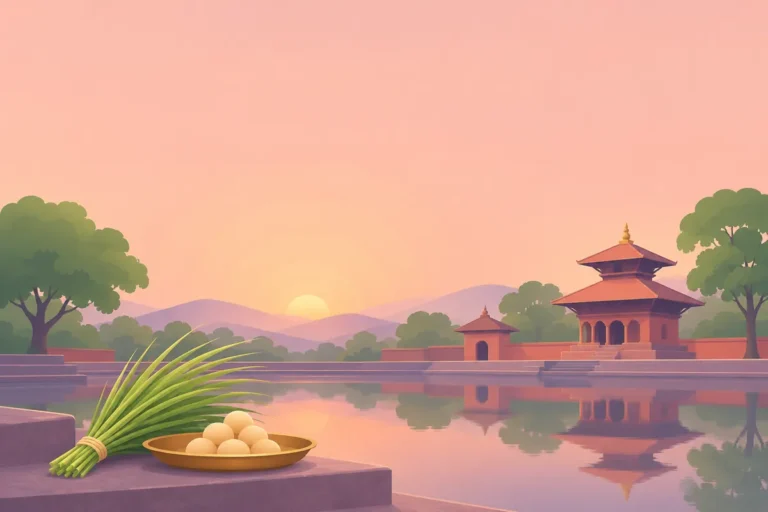
Kushe Aunsi is Nepal’s Father’s Day, “the day of seeing the father’s face”. Children visit their fathers with sweets and gifts and receive blessings. Those whose fathers have passed away perform shraddha rites, often at the Gokarneshwar temple near Kathmandu. Kusha grass, used in rituals for the year, is collected on this day.
 Next: 31 Aug 2027
Hindu, Maharashtra, Chhattisgarh and Telangana
Pola
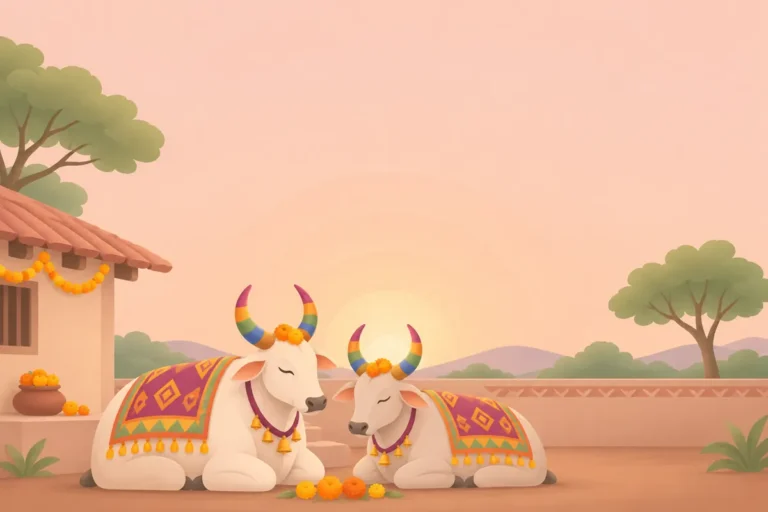
Pola is a farmers’ festival honouring bullocks, the partners of the plough. The animals are rested, bathed, painted, decorated with bells and garlands and fed special food, then paraded through the village to music.
 Next: 2 Sep 2027
Hindu
Hartalika Teej
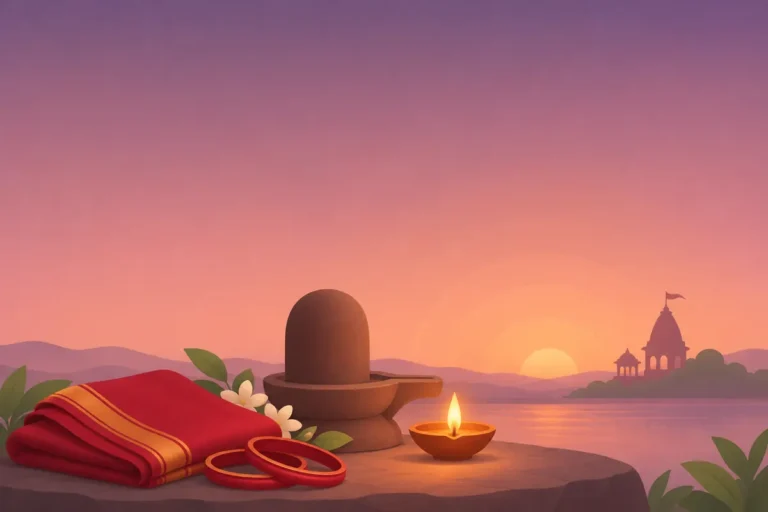
Hartalika Teej is the most important Teej. Women keep a strict fast, often without water, and worship clay images of Shiva and Parvati, praying for marital happiness or a good husband. In Nepal, Teej is a joyful festival of red saris, singing and dancing; in Karnataka it is Gowri Habba.
 Next: 2 Sep 2027
Assamese Vaishnava (Ekasarana Dharma)
Srimanta Sankardeva Tithi
This day remembers Srimanta Sankardeva, the fifteenth- and sixteenth-century saint, poet, playwright and reformer who founded Assam’s Ekasarana Dharma, devotion to Krishna alone. Satras and namghars hold nam-prasanga (devotional singing), readings and Bhaona plays.
 Next: 3 Sep 2027
Kerala’s harvest festival, celebrated by Malayalis of all faiths
Onam
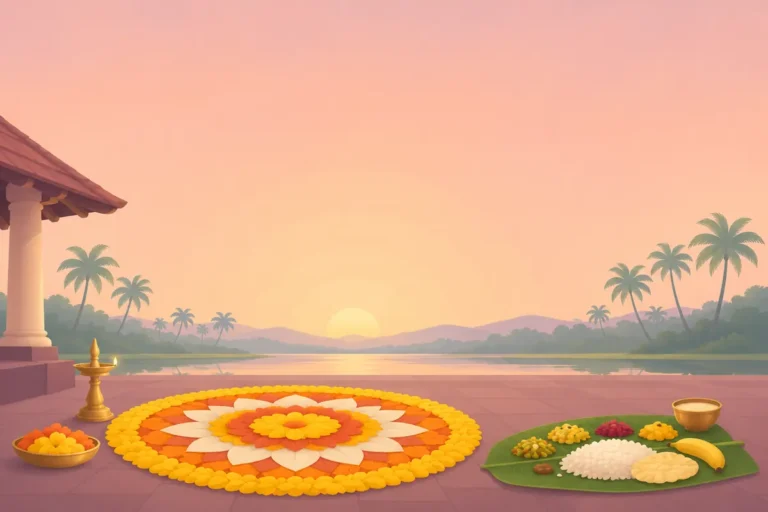
Onam is Kerala’s great harvest festival. It welcomes back the beloved king Mahabali, who is said to visit his people every year. Homes make pookalam (flower carpets), families share the Onam sadya on banana leaves, and snake-boat races, Pulikali tiger dances and Thiruvathira dances fill the season.
 Next: 4 Sep 2027
Hindu
Ganesh Chaturthi
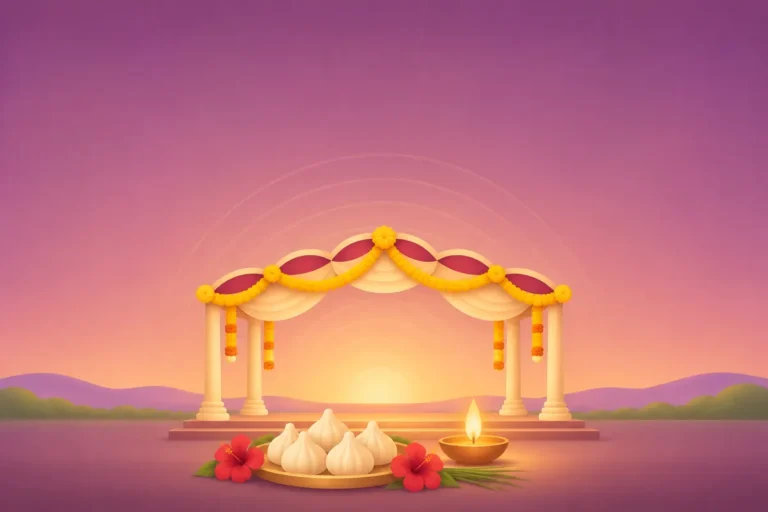
Ganesh Chaturthi celebrates the birth of Ganesha, the elephant-headed god of beginnings, wisdom and the remover of obstacles. Families and communities bring home clay images, worship them with modaks, songs and aarti for one and a half to ten days, then immerse them in water with the cry “Ganpati Bappa Morya!”.
 Next: 4 Sep 2027
Jain
Samvatsari and Paryushan
Paryushan is the most important Jain festival: eight or ten days of fasting, scripture reading, prayer and reflection. It ends with Samvatsari, the day of forgiveness, when Jains ask everyone they may have hurt for forgiveness with the words “Micchami Dukkadam”.
 Next: 5 Sep 2027
Hindu, western Odisha
Nuakhai
Nuakhai, “eating the new rice”, is the harvest festival of western Odisha. The first grain of the season is offered to the goddess Samaleswari at Sambalpur and to family deities, and then eaten together. Younger family members greet elders with “Nuakhai Juhar” and receive blessings.
 Next: 7 Sep 2027
Hindu, Maharashtra
Gauri Avahan (Gauri Ganpati)
In Maharashtra, Gauri, often understood as Parvati or Lakshmi, is welcomed into the home during Ganeshotsav, as Ganesha’s mother visiting him. Images or masks of Gauri are installed, dressed in saris and jewellery, worshipped with a feast on the second day, and bid farewell on the third.
 Next: 12 Sep 2027
Newar Hindu and Buddhist, Kathmandu
Indra Jatra
Indra Jatra is Kathmandu’s great street festival. A tall pole (lingo) is raised at Hanuman Dhoka, masked dances and the Lakhey demon dancer fill the streets, the Kumari, the living goddess, is pulled through the old city in her chariot, and images of Bhairav are displayed. It marks the end of the monsoon and gives thanks for the harvest rains.
 Next: 14 Sep 2027
Hindu and Jain
Anant Chaturdashi
Anant Chaturdashi is the last day of Ganeshotsav, when the great public Ganesha images are carried in processions to the sea, rivers and lakes for immersion. It is also a day to worship Vishnu as Ananta, the infinite, by tying a fourteen-knotted thread on the arm.
 Next: 15 Sep 2027
Hindu, Gujarat
Bhadarvi Poonam (Ambaji)
On Bhadarvi Poonam, huge numbers of pilgrims walk to the Ambaji temple in north Gujarat, one of the Shakti Peethas, carrying red flags (dhaja) and singing. Volunteers line the roads with free food, water and medical camps. The temple worships a sacred yantra rather than an image of the goddess.
 Next: 15 Sep 2027
Kerala, all communities; especially followers of the Guru
Sree Narayana Guru Jayanthi and Samadhi
These days remember Sree Narayana Guru (1856–1928), the saint, philosopher and social reformer from Kerala who taught “one caste, one religion, one God for humankind” and worked against caste discrimination. Processions, meetings and prayers are held at Sivagiri and across Kerala.
 Next: 16 Sep 2027
Hindu, Kerala
Aranmula Uthrattathi Boat Race
The Aranmula boat race is held on the Pampa river near the Parthasarathy temple at Aranmula. Long palliyodams (snake boats) with dozens of oarsmen glide in pairs to the rhythm of vanchipattu boat songs. It is less a race than a ritual procession honouring Krishna as Parthasarathy.
 Next: 17 Sep 2027
Hindu
Vishwakarma Puja
Vishwakarma Puja honours Vishwakarma, the divine architect and craftsman. Factories, workshops, offices and garages worship their tools and machines, and workers take a day of rest from them. In Bengal and Bihar kites fill the sky.
 Next: 23 Sep 2027
Hindu, Bihar, Jharkhand, eastern Uttar Pradesh and Nepal
Jitiya (Jivitputrika Vrat)
Jitiya is a vow kept by mothers for the long life and well-being of their children. Mothers keep a strict fast, often without water, for a day and a night, and worship Jimutavahana, a king remembered for giving his life to save others.
 Next: 29 Sep 2027
Hindu, Telangana
Bathukamma
Bathukamma is Telangana’s festival of flowers. Women arrange seasonal wildflowers into tall, layered cone-shaped stacks, gather in circles to sing Bathukamma songs and clap, and finally float the flower stacks on lakes and ponds. The name means “come alive, mother goddess”.
 Next: 29 Sep 2027
Hindu
Pitru Paksha and Mahalaya Amavasya
Pitru Paksha is the fortnight for remembering ancestors. Families perform shraddha and tarpan, offering water, sesame, rice balls (pinda) and food to departed parents and forebears, usually on the lunar day of their passing, and feed Brahmins, the poor, crows and cows. Mahalaya Amavasya, its last day, is for all ancestors.
 Next: 30 Sep 2027
Hindu
Navratri
Navratri, “nine nights”, is the great autumn festival of the goddess. Across India she is worshipped in her many forms: in Gujarat with nights of Garba and Dandiya Raas, in Bengal as Durga Puja, in the South with Golu displays of dolls and the worship of Saraswati, and in the North with Ramlila plays leading to Dussehra.
 Next: 5 Oct 2027
Hindu, especially in Bengal, Assam, Odisha, Bihar and Tripura
Durga Puja
Durga Puja is Bengal’s greatest festival. Artists sculpt clay images of Durga slaying Mahishasura, with Lakshmi, Saraswati, Ganesha and Kartikeya, and communities set up pandals of astonishing artistry. For five days people go pandal-hopping, eat, dance to dhak drums, and finally bid the goddess farewell with sindoor khela and immersion. Kolkata’s Durga Puja is on UNESCO’s list of intangible cultural heritage.
 Next: 8 Oct 2027
Hindu
Dussehra (Vijayadashami)
Dussehra, or Vijayadashami, celebrates the victory of good over evil: Rama’s defeat of Ravana and Durga’s victory over Mahishasura. In North India towering effigies of Ravana are burned after Ramlila plays; in Mysuru a royal procession of elephants is held; and across the South children begin their education.
 Next: 10 Oct 2027
Hindu, Nepal; widely celebrated by Nepalis
Dashain
Dashain is Nepal’s longest and most important festival. Families sow jamara (barley) on the first day, worship Durga through Navratri, and on Vijaya Dashami elders put a red tika of rice, curd and vermilion and jamara on the foreheads of younger relatives and give blessings. Kites, swings and family feasts fill the days.
 Next: 14 Oct 2027
Hindu
Sharad Purnima
Sharad Purnima is the bright autumn full moon after the monsoon. Families stay up under the moonlight, and in many homes kheer or milk is left in the moonlight and eaten the next morning. In Maharashtra it is Kojagiri, with spiced milk; in Bengal it is Kojagori Lakshmi Puja; in Odisha it is Kumara Purnima.
 Next: 15 Oct 2027
Hindu, especially the Valmiki community
Valmiki Jayanti
Valmiki Jayanti honours Maharishi Valmiki, the poet traditionally credited with the Ramayana and called the adi kavi, the first poet. Communities hold processions (shobha yatras), recitations of the Ramayana and gatherings at Valmiki temples.
 Next: 17 Oct 2027
Hindu, Andhra Pradesh and Telangana
Atla Taddi
Atla Taddi is a Telugu festival for women and girls. Women fast and worship Gauri, praying for happy marriages, and in the evening make and share attu (dosa-like pancakes) with other women. Girls wake before dawn, eat, then play games and swing in the moonlight.
 Next: 18 Oct 2027
Hindu, mainly North India
Karwa Chauth
On Karwa Chauth, married women fast from sunrise until moonrise for the long life and well-being of their husbands. They dress in festive clothes, apply mehendi, gather in the afternoon to hear the Karwa Chauth story, and break the fast after seeing the moon, often through a sieve, and then their husband’s face.
 Next: 18 Oct 2027
Assamese
Kati Bihu
Kati Bihu, also called Kongali Bihu, the “Bihu of the poor”, falls when the granaries are empty and the rice is still growing in the fields. It is quiet and prayerful: lamps (saki) are lit at the tulsi plant, in the granary and in the paddy fields to protect the crop.
 Next: 22 Oct 2027
Hindu, North India
Ahoi Ashtami
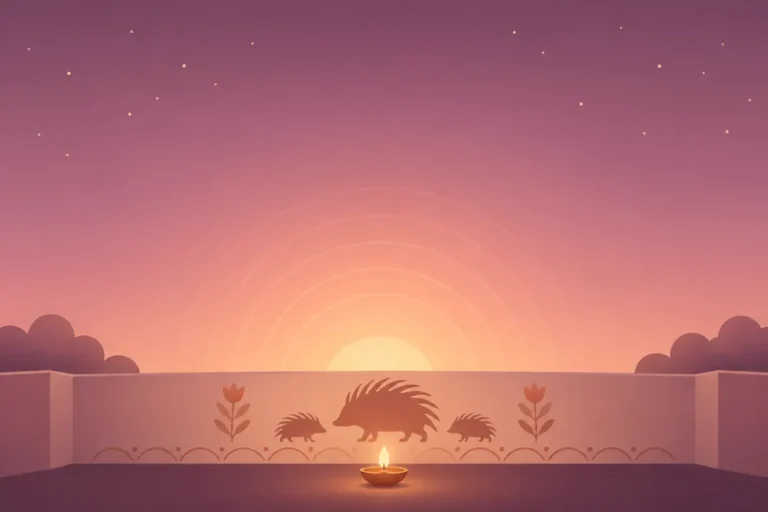
On Ahoi Ashtami, mothers fast for the well-being of their children and worship Ahoi Mata, often drawn on the wall with a porcupine and her cubs. The fast is broken after seeing the stars in the evening.
 Next: 26 Oct 2027
Hindu, Maharashtra, Gujarat and Karnataka
Vasu Baras
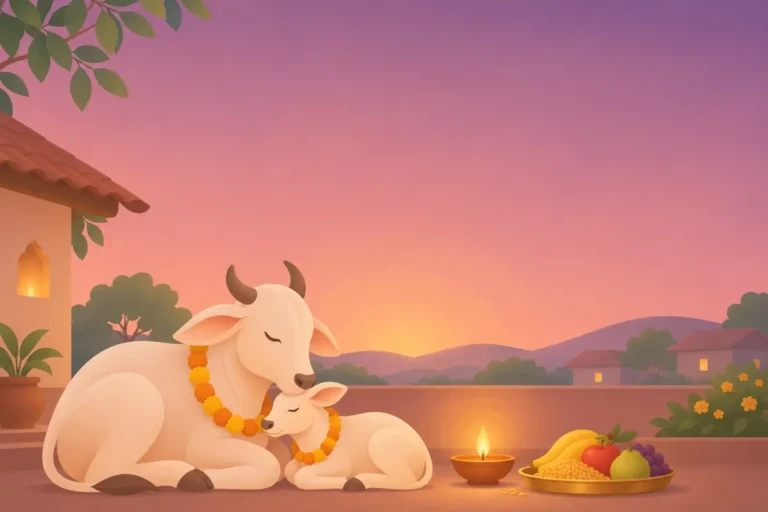
Vasu Baras opens Diwali in Maharashtra by honouring cows and calves, in gratitude for their role in family life. Women worship a cow and calf with flowers and food, and many avoid wheat and milk products for the day. In Gujarat the same day is Vagh Baras, when businesses settle accounts.
 Next: 27 Oct 2027
Hindu; also kept by Jains as Dhanyateras
Dhanteras
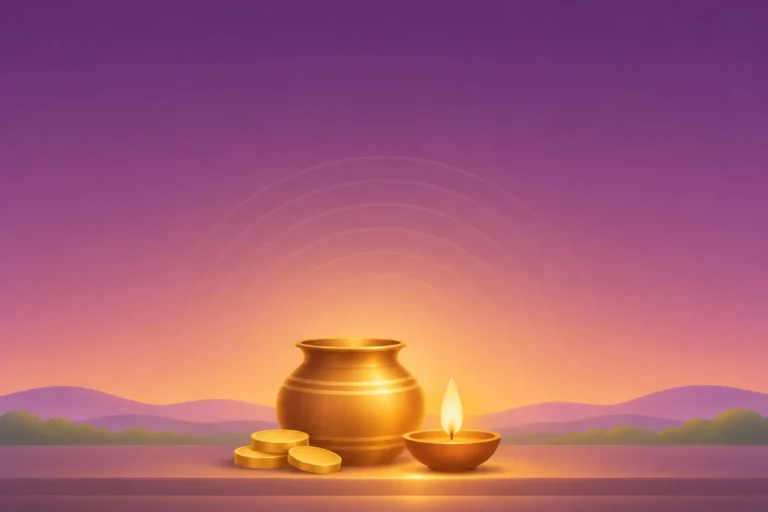
Dhanteras opens the five days of Diwali. It honours Lakshmi, the goddess of prosperity, and Dhanvantari, the physician of the gods, so it is a day for both wealth and good health. Many families buy something new for the home, often gold, silver or a steel or brass pot.
 Next: 27 Oct 2027
Hindu
Naraka Chaturdashi
Naraka Chaturdashi is the second day of Diwali. It remembers Krishna’s victory over the demon king Narakasura. The day begins before dawn with a ritual oil bath, then lamps, new clothes and sweets. In Gujarat it is Kali Chaudas, a night for protection from harm.
 Next: 27 Oct 2027
Hindu, celebrated across Nepal and by Nepali communities worldwide; Newar Buddhists also keep Mha Puja during these days
Tihar
Tihar is Nepal’s five-day festival of lights. Each day honours someone who shares our lives: crows, dogs, cows, oxen, and finally brothers. Homes are lit with lamps and marigolds, children go out singing Deusi and Bhailo, and sisters bless their brothers with a seven-coloured tika.
 Next: 28 Oct 2027
Hindu, also marked by Sikhs, Jains and some Buddhists
Diwali (Deepavali)
Diwali, the festival of lights, is one of the biggest festivals of the year. Homes are lit with clay lamps and decorated with rangoli, families worship Lakshmi, the goddess of wealth and good fortune, and the celebrations run over about five days.
 Next: 28 Oct 2027
Hindu (especially Shakta traditions)
Kali Puja
While most of India worships Lakshmi on the night of Diwali, in Bengal, Assam, Odisha and Tripura the goddess Kali is worshipped through the dark new-moon night. Huge pandals, lamps and fireworks fill the cities, and the worship often goes on until dawn.
 Next: 30 Oct 2027
Hindu and Jain, kept by Gujarati communities everywhere
Bestu Varas (Gujarati New Year)
Bestu Varas is the Gujarati New Year. Families wake early, put on new clothes, go to the temple, and visit relatives and friends to wish them “Saal Mubarak” or “Nutan Varshabhinandan”. Businesses open new account books after the Chopda Pujan of Diwali.
 Next: 30 Oct 2027
Hindu (especially Vaishnava traditions)
Govardhan Puja
Govardhan Puja remembers Krishna lifting Govardhan Hill to shelter the people and cows of Vraj from a great storm. Temples and homes build a small hill of food, the Annakut or “mountain of food”, offer it to Krishna, and then share it with everyone.
 Next: 31 Oct 2027
Hindu
Bhai Dooj
Bhai Dooj closes the five days of Diwali. Sisters put a tilak on their brothers’ foreheads, perform aarti and pray for their long life; brothers bring gifts and promise to stand by them. Families gather for a special meal.
 Next: 1 Nov 2027
Civic, Karnataka
Kannada Rajyotsava
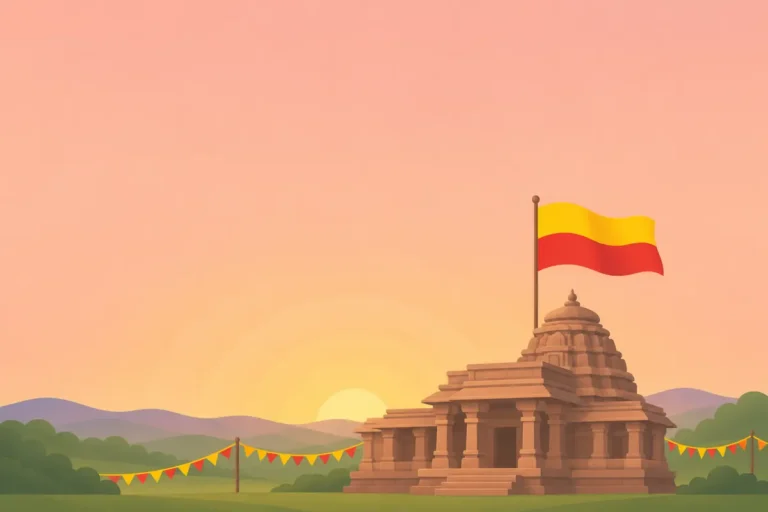
Kannada Rajyotsava marks the day in 1956 when Kannada-speaking regions were united into one state, then called Mysore, renamed Karnataka in 1973. The red and yellow Kannada flag flies everywhere, and the state gives its Rajyotsava awards.
 Next: 2 Nov 2027
Hindu, Andhra Pradesh, Telangana and Karnataka
Nagula Chavithi
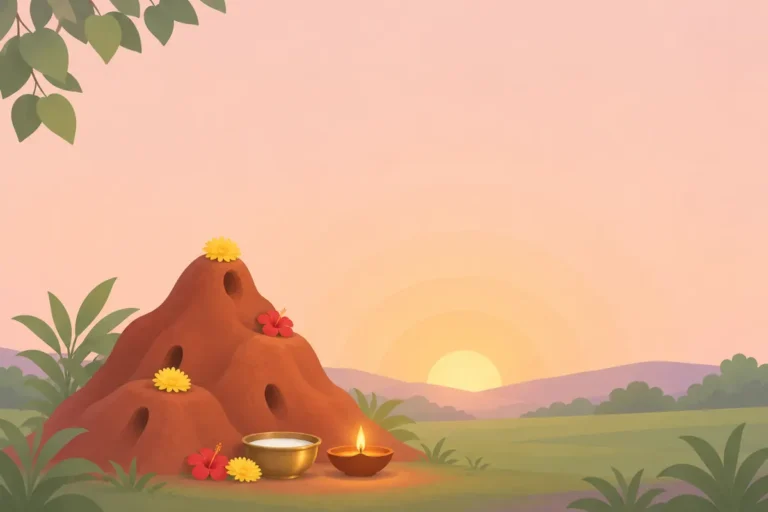
Nagula Chavithi is the Telugu and Kannada festival honouring serpents. Families visit anthills (snake mounds), offer milk, eggs in some communities, flowers and sweets, and pray for the well-being of their children and protection from harm.
 Next: 3 Nov 2027
Hindu and Jain, mainly in Gujarat
Labh Pancham
Labh Pancham, the “fifth day of profit”, is the day many Gujarati shops and offices reopen after the Diwali holidays. Traders worship the new account books and pray for a year of labh (profit) and saubhagya (good fortune). Jains keep the same day as Gyan Panchami, honouring knowledge.
 Next: 4 Nov 2027
Hindu
Chhath Puja
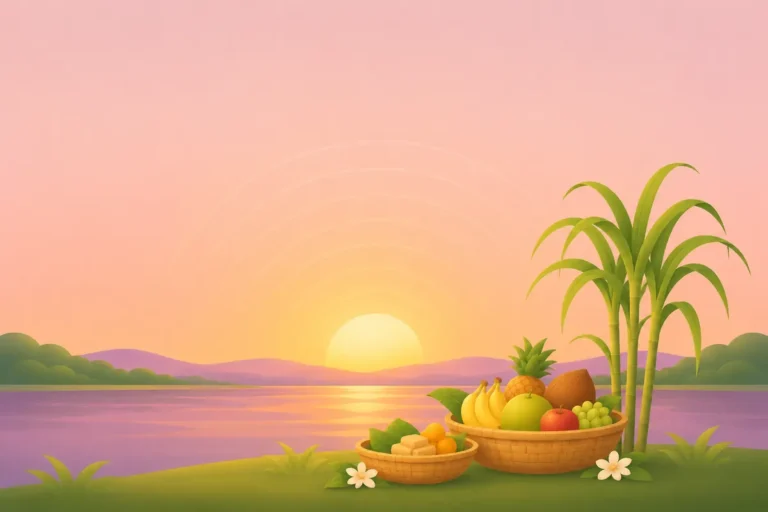
Chhath is a four-day festival of thanks to Surya, the sun, and to Chhathi Maiya. Devotees, often women, fast strictly, stand in rivers and ponds, and offer arghya (water and offerings) to the setting sun and then to the rising sun. The riverbanks fill with families, songs and baskets of fruit and thekua.
 Next: 4 Nov 2027
Hindu, Tamil (Murugan devotees)
Skanda Sashti
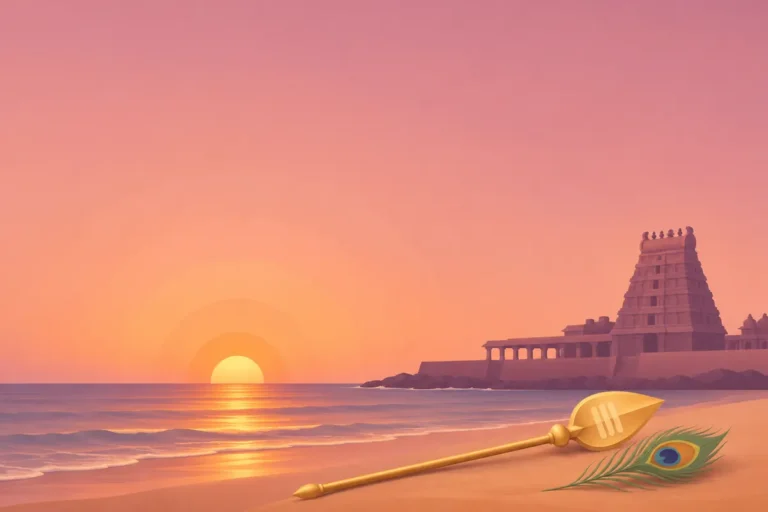
Skanda Sashti celebrates Murugan’s victory over the demon Soorapadman. Devotees fast for six days, recite the Kanda Shashti Kavasam, and on the sixth day watch the Soorasamharam, a re-enactment of the battle, at Murugan temples, especially Tiruchendur on the seashore.
 Hindu
Rishi Panchami
Rishi Panchami honours the Saptarishis, the seven great sages of Hindu tradition. Many women fast, bathe in rivers using herbs and worship the sages, seeking purification. In Nepal women gather at Pashupatinath and other rivers after Teej.
Dates come from the regional panchang calendars and can differ by a day from place to place. See every date on the festival calendar.
Diwali, Holi, Navaratri and more: why they are celebrated and how families take part. Dates change every year.
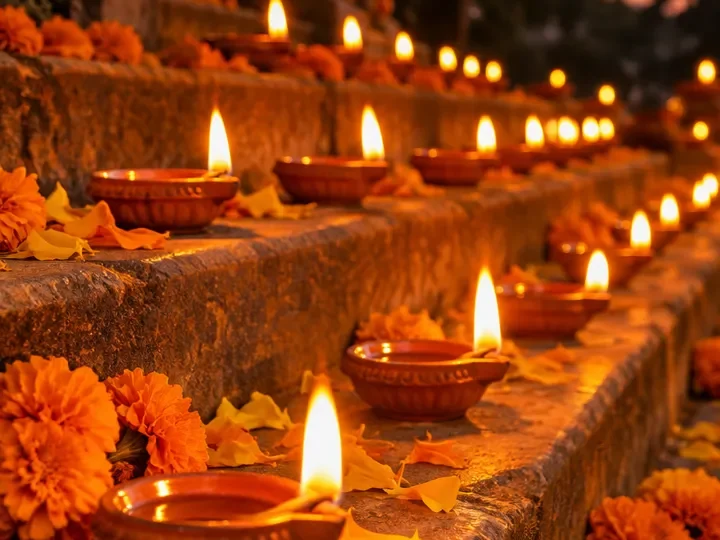
Why Diwali is celebrated, the stories behind it, the five days of the festival and simple ways families mark it at home.
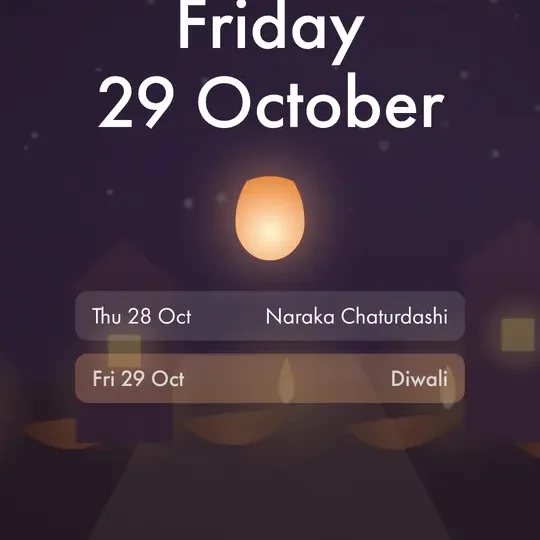
Diwali 2027 is on Friday 29 October, per India’s official holiday list, with the days around it.
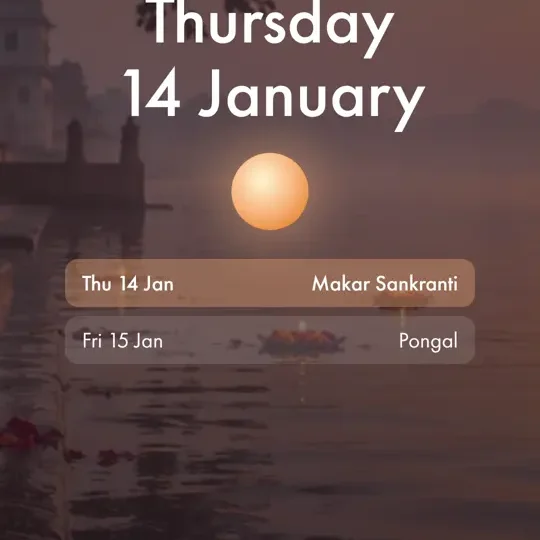
Makar Sankranti 2027 falls on Thursday 14 January, according to India’s official 2027 holiday list.
Sleep and sound
Focus and habits
Reflect and play
Ask Satsang Space
An AI guide to our practices and guides
Hello! I can help you find a practice, start meditating, try a breathing exercise or explore our guides. What would you like to know?
AI answers can be wrong. Not medical advice. Questions are processed by Anthropic and not stored here. Privacy
Reading options