
Hindu, also celebrated by Jains, Sikhs and many others
Raksha Bandhan
Also called Rakhi, Rakhri, Rakhi Purnima
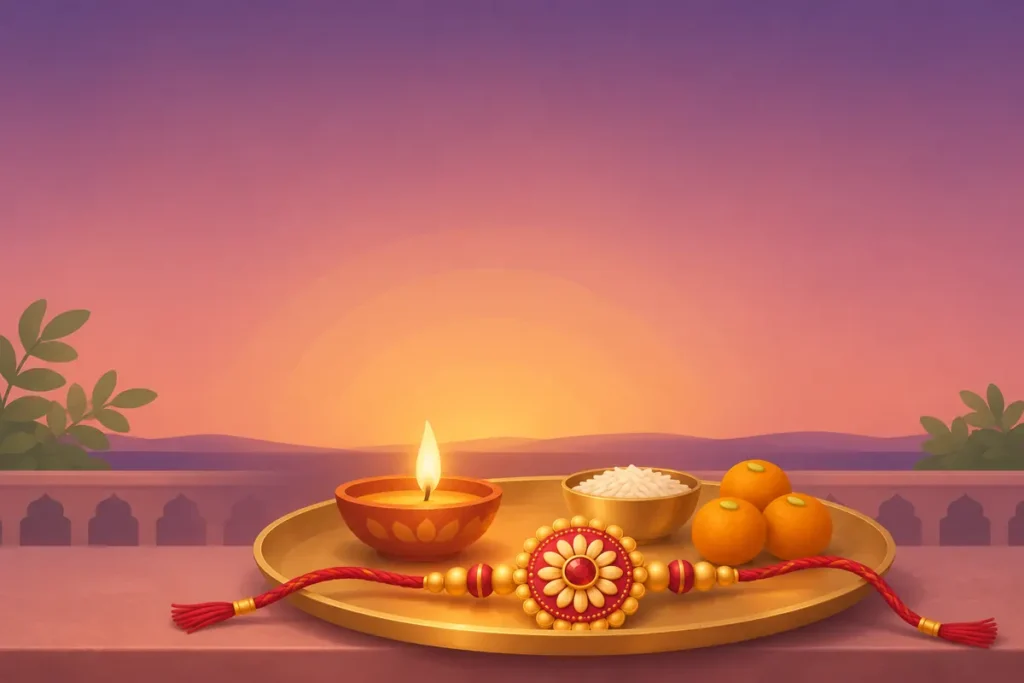
On Raksha Bandhan, sisters tie a rakhi, a decorated thread, on their brothers’ wrists, apply tilak and pray for their well-being. Brothers give gifts and promise to protect their sisters. Today cousins, close friends and even neighbours tie rakhis to celebrate the bond.
Why it is celebrated
The rakhi is a thread of protection (raksha) and affection that ties families together.
Over time it has also become a symbol of friendship and solidarity between communities.
The stories behind it
Krishna and Draupadi
When Krishna cut his finger, Draupadi tore a strip from her sari to bind it. Krishna promised to protect her, and later kept his word when she was humiliated in the Kaurava court, endlessly lengthening her sari.
Indra and Indrani
In an older story, Indrani tied a sacred thread on Indra’s wrist before his battle with the demons, praying for his victory.
What people do
- Tying the rakhi with a tilak, aarti and a sweet
- Brothers give gifts or money
- Rakhis sent by post to brothers far away
- Tying rakhis on soldiers, trees, or friends in community programmes
Across India and beyond
Narali Purnima, offering coconuts to the sea
Janai Purnima
Avani Avittam, the changing of the sacred thread
Joining in for the first time
- Anyone can tie a rakhi on a friend as a sign of care
Questions people ask
What is Bhadra?
A part of the day considered inauspicious in the panchang; many families tie the rakhi only after it ends.
Read next
Sources
Customs differ between families, communities and regions. This page describes common practice; your family or temple may do things differently.