
Hindu, also marked by Sikhs, Jains and some Buddhists
Diwali (Deepavali)
Also called Deepavali, Dipawali, Dipabali, Divali
Diwali, the festival of lights, is one of the biggest festivals of the year. Homes are lit with clay lamps and decorated with rangoli, families worship Lakshmi, the goddess of wealth and good fortune, and the celebrations run over about five days.
Why it is celebrated
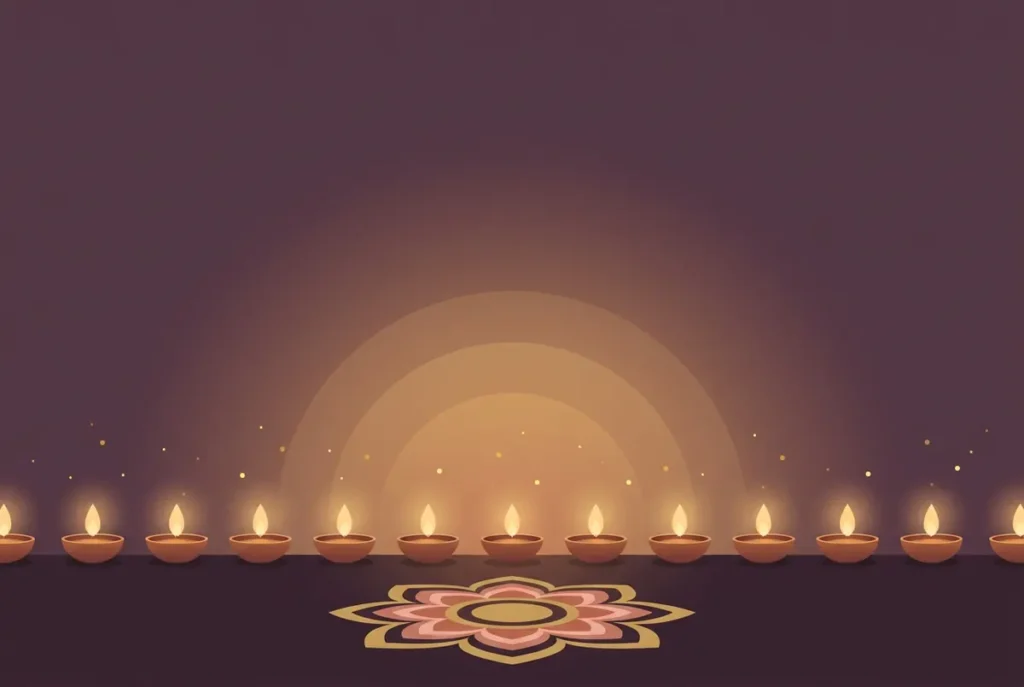
The name comes from the Sanskrit deepavali, “a row of lamps”. The lights stand for the victory of light over darkness and good over evil, and for welcoming good fortune into the home.
Different regions remember different stories on Diwali, which is part of why it is celebrated so widely. In the north it is best known as the return of Rama to Ayodhya; in the south it is linked with Krishna’s victory over the demon Narakasura; and almost everywhere the evening worship is for Lakshmi.
For many business families, especially in Gujarat and Maharashtra, Diwali also closes the financial year: old account books are finished and new ones are blessed.
The stories behind it
Rama comes home
In the Ramayana, Prince Rama returns to his kingdom of Ayodhya after fourteen years in exile and his victory over Ravana. The people light rows of lamps to welcome Rama, Sita and Lakshmana home. This is the story most often told in North India.
Krishna and Narakasura
In South India and Goa, Diwali celebrates Krishna (with his wife Satyabhama in many tellings) defeating Narakasura, a demon king who had imprisoned thousands of people. The day of his defeat, Naraka Chaturdashi, is the main festival day there, often begun with an oil bath before dawn.
Lakshmi’s night
Many families tell that Lakshmi visits homes that are clean, bright and welcoming on the night of Diwali. This is why houses are cleaned and lit, doors are left open and the evening Lakshmi Puja is the centre of the festival for most households.
In other traditions
Jains mark Diwali as the day Mahavira, the last Tirthankara, reached moksha (liberation). Sikhs celebrate Bandi Chhor Divas, remembering Guru Hargobind’s release from the Gwalior fort, and the Golden Temple in Amritsar is lit up.
What people do
- Cleaning and decorating the home, and buying something new (often gold, silver or kitchenware on Dhanteras)
- Drawing rangoli or kolam patterns at the doorway with coloured powder, rice flour or flowers
- Lighting diyas (small clay oil lamps) and candles, and hanging lanterns and lights
- Lakshmi Puja in the evening, often with Ganesha, at home or at work
- New clothes, visiting family and friends and exchanging sweets and gifts
- Fireworks in many places, though many cities now limit them because of air pollution and noise
Across India and beyond
Rama’s return to Ayodhya; Lakshmi Puja on the new-moon night.
Diwali ends the year; the next day, Bestu Varas, is the Gujarati New Year (Saal Mubarak!).
Starts with Vasu Baras; the Diwali Padwa day honours married couples.
Deepavali is celebrated on Naraka Chaturdashi morning with an oil bath, new clothes and sweets.
Kali Puja is held on the same new-moon night.
Celebrated as Tihar over five days, honouring crows, dogs, cows and siblings.
Joining in for the first time
- Wishing someone “Happy Diwali” or “Shubh Deepavali” is always welcome
- Bring a box of sweets if you are invited to a home
- Ask before lighting fireworks; many families now celebrate with lamps only
- Shoes usually come off before entering a home shrine or temple
Questions people ask
Why does the date of Diwali change every year?
Diwali follows the Hindu lunar calendar and falls on the new moon of Ashvin or Kartik, so its date on the everyday calendar moves each year, usually between mid-October and mid-November.
Is Diwali only a Hindu festival?
It is mainly a Hindu festival, but Jains, Sikhs and some Buddhists also mark it, each with their own meaning.
What is a diya?
A small clay lamp filled with oil or ghee and a cotton wick. Rows of diyas give the festival its name.
Read next
Sources
- Encyclopaedia Britannica: Diwali
- Sahapedia: Diwali, origins and the evolution of the festival of lights
- Hindu American Foundation: 5 things to know about Diwali
- Hindupedia: Diwali
Customs differ between families, communities and regions. This page describes common practice; your family or temple may do things differently.