
Hindu (Vaishnava)
Tulsi Vivah
Also called Tulasi Vivaha, Tulasi Kalyanam
Tulsi Vivah is a ceremonial wedding of the holy basil plant (tulsi) to Vishnu, usually in the form of a shaligram stone or of Krishna. Families decorate the tulsi like a bride, hold a full wedding ritual and share sweets, and the season of human weddings begins.
Why it is celebrated
Tulsi is loved as a sacred plant and is treated as a goddess, Vrinda. The ceremony honours her devotion and marks the start of the auspicious wedding season.
Some families who have no daughter perform the ceremony as kanyadaan, giving a bride in marriage.
The stories behind it
Vrinda and Vishnu
The Puranas tell of Vrinda, a devoted wife whose faithfulness protected her husband, the powerful Jalandhara. To end his tyranny, Vishnu broke her devotion by a trick, and Jalandhara was defeated. In her grief she cursed Vishnu to become a stone, the shaligram. She became the tulsi plant, and Vishnu promised to marry her every year. Tellings differ in their details.
What people do
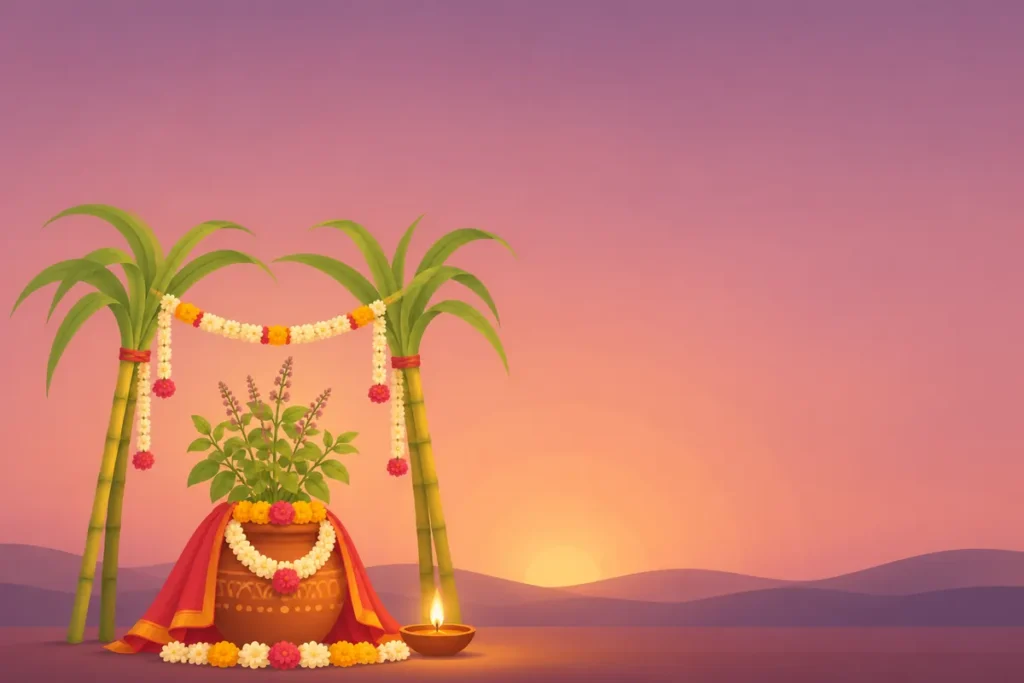
- Decorating the tulsi pot as a bride with a red sari or cloth, bangles and a mangalsutra
- A small mandap of sugarcane over the plant
- Wedding rituals with a priest or family elder, often in the evening
- Distributing sweets, puffed rice and fruit after the ceremony
- Large community Tulsi Vivah events at temples in Gujarat and Maharashtra
Joining in for the first time
- Guests are welcome at community events; join in the songs and the shower of rice or flower petals
Questions people ask
Is it a real wedding?
It is a ritual wedding of the plant to Vishnu, performed with devotion like a family wedding.
Read next
Sources
Customs differ between families, communities and regions. This page describes common practice; your family or temple may do things differently.