Uses your device’s built-in voice.

Hindu, Odisha
Raja Parba
Also called Mithuna Sankranti, Raja Sankranti
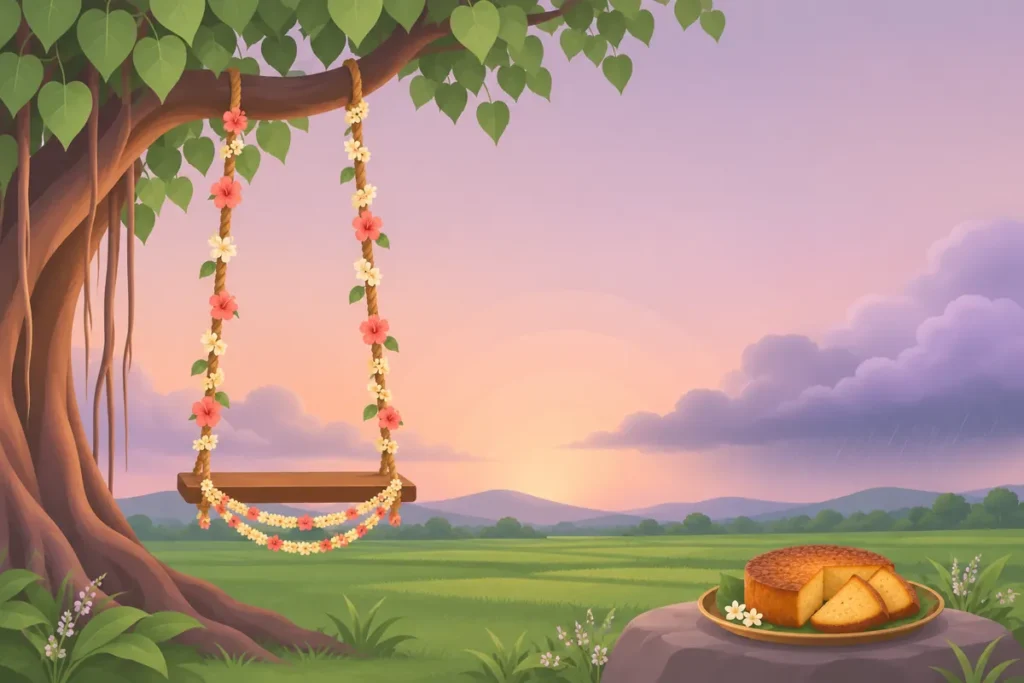
Raja Parba is Odisha’s festival of womanhood and of the earth. It is believed that Mother Earth rests and is renewed before the rains, so ploughing stops for three days. Young women wear new clothes, play on swings hung from trees, sing Raja songs and eat poda pitha.
Why it is celebrated
The festival honours the earth’s fertility and, through it, womanhood, celebrating girls who will become women.
It marks the end of the farming year’s dry season and welcomes the monsoon.
What people do
- A pause in farm work and ploughing for three days
- Rope swings (doli) hung from banyan and other trees
- Girls wear new clothes and alta, and do not walk barefoot or cut vegetables
- Folk songs and games; the fourth day, Basumati Snana, a ritual bath of the earth
Joining in for the first time
- Swings are a social space; if invited to play, enjoy it
Questions people ask
Why do farmers stop work?
The earth is believed to be resting before the rains and the new season.
Read next
Sources
Customs differ between families, communities and regions. This page describes common practice; your family or temple may do things differently.