
Hindu
Dussehra (Vijayadashami)
Also called Vijayadashami, Dasara, Dashain
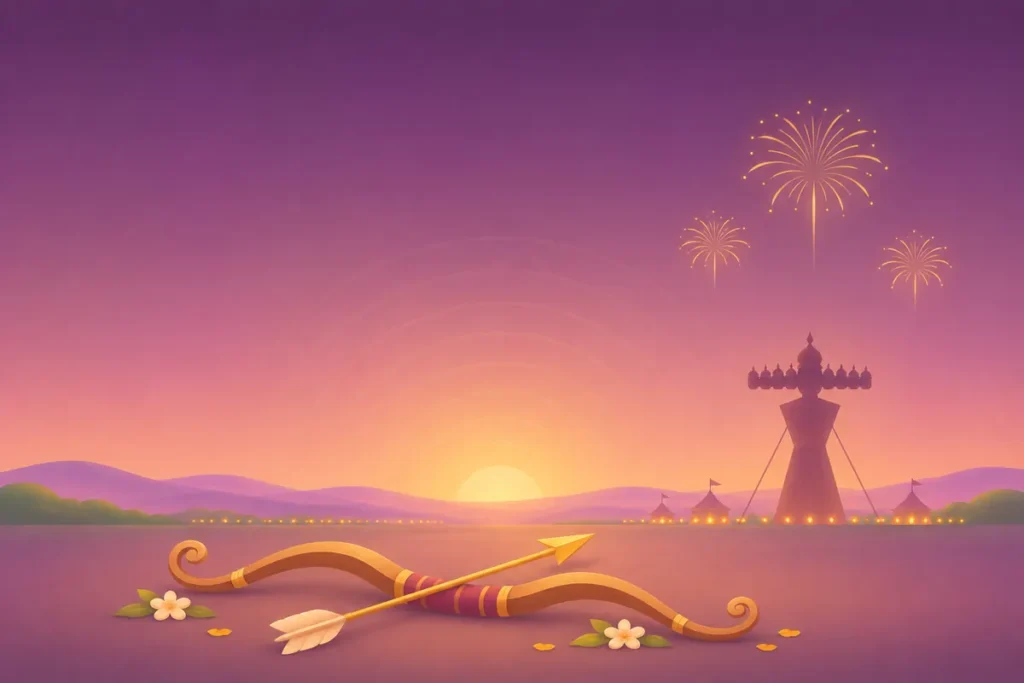
Dussehra, or Vijayadashami, celebrates the victory of good over evil: Rama’s defeat of Ravana and Durga’s victory over Mahishasura. In North India towering effigies of Ravana are burned after Ramlila plays; in Mysuru a royal procession of elephants is held; and across the South children begin their education.
Why it is celebrated
Vijaya means victory: the day is seen as auspicious for starting anything new.
It ends Navratri and begins the run-up to Diwali, twenty days later.
The stories behind it
Rama and Ravana
Ravana, the king of Lanka, abducted Sita. Rama, with Lakshmana, Hanuman and an army of vanaras, crossed the sea and defeated Ravana in battle. The burning of Ravana’s effigy with those of his brother Kumbhakarna and son Meghnad recalls this victory.
The shami tree
In the Mahabharata, the Pandavas hid their weapons in a shami tree during their year in disguise and recovered them on Vijayadashami. In Maharashtra people exchange leaves of the apta tree as “gold” on this day.
What people do
- Ramlila plays and the burning of Ravana effigies
- Ayudha puja: worship of tools and weapons (often on Navami)
- Vidyarambham: young children write their first letters
- Exchanging apta or shami leaves as gold in Maharashtra and Karnataka
- The Mysuru Dasara procession (Jamboo Savari)
Across India and beyond
Ramlila and Ravana Dahan
Jamboo Savari with Chamundeshwari on an elephant
Kullu Dussehra, a week-long gathering of deities
Bastar Dussehra over 75 days
Dashain
Joining in for the first time
- Ravana Dahan grounds are crowded; keep a safe distance from fireworks
Questions people ask
Why burn Ravana?
It is a public, symbolic ending of evil, pride and ignorance.
Read next
Sources
Customs differ between families, communities and regions. This page describes common practice; your family or temple may do things differently.