
Hindu (Jagannath tradition)
Snana Purnima
Also called Deva Snana Purnima, Snana Yatra
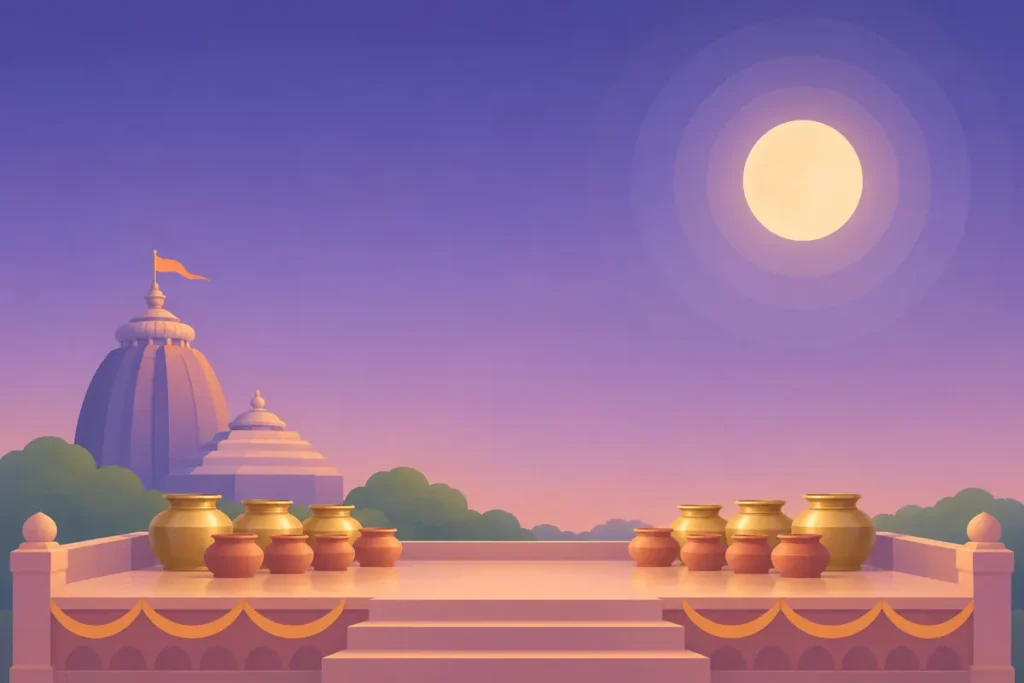
On Snana Purnima, the deities of Jagannath, Balabhadra, Subhadra and Sudarshan are brought out of the temple in Puri and bathed in public on a high platform with 108 pots of water from a sacred well. After the bath they dress in the Hati Besha (elephant attire) and then withdraw from view for about two weeks.
Why it is celebrated
It is the birthday of Lord Jagannath according to temple tradition, and the start of the Rath Yatra season.
The period of rest after the bath, called Anasara, is when the deities are said to fall ill and are cared for with herbal remedies.
The stories behind it
The deities fall ill
The tradition says the bath gives the deities a fever. For about fifteen days they stay in a private room, the Anasara Ghara, and are treated by the temple’s physicians, while devotees pray for their recovery. They appear again fresh, just before the Rath Yatra.
What people do
- Public bathing of the deities on the Snana Bedi
- Hati Besha, the elephant attire
- Anasara: the deities are hidden and not visible to devotees for about two weeks
- In ISKCON temples worldwide, a similar bathing ceremony is held
Joining in for the first time
- In Puri the crowds are very large; follow police and temple guidance
Questions people ask
Why are the deities hidden after the bath?
Tradition says they rest and recover before the Rath Yatra.
Read next
Sources
Customs differ between families, communities and regions. This page describes common practice; your family or temple may do things differently.