Uses your device’s built-in voice.

Newar, Kathmandu valley
Yomari Punhi
Also called Yomari Purnima, Dhanya Purnima
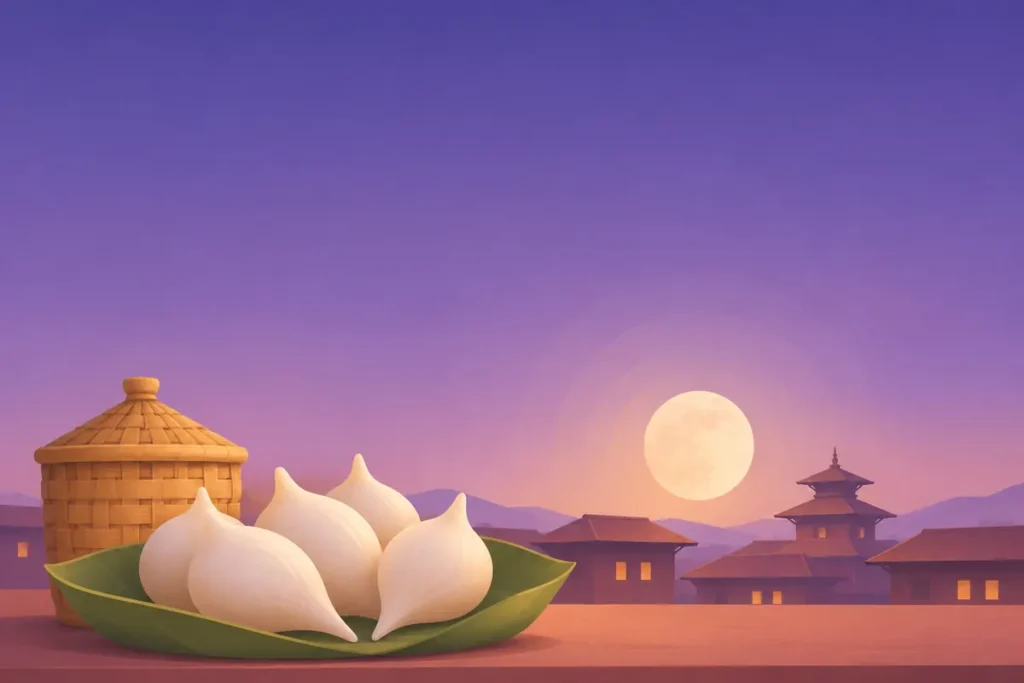
Yomari Punhi is a Newar harvest festival named after yomari, steamed rice-flour dumplings shaped like a fig and filled with chaku (molasses) and sesame. Families offer yomari to Annapurna and Kubera in their granaries, and children go from house to house singing for them.
Why it is celebrated
It gives thanks for the rice harvest.
The stories behind it
The first yomari
A Newar legend tells of a couple in Panchal Nagar who first made yomari. Kubera, the god of wealth, visited in disguise, was offered yomari and blessed them with riches.
What people do
- Making yomari of different shapes
- Offering them to deities and storing some in the granary for days
- Children singing yomari songs from door to door
- Worship at Annapurna temples
Joining in for the first time
- Bakeries in Kathmandu sell yomari; buy a few and share them
Questions people ask
What does yomari mean?
“Loved bread”: yo (liked) and mari (bread) in Newar.
Read next
Sources
Customs differ between families, communities and regions. This page describes common practice; your family or temple may do things differently.