Hindu, Kerala and Tulu Nadu
Vishu
Also called Malayali solar new year (traditional)
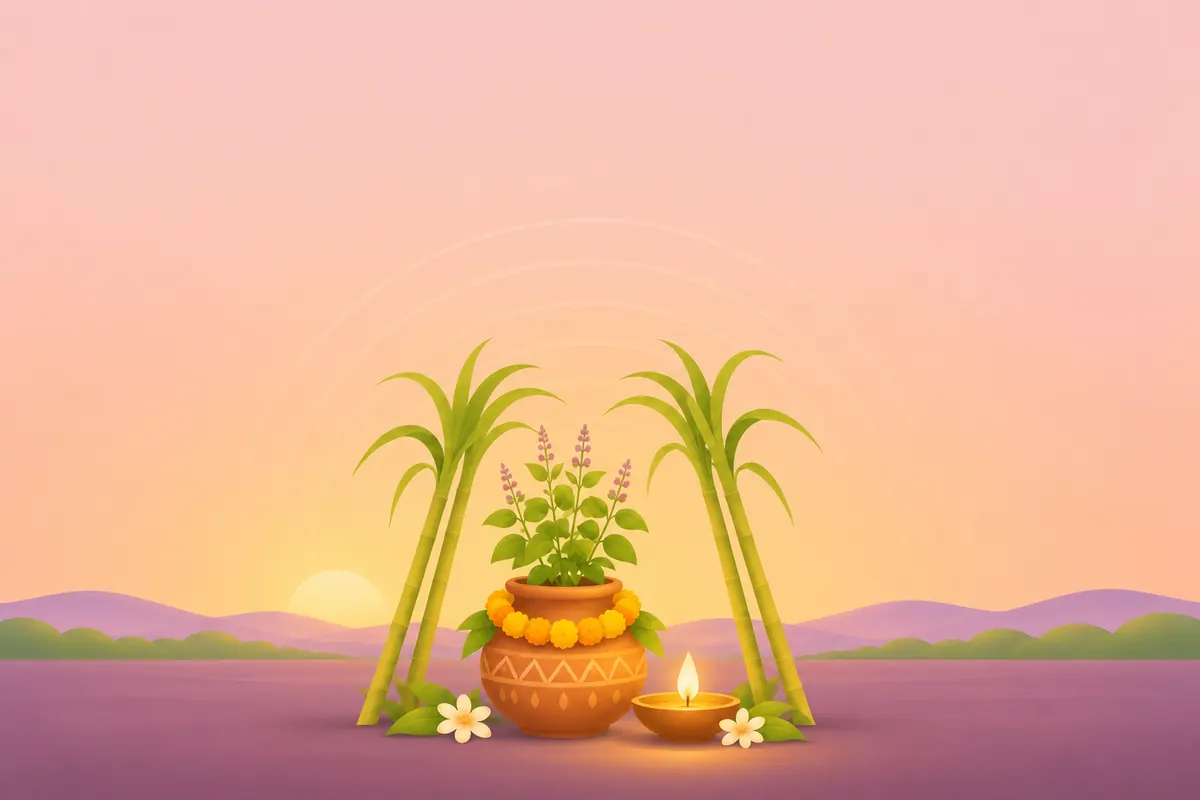
Vishu is Kerala’s spring festival and traditional new year. Its heart is the Vishukkani, “the first sight”: an arrangement of rice, golden cucumber, fruits, gold, a mirror, a lamp and yellow konna flowers before an image of Krishna, seen first thing in the morning with eyes closed until the moment of seeing.
Why it is celebrated
What one sees first on Vishu is believed to set the tone for the year, so the Vishukkani gathers everything that stands for prosperity and light.
It marks the sun’s entry into Medam (Aries), the start of the agricultural year in Kerala.
The stories behind it
Krishna and Narakasura
Some families link Vishu with Krishna’s victory over Narakasura; others with Rama’s defeat of Ravana. In Kerala it is above all Krishna who is honoured in the Vishukkani.
What people do
- Vishukkani: viewing the arrangement at dawn
- Vishukkaineetam: elders give coins or money to children and others
- Vishu sadya, a festive vegetarian meal
- Firecrackers in the evening and the night before
- Visiting the Guruvayur and Sabarimala temples
Joining in for the first time
- If you are a guest on Vishu morning, you may be led to the kani with your eyes covered
- Accept vishukkaineetam gratefully; it is a blessing
Setting up the kani
The Vishukkani is usually arranged by the eldest woman of the house the night before. In a bell-metal vessel called an uruli she places raw rice, a golden cucumber (kani vellari), fruits such as mango and jackfruit, a halved coconut, gold or coins, a folded cotton cloth, a mirror, a book such as the Ramayana or Bhagavad Gita, and bunches of yellow konna flowers. A lit brass lamp (nilavilakku) and an image of Krishna complete it.
The first sight
Before dawn, the person who arranged the kani wakes the family one by one and leads them with their eyes covered to the kani, so that it is the first thing they see. Many families then carry the kani to show cattle and plants, and to anyone who cannot come to it.
Konna flowers
The golden blossoms of the konna tree (Cassia fistula, also called the Indian laburnum or golden shower tree) bloom just before Vishu and are an essential part of the kani. The tree is the state flower of Kerala, and its bright yellow is linked with Krishna and with prosperity.
New Years in mid-April
Vishu falls on the same solar new year as Puthandu in Tamil Nadu, Pohela Boishakh in Bengal, Bohag Bihu in Assam, Pana Sankranti in Odisha and Vaisakhi in Punjab. See also Onam and the Malayalam New Year.
Questions people ask
Isn’t the Malayalam new year in Chingam?
The Malayalam (Kollam) calendar year begins in Chingam, but Vishu is the traditional astronomical new year.
Read next
Sources
Customs differ between families, communities and regions. This page describes common practice; your family or temple may do things differently.