Hindu (Vaishnava), especially in Manipur, Assam, Vraj and Bengal
Raas Leela (Raas Purnima)
Also called Raas Purnima, Ras Mahotsav
Raas celebrates the circle dance of Krishna with Radha and the gopis on a moonlit night in Vrindavan. On Raas Purnima, temples and communities stage the Raas Leela in dance and drama, from the graceful Manipuri Raas to the great festival of Majuli island in Assam.
Why it is celebrated
For devotees the dance is a picture of the soul’s love for God: every gopi feels Krishna dances with her alone.
In Manipur and Assam, Vaishnava saints and kings made Raas into a sacred dance-drama tradition kept alive by temple communities.
The stories behind it
The dance on the autumn night
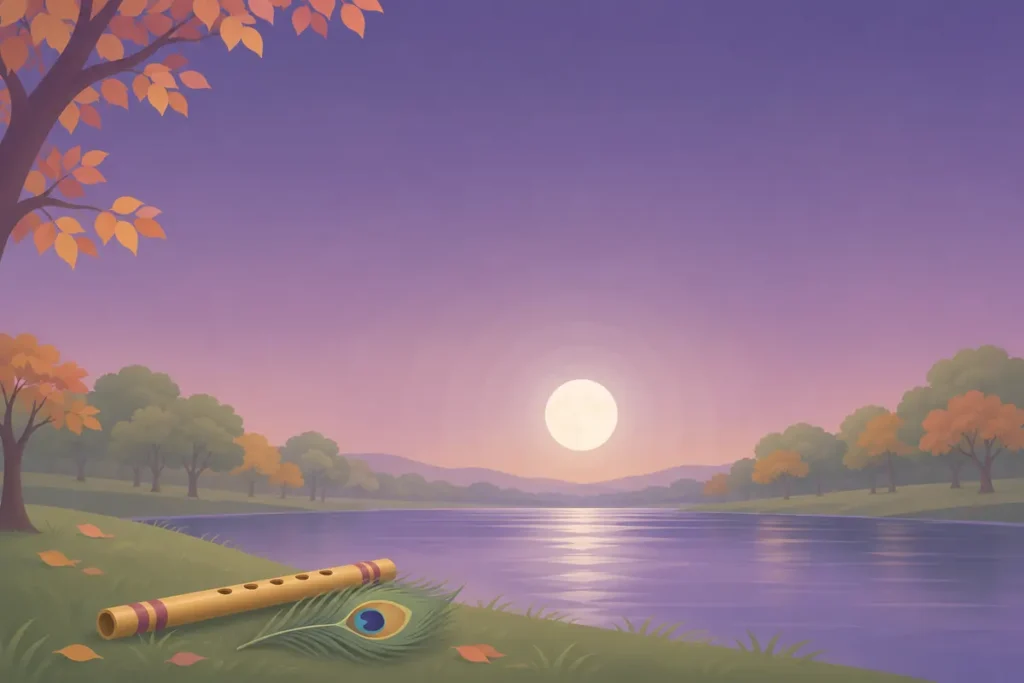
The Bhagavata Purana describes Krishna playing his flute on a full-moon night in autumn. The gopis left their homes to join him by the Yamuna, and he multiplied himself so that each could dance beside him in a great circle.
What people do
- Raas Leela performances in temples through the night
- Manipuri Raas dance in Imphal temples, with distinctive costumes
- The Raas Mahotsav of Majuli, Assam, with dramas in Sattras
- Kirtan and decorated images of Radha and Krishna
Across India and beyond
Maha Raas at the Shree Govindajee temple
Raas on Majuli island and in Nalbari
Raas Leela performances around Vrindavan
Raas festival with large images
Joining in for the first time
- Performances are usually open to the public; dress modestly and sit quietly
What the Raas means
The Bhagavata Purana describes how, on a moonlit autumn night, the gopis of Vrindavan heard Krishna’s flute and came to dance with him, and he appeared beside each one of them in the circle. For devotees, the Raas is a picture of the soul’s longing for God and of divine love that reaches each person individually. See Krishna.
Manipur and Majuli
Manipuri Raas, one of the classical dance forms of India, was shaped in the eighteenth century under King Bhagyachandra. Dancers wear stiff, barrel-shaped embroidered skirts and move with gentle, flowing steps in Imphal’s temples through the night. On Majuli island in Assam, the Vaishnava sattras stage the Raas as a festival of drama, music and elaborate masks.
When it is celebrated
In Vrindavan and Mathura, the Raas is celebrated on Sharad Purnima, while Manipur, Assam and Bengal hold their Raas Purnima on the Kartik full moon, the same night as Kartik Purnima.
Questions people ask
Is Raas the same as Garba?
No. Raas is Krishna’s circle dance; Garba and dandiya raas in Gujarat are dances for Navratri, though the names overlap.
Read next
Sources
Customs differ between families, communities and regions. This page describes common practice; your family or temple may do things differently.