The lotus
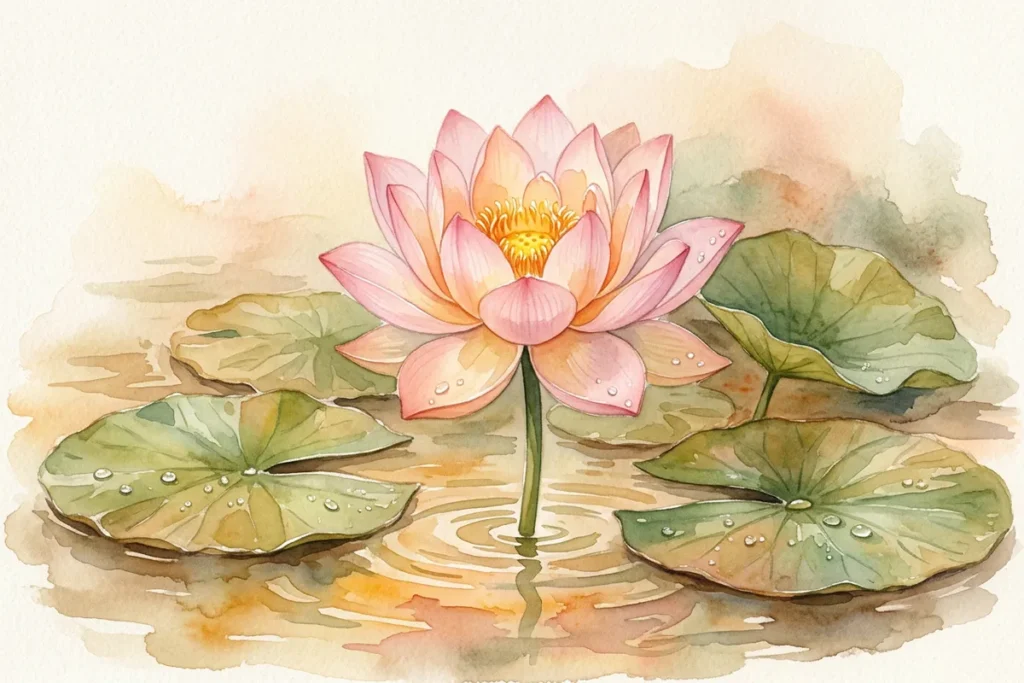
The lotus (padma) grows from muddy water yet blooms clean and beautiful. In Hinduism it stands for purity, beauty and the soul rising above the world.1
With the gods
Lakshmi and Saraswati sit on lotuses, and Vishnu holds one. Brahma is said to be born from a lotus growing from Vishnu’s navel.1
A lesson for life
The Gita compares a person who acts without attachment to a lotus leaf that water cannot wet.2
More gods and the lotus
Many deities are described with lotus imagery: “lotus-eyed” and “lotus-footed” are common words of praise in Hindu hymns. Lakshmi is sometimes called Padma or Kamala, both meaning lotus, and Saraswati is shown on a white lotus. Brahma, the creator, sits on the lotus from Vishnu’s navel.13
In temples and art
Lotus shapes are carved on temple ceilings, pillars and the bases of murtis, and lotus patterns appear in rangoli and kolam drawings at doorways. The lotus is also important in Buddhist and Jain art.14
In yoga
Padmasana, the lotus pose, is a classic seated posture for meditation, with each foot resting on the opposite thigh. It needs flexible hips and knees, so many people sit cross-legged or on a chair instead. In yoga traditions, the energy centres called chakras are often pictured as lotuses with different numbers of petals.15
A national symbol
The lotus is the national flower of India. Its image of beauty rising from muddy water makes it a favourite reminder that a person can live in the world without being stained by it.1
Sources
- Wikipedia: Sacred lotus in religious art
- Wikipedia: Bhagavad Gita
- Wikipedia: Lakshmi
- Wikipedia: Hindu temple
- Wikipedia: Rāja yoga
Hindu traditions are many and varied; families and teachers may explain these ideas differently. Last reviewed 19 November 2026.