Shiva
Shiva is one of the principal deities of Hinduism and the supreme being for Shaivas. He is the great yogi in meditation, the dancer who keeps the universe moving, and the destroyer of ignorance and evil.1
His symbols
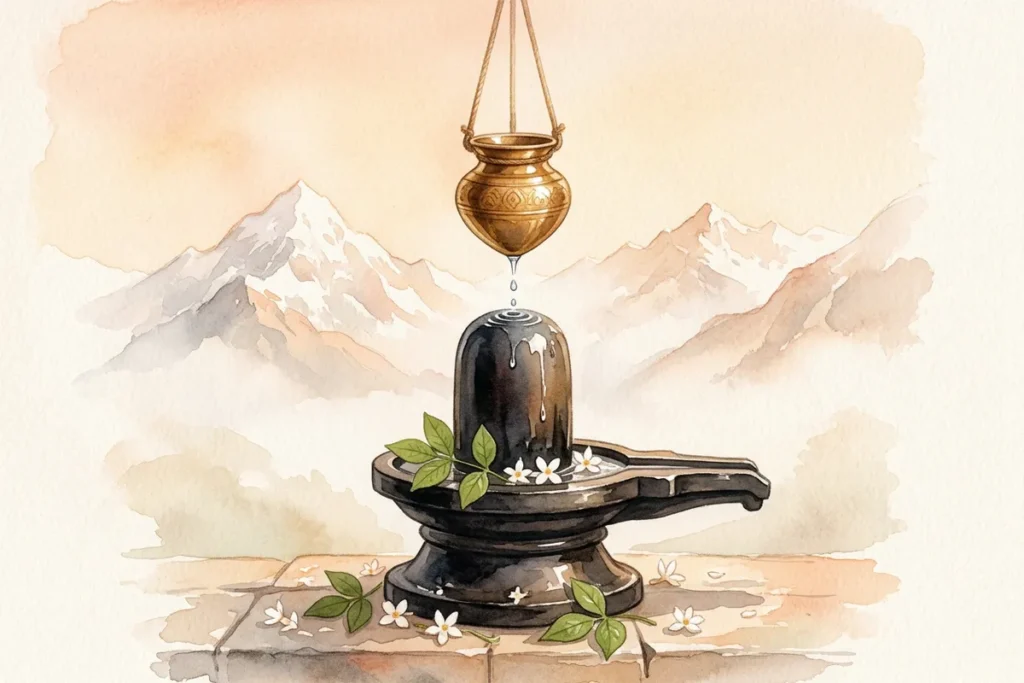
Shiva is shown with matted hair holding the river Ganga and a crescent moon, a third eye, a snake around his neck, a trident (trishula) and a small drum (damaru). His vehicle is the bull Nandi. He is also widely worshipped as the lingam, a simple, rounded form.1
Nataraja, lord of dance
As Nataraja, Shiva dances within a ring of fire. The dance stands for the cycle of creation, preservation and dissolution.1
His family
Shiva’s wife is Parvati, a form of the Goddess, and their sons are Ganesha and Kartikeya (also called Murugan or Skanda).1
Festivals and prayers
His great night is Maha Shivaratri. Try the five-syllable mantra Om Namah Shivaya or the aarti Om Jai Shiv Omkara.1
From Rudra to Shiva
In the oldest Hindu texts, the Vedas, a fierce storm god called Rudra is praised and asked for healing and protection. The word shiva, meaning “kind” or “auspicious”, was first used as a gentle name for Rudra. Over time, texts such as the Shvetashvatara Upanishad came to describe Rudra-Shiva as the supreme reality, and he became one of the great gods of Hinduism.1
His many names
- Mahadeva, “the great god”.
- Shankara, “the one who brings peace and good”.
- Pashupati, “lord of all creatures”.
- Nilakantha, “the blue-throated one” (see the story below).
- Bholenath, “the innocent lord”, a loving name used across North India for a god who is easily pleased.
The blue throat
A well-known story from the Puranas tells how gods and demons churned the cosmic ocean to find the nectar of immortality. A deadly poison rose up first and threatened the whole world. Shiva drank it to protect everyone; Parvati held his throat so that the poison stayed there, and his throat turned blue. The story shows Shiva as the one who takes on suffering for the sake of others.1
Shiva and the river Ganga
When the sacred river Ganga came down from heaven, her force could have shattered the earth. Shiva caught her in his matted hair and let her flow gently out. This is why he is shown with the river streaming from his hair.1
Where Shiva is worshipped
- Mount Kailash in the Himalayas is described as his home.
- The twelve Jyotirlinga temples, such as Somnath in Gujarat, Kashi Vishwanath in Varanasi and Kedarnath in the Himalayas, are major places of pilgrimage.
- Mondays and the monsoon month of Shravan are especially linked with Shiva; many devotees offer water, milk and bael leaves on the lingam.
The Shaiva tradition
For Shaivas, Shiva is the supreme being, beyond and within everything. Shaivism has many schools, including Shaiva Siddhanta in South India and Kashmir Shaivism in the north. In Tamil Nadu, the devotional songs of the sixty-three Nayanar poet-saints are still sung in temples today. Read more in many forms, one divine.12
Sources
Hindu traditions are many and varied; families and teachers may explain these ideas differently. Last reviewed 19 November 2026.