Hindu, Tamils everywhere
Puthandu
Also called Tamil New Year, Varusha Pirappu, Chithirai Thirunal
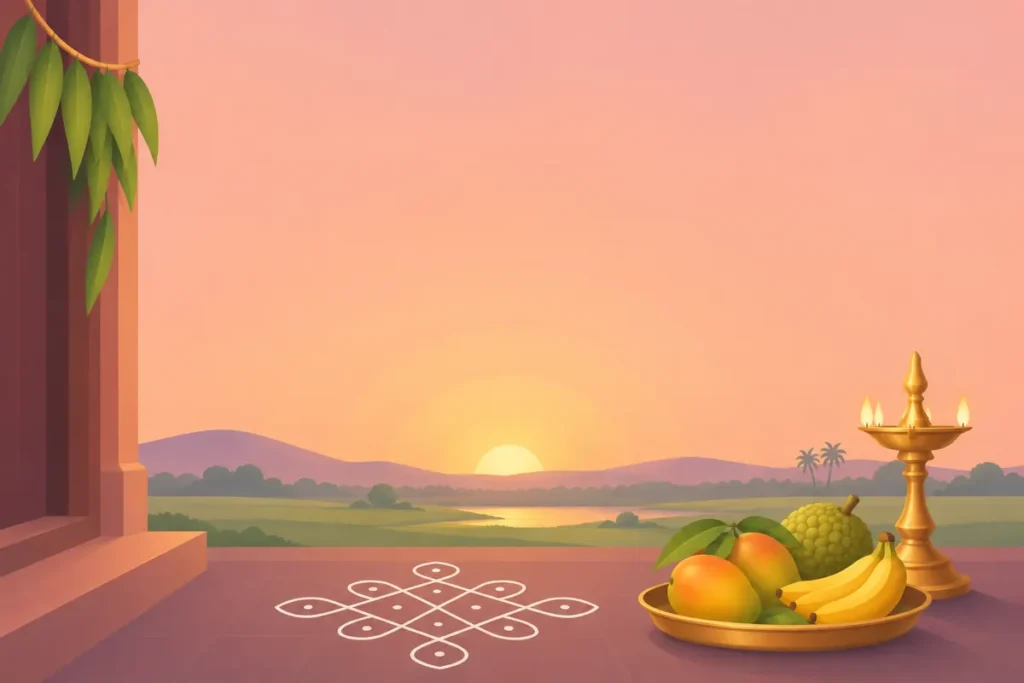
Puthandu is the Tamil New Year. Families draw kolam at the entrance, place a tray of fruits, flowers, gold and a mirror to see first in the morning, visit temples and eat a meal that includes mango pachadi, sweet, sour and bitter, for a year of every taste.
Why it is celebrated
It marks the sun’s entry into Mesha (Aries) and the start of the Tamil solar year.
It is a day of new beginnings: new clothes, visits to elders and prayers for the year.
What people do
- A tray of auspicious items (kanni) seen first in the morning, as in Vishu
- Kolam at the doorway
- Temple visits; reading of the panchangam
- Car festivals at temples such as Madurai and Tiruchirappalli in Chithirai
Joining in for the first time
- “Puthandu vazhthukal” is the Tamil new year greeting
The first sight
As on Vishu, many Tamil families arrange a tray the night before with fruits such as mango, banana and jackfruit, flowers, betel leaves, gold or coins, rice and a mirror. In the morning the family looks at the tray first, hoping for a year of plenty. Homes are cleaned and a large kolam is drawn at the entrance.
Chithirai festivals
The month of Chithirai brings large temple festivals. The Chithirai Thiruvizha in Madurai celebrates the divine wedding of Meenakshi and Sundareswarar, followed by the procession of Kallazhagar into the Vaigai river around Chithra Pournami. Temples also read the new panchangam for the year.
Around the world
Tamil communities in Sri Lanka, Malaysia, Singapore and Australia mark the New Year with temple visits and community events. The same solar new year is celebrated as Vishu, Pohela Boishakh, Bohag Bihu and Vaisakhi.
Questions people ask
When does the Tamil year start?
On the first day of Chithirai, in mid-April.
Read next
Sources
Customs differ between families, communities and regions. This page describes common practice; your family or temple may do things differently.