Hindu (Vaishnava)
Tulsi Vivah
Also called Tulasi Vivaha, Tulasi Kalyanam
Tulsi Vivah is a ceremonial wedding of the holy basil plant (tulsi) to Vishnu, usually in the form of a shaligram stone or of Krishna. Families decorate the tulsi like a bride, hold a full wedding ritual and share sweets, and the season of human weddings begins.
Why it is celebrated
Tulsi is loved as a sacred plant and is treated as a goddess, Vrinda. The ceremony honours her devotion and marks the start of the auspicious wedding season.
Some families who have no daughter perform the ceremony as kanyadaan, giving a bride in marriage.
The stories behind it
Vrinda and Vishnu
The Puranas tell of Vrinda, a devoted wife whose faithfulness protected her husband, the powerful Jalandhara. To end his tyranny, Vishnu broke her devotion by a trick, and Jalandhara was defeated. In her grief she cursed Vishnu to become a stone, the shaligram. She became the tulsi plant, and Vishnu promised to marry her every year. Tellings differ in their details.
What people do
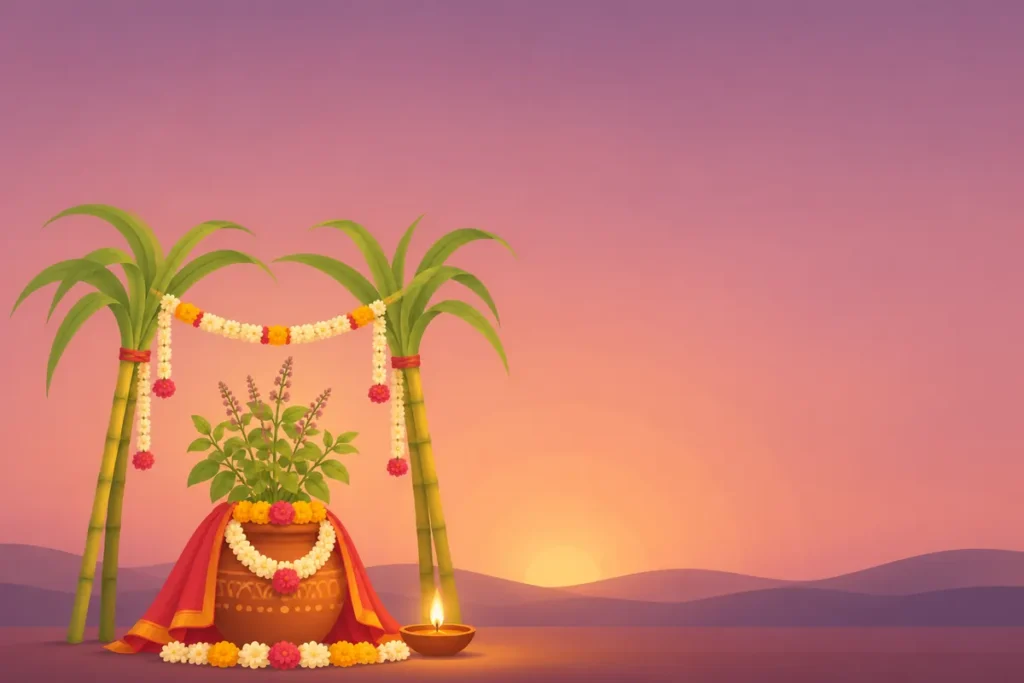
- Decorating the tulsi pot as a bride with a red sari or cloth, bangles and a mangalsutra
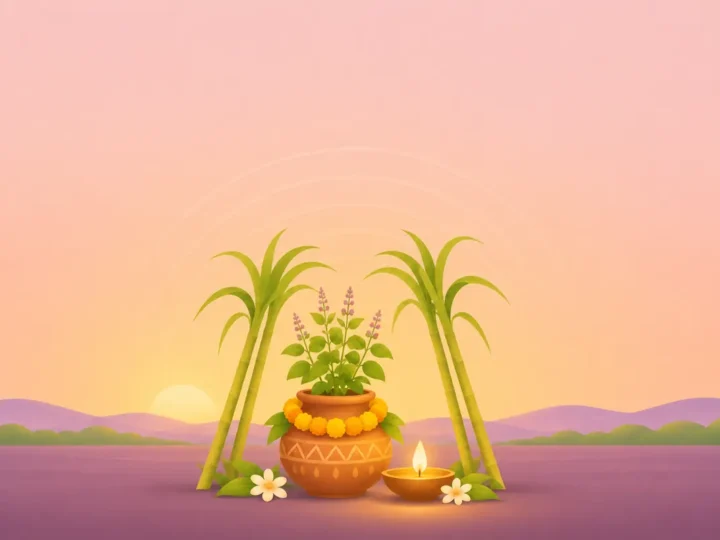
- A small mandap of sugarcane over the plant
- Wedding rituals with a priest or family elder, often in the evening
- Distributing sweets, puffed rice and fruit after the ceremony
- Large community Tulsi Vivah events at temples in Gujarat and Maharashtra
Joining in for the first time
- Guests are welcome at community events; join in the songs and the shower of rice or flower petals
How the ceremony is done
- The tulsi pot is cleaned, painted and decorated, often with a rangoli around it.
- A small canopy of sugarcane stalks is built over the plant.
- The tulsi is dressed as a bride with a red cloth or chunri, bangles and a mangalsutra.
- A shaligram stone or an image of Krishna is placed beside her as the groom.
- Wedding rites are performed: the joining of a cloth or thread between the two, the showering of rice, and the singing of wedding songs.
- Aarti, sweets and prasad close the ceremony.
The end of Vishnu’s rest
Tulsi Vivah follows Dev Uthani (Prabodhini) Ekadashi, when Vishnu is believed to wake after four months of rest that began on Devshayani Ekadashi. Many families avoid weddings during those four months, so Tulsi Vivah opens the wedding season.
Why tulsi is sacred
Tulsi, or holy basil, is grown in a raised pot (tulsi vrindavan) in the courtyards of many Hindu homes. Families water it and light a lamp before it each evening. Its leaves are offered in the worship of Vishnu and Krishna, and it is valued in traditional herbal remedies.
Growing a tulsi plant
Tulsi likes warmth and sun. In cooler parts of Australia, many families keep it in a pot that can come indoors or onto a sunny windowsill in winter. Water when the top of the soil is dry, and pinch off flower spikes to keep it leafy.
Questions people ask
Is it a real wedding?
It is a ritual wedding of the plant to Vishnu, performed with devotion like a family wedding.
Read next
Sources
Customs differ between families, communities and regions. This page describes common practice; your family or temple may do things differently.