Hindu, Odisha
Pana Sankranti
Also called Maha Vishuba Sankranti, Odia New Year
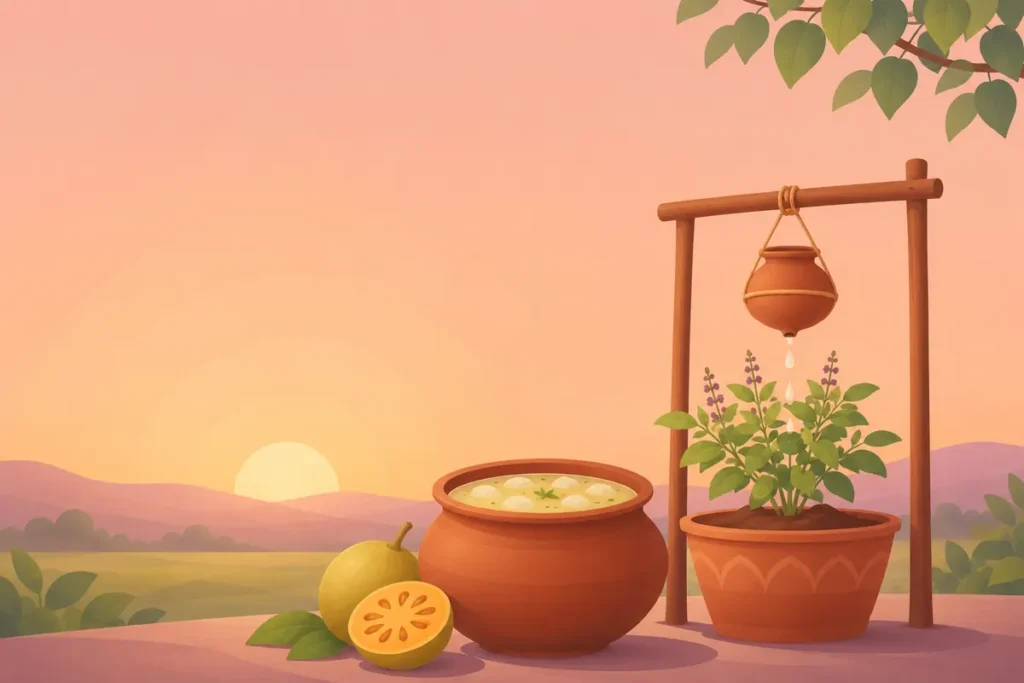
Pana Sankranti is the Odia New Year. It is named after pana, a cooling drink of bel fruit, curd, jaggery and spices that families share. A small pot of water with a hole is hung above the tulsi plant so that it drips through the hot season.
Why it is celebrated
It begins the Odia solar year and the hot season, and honours Hanuman, whose birthday some Odia families also celebrate on this day.
Sharing pana is a way of offering coolness and kindness as summer begins.
What people do
- Hanging a basundhara (dripping pot) above the tulsi plant
- Preparing and sharing pana
- Visiting temples; fire-walking (jhamu yatra) and danda nacha in some places
- Reading the new almanac (panji)
Joining in for the first time
- If offered pana, it is meant to be shared; accept with thanks
Making pana
Pana is a cooling drink of ripe bel (wood apple) pulp, curd or milk, jaggery or sugar, banana, grated coconut and spices such as black pepper and cardamom, mixed with water. It is first offered to the deities and then shared with family, neighbours and passers-by. Try panakam, a similar summer drink from South India.
The dripping pot
Families hang a small earthen pot with a hole in the bottom above the tulsi plant, with a wick of kusha grass, so that water drips onto the plant through the hot months. The pot is called basundhara and is a prayer that the earth and plants stay cool and fertile.
New year customs
Many Odia families read the new panjika (almanac), visit temples and wear new clothes. In some villages, devotees walk on fire in jhamu yatra, and danda nacha dancers perform. The same solar new year is Vishu, Puthandu and Pohela Boishakh. See also Utkal Divas.
Questions people ask
Is it the same day as Vaisakhi?
Yes, it is one of the solar new years that fall in mid-April.
Read next
Sources
Customs differ between families, communities and regions. This page describes common practice; your family or temple may do things differently.