Karma: action and its results
Karma simply means action. In Hindu thought, every action, word and even intention leaves an effect that returns to the one who acted, sooner or later.1
Cause and effect
Kind actions tend to bring good results and harmful actions bring suffering, either in this life or in a future one. Karma is usually understood as a natural law, like gravity, rather than a punishment handed out by God.1
Karma is not fate
A common misunderstanding is that karma means everything is fixed. Hindu teachers stress the opposite: your past actions shape your circumstances, but your present choices are free and shape your future.1
Acting without attachment
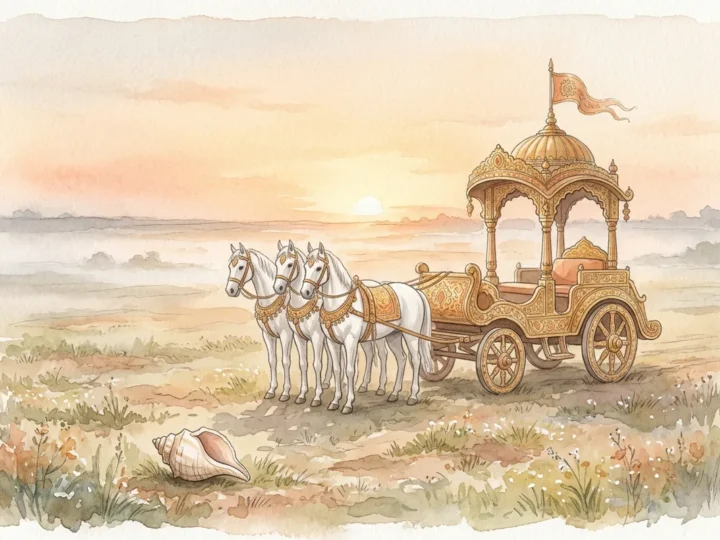
The Bhagavad Gita teaches karma yoga: do your duty well, but let go of being attached to the results. Work done in this spirit, often offered to God, does not bind the soul.23
Karma and rebirth
Karma is closely linked to rebirth: the results of actions carry forward from one life to the next until the soul is free.14
Karma: action and its results
The Sanskrit word karma simply means “action”. As a principle, it describes the idea that every action, word and even intention has consequences. Good actions tend to bring good results and harmful actions tend to bring suffering, whether later in this life or in a future one.
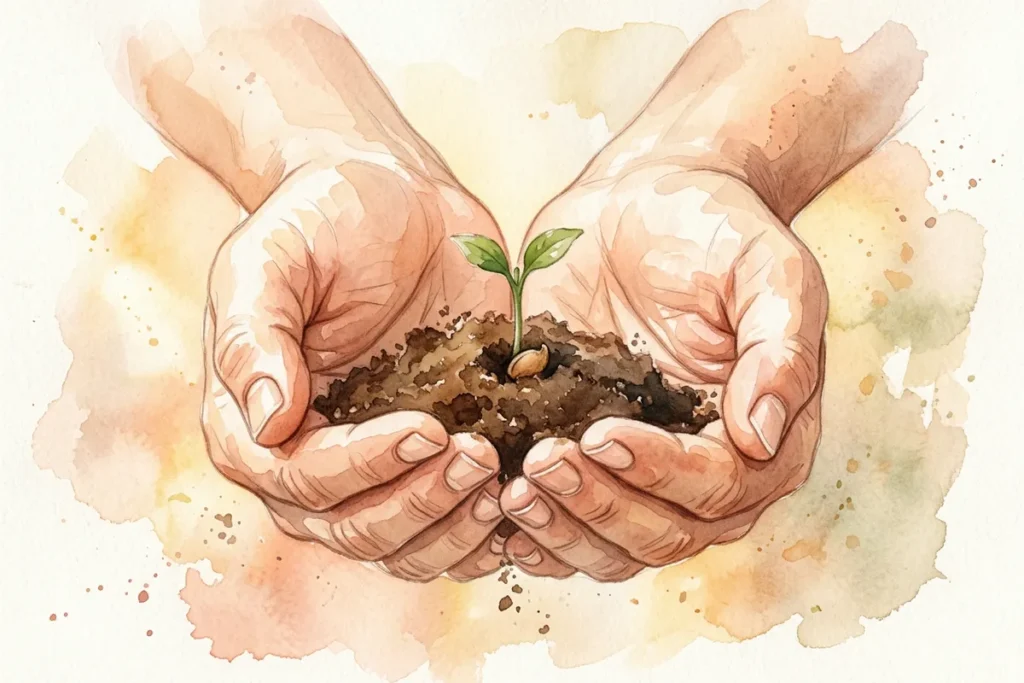
Karma is often compared to sowing seeds: what we plant, we eventually harvest. It is not usually understood as punishment handed out by a judge, but as a natural moral law, like cause and effect.
Dharma: living rightly
These ideas are closely tied to dharma, right conduct appropriate to one’s situation and stage of life. Living by dharma creates good karma and supports progress towards moksha.
Common questions
Is karma the same as fate?
Not exactly. Past actions shape our circumstances, but most Hindu teachings stress that we are free to choose how we act now, and so shape our future.
Do all Hindus believe in rebirth?
Belief in samsara is very widespread in Hindu traditions, though individuals understand and emphasise it in different ways.
Are these ideas only Hindu?
Related ideas of karma, rebirth and liberation also appear, with differences, in Buddhism, Jainism and Sikhism.
Sources
Hindu traditions are many and varied; families and teachers may explain these ideas differently. Last reviewed 19 November 2026.