Assamese, celebrated across communities in Assam
Bohag Bihu
Also called Rongali Bihu, Assamese New Year
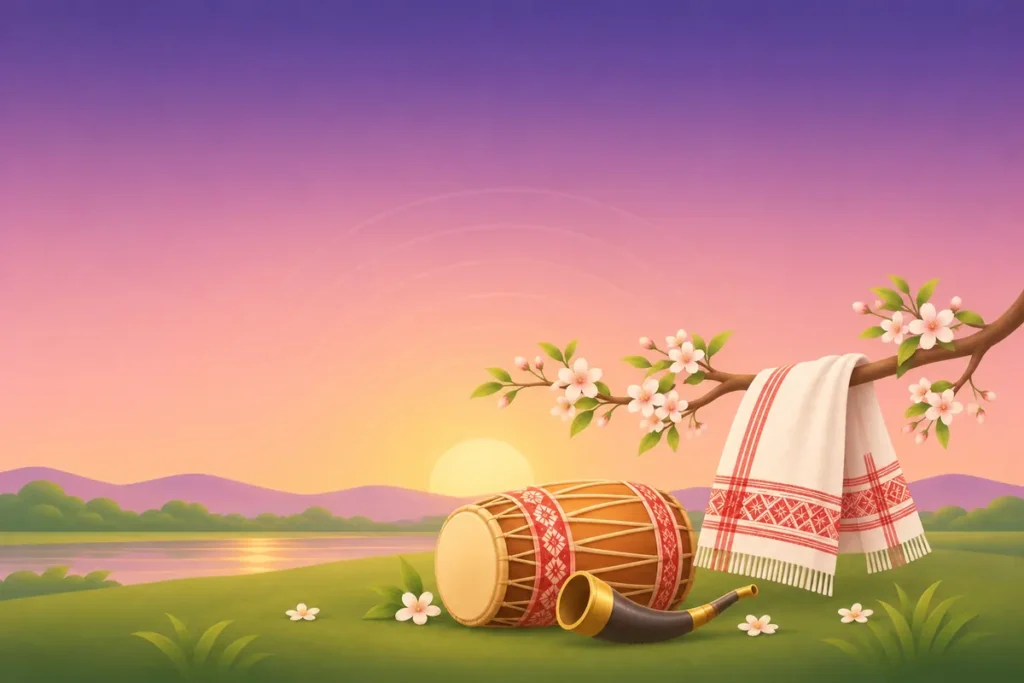
Bohag Bihu, or Rongali Bihu, “the Bihu of joy”, is the Assamese New Year and spring festival. Cattle are bathed on Goru Bihu, people visit elders and give gamosa (woven cotton towels), and groups perform Bihu dance and songs to the dhol and pepa (buffalo-horn pipe).
Why it is celebrated
It welcomes spring and the sowing season, and the new year.
It is above all a festival of community, music and the joy of the season.
What people do
- Goru Bihu: washing cattle with turmeric and black gram paste
- Manuh Bihu: new clothes, blessings from elders and gifts of gamosa
- Husori groups singing from house to house
- Bihu dances and Bihu songs on stages and in the fields
- Feasts with pitha and laru
Joining in for the first time
- Bihu functions (Bihutoli) are public and welcoming; join the audience
- A gamosa is a respected gift
The days of Bihu
- Goru Bihu: on the last day of the old year, cattle are bathed in rivers and ponds, rubbed with turmeric and black gram paste, and fed fresh vegetables.
- Manuh Bihu: on New Year’s Day, people bathe, wear new clothes, seek blessings from elders and give gamosas.
- Gosain Bihu: the family deities are worshipped.
Celebrations, dances and fairs continue for days afterwards.
Dance and music
Bihu dance is fast and joyful, with young men and women dancing in groups to the dhol drum, the pepa (buffalo-horn pipe), the gogona (a bamboo mouth instrument) and cymbals. Bihu songs, called Bihu geet, celebrate spring, love and the land. Husori groups go from house to house singing and blessing each family.
The gamosa
The gamosa is a white woven cotton cloth with red borders and patterns, handwoven by many Assamese women. It is given as a sign of respect, used to welcome guests and worn by dancers. Assamese associations abroad, including in Australia, hold Bihu celebrations with dances and pitha. See also Magh Bihu, Kati Bihu and other New Years in mid-April.
Questions people ask
What is a gamosa?
A white handwoven cotton cloth with red borders, a symbol of Assamese culture.
Read next
Sources
Customs differ between families, communities and regions. This page describes common practice; your family or temple may do things differently.