Assamese, Hindu and celebrated across communities in Assam
Magh Bihu
Also called Bhogali Bihu, Maghor Bihu
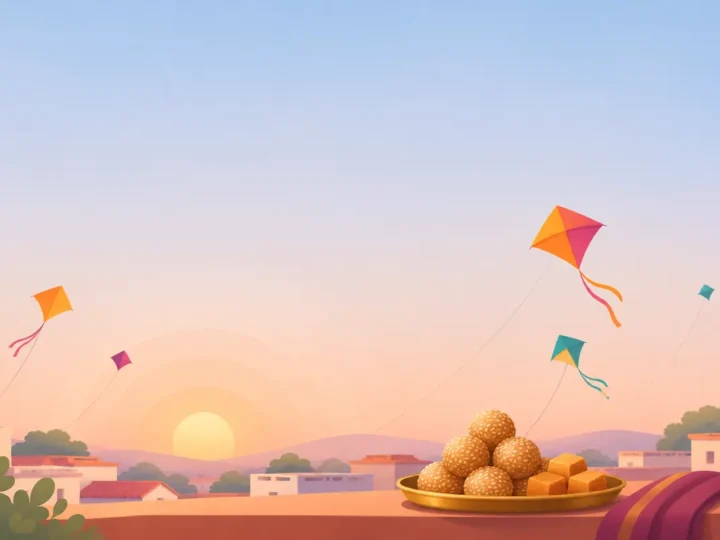
Magh Bihu, also called Bhogali Bihu, “the Bihu of feasting”, is Assam’s winter harvest festival. On Uruka night, communities build huts of bamboo and hay called bhelaghar, feast together and stay up; next morning they burn a tall bonfire, the meji, and share pitha and laru.
Why it is celebrated
It marks the end of the harvest and the year’s plenty, when the granaries are full.
Bihu festivals follow the farming year: Bohag Bihu for spring and new year, Kati Bihu for prayer in the lean autumn, and Magh Bihu for the harvest feast.
What people do
- Building bhelaghar huts and a meji bonfire in the fields
- A community feast on Uruka night
- Lighting the meji at dawn and offering pitha and betel nut to Agni
- Traditional games such as buffalo and bird fights in some places, now restricted
- Visiting friends with pitha and laru
Joining in for the first time
- Uruka feasts are very social; bring something to share
- “Bhogali Bihur shubhechha” is a common greeting
Uruka night
On the eve of Magh Bihu, young people build bhelaghar, temporary huts of bamboo, hay and leaves, in the harvested fields. Families and friends cook and eat a large community feast there, often with fish and meat in many communities, and stay up through the night with songs and games around a fire.
The meji
At dawn, people bathe and light the meji, a tall tower of firewood, bamboo and hay built in the fields. Pitha, laru, betel nut and rice are offered to Agni, the fire god, with prayers for a good harvest. The bhelaghar is burned too, and the ashes are sometimes scattered in the fields.
Three Bihus
The Assamese year has three Bihus tied to the farming cycle: Bohag Bihu in spring, the new year and sowing season; Kati Bihu in autumn, when granaries are nearly empty and lamps are lit in the paddy fields; and Magh Bihu in winter, when the harvest is in and there is food to share. Across India the same day is Makar Sankranti.
Questions people ask
How many Bihus are there?
Three: Bohag (Rongali) in April, Kati (Kongali) in October, and Magh (Bhogali) in January.
Read next
Sources
Customs differ between families, communities and regions. This page describes common practice; your family or temple may do things differently.