Nepali, Hindu and Buddhist
Nepali New Year (Navavarsha)
Also called Nava Varsha, Bisket Jatra (Bhaktapur)
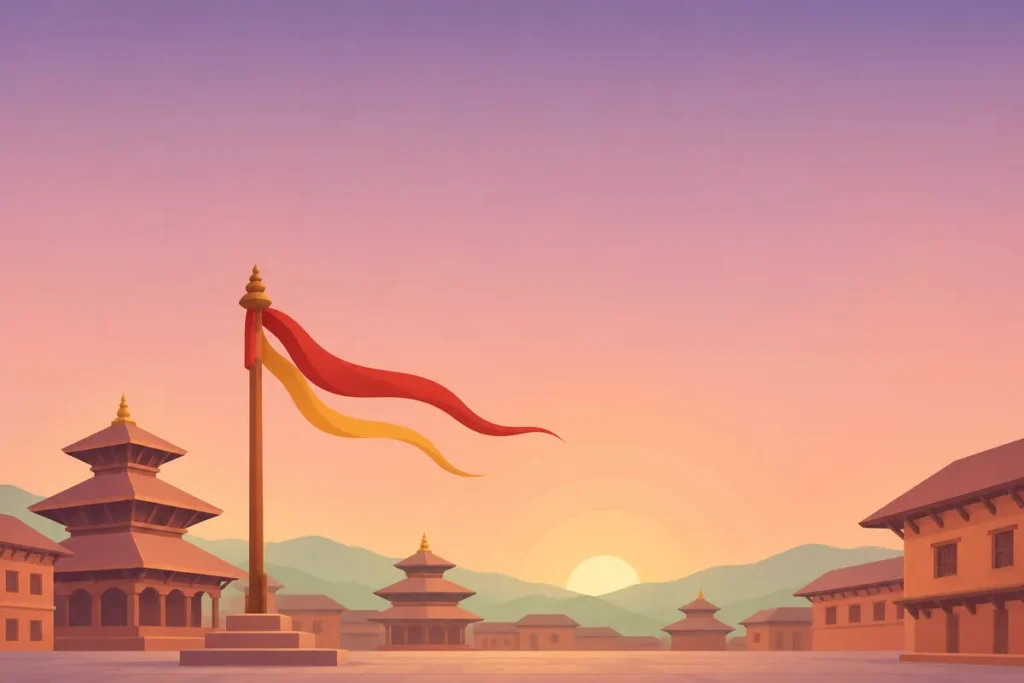
Navavarsha is the start of Nepal’s official calendar year, Bikram Sambat. Families gather, visit temples and celebrate with friends. In Bhaktapur the new year is marked by Bisket Jatra, when huge chariots are pulled through the town and a tall pole (lingo) is raised and pulled down.
Why it is celebrated
Bikram Sambat is Nepal’s national calendar, and its first day is a public holiday.
In the Kathmandu valley, old local festivals such as Bisket Jatra have gathered around the new year.
The stories behind it
The snakes of Bisket
A Bhaktapur legend tells of a princess whose husbands kept dying on their wedding night until a brave prince stayed awake and saw two snakes emerge from her nostrils, which he killed. The raising of the lingo with long banners is said to remember those serpents.
What people do
- Family gatherings and temple visits
- Bisket Jatra in Bhaktapur: chariots of Bhairav and Bhadrakali and the lingo pole
- Picnics, concerts and new year events in Kathmandu
Joining in for the first time
- “Naya barsha ko shubhakamana” is the greeting
The Bikram Sambat calendar
Nepal’s official calendar, Bikram Sambat, is about 56 to 57 years ahead of the Gregorian calendar. It follows the sun for its months, so the new year falls in mid-April, at the same time as several South and Southeast Asian new years. Government offices, schools and newspapers use it every day.
Bisket Jatra
In Bhaktapur, the new year is marked by Bisket Jatra, a festival lasting about nine days. Huge wooden chariots carrying the god Bhairav and the goddess Bhadrakali are pulled through the narrow streets in a tug-of-war between the upper and lower parts of the town. A tall pole called the lingo, hung with long banners said to represent two serpents, is raised and then pulled down to mark the turn of the year.
Customs
Families gather for a festive meal, visit temples and spend time with friends, and cities hold concerts and events. Nepali communities in Australia and elsewhere hold new year celebrations. See also Mata Tirtha Aunsi, two weeks later, and other new years in mid-April.
Questions people ask
Is Nepal’s calendar different?
Yes; Bikram Sambat is about 56–57 years ahead of the Gregorian calendar.
Read next
Sources
Customs differ between families, communities and regions. This page describes common practice; your family or temple may do things differently.