Hindu (Vaishnava)
Dev Uthani Ekadashi
Also called Prabodhini Ekadashi, Devutthana Ekadashi, Kartiki Ekadashi
Dev Uthani Ekadashi marks the day Vishnu wakes from his four-month sleep (Chaturmas). The quiet season ends: weddings and other auspicious events may begin again, and many homes celebrate the marriage of the tulsi plant to Vishnu.
Why it is celebrated
Many Hindus believe Vishnu rests on the cosmic serpent Shesha from Devshayani Ekadashi in Ashadh until this day. His waking is celebrated as a return of blessings to the world.
For many families it opens the wedding season.
The stories behind it
Vishnu’s yoga-nidra
In the Puranas Vishnu sleeps in yoga-nidra, a meditative sleep, on the ocean of milk during the monsoon months. Devotees wake him with songs, bells and conch shells on this day.
What people do
- Fasting or eating only fruit and milk; breaking the fast the next morning
- Waking the deity with songs and drawings of Vishnu’s feet near the shrine
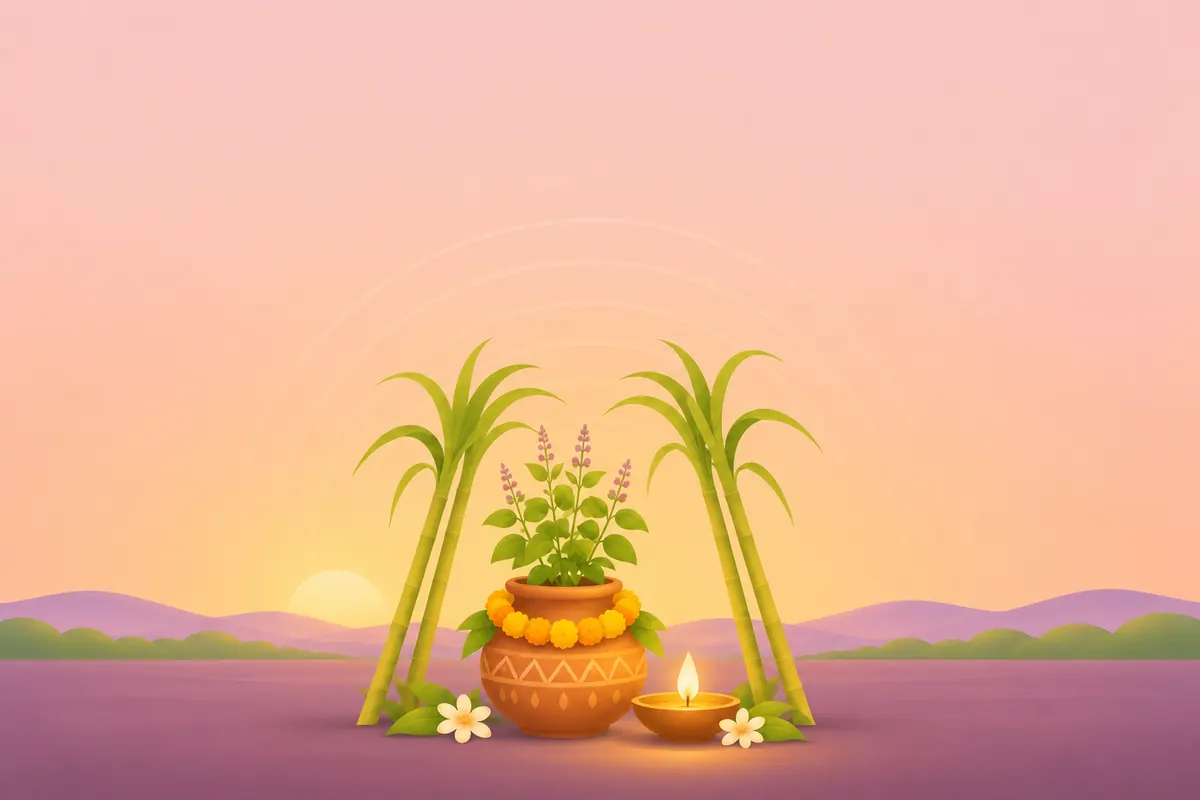
- Tulsi Vivah, the wedding of the tulsi plant, from this day onwards
- In Maharashtra, the Kartiki Ekadashi pilgrimage to Pandharpur
- Sugarcane is placed around the tulsi or the shrine in many homes
Joining in for the first time
- If you are invited to a Tulsi Vivah, simple festive clothes and a small offering are fine
Waking the god
In many North Indian homes, women draw Vishnu’s footprints or a simple image with rice paste or chalk near the shrine. In the evening, the family gathers with sugarcane, seasonal fruit such as water chestnuts and sweet potato, and a lamp. They ring bells or tap a winnowing basket and sing traditional songs asking the god to rise, marking the end of his rest.
Chaturmas
The four months from Devshayani Ekadashi to this day are called Chaturmas. Many people take vows during this time, such as giving up certain foods, reading scripture daily or eating once a day, and most families avoid weddings. Dev Uthani Ekadashi brings Chaturmas to an end.
Kartiki Ekadashi at Pandharpur
In Maharashtra, the day is Kartiki Ekadashi, the second great pilgrimage of the year to the Vitthal temple at Pandharpur after Ashadhi Ekadashi. Tulsi Vivah begins from this day, and the wedding season opens. Many families keep a fruit-and-milk fast; try sabudana khichdi for breaking it gently.
Questions people ask
What is Chaturmas?
The four months of the monsoon, from Devshayani Ekadashi to this day, traditionally a time of vows and restraint.
Read next
Sources
Customs differ between families, communities and regions. This page describes common practice; your family or temple may do things differently.