Hindu
Chhath Puja
Also called Chhath, Surya Shashthi, Dala Chhath
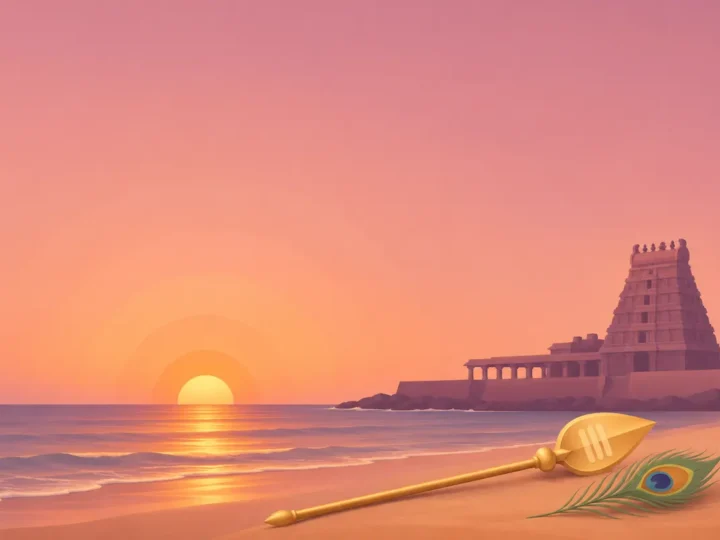
Chhath is a four-day festival of thanks to Surya, the sun, and to Chhathi Maiya. Devotees, often women, fast strictly, stand in rivers and ponds, and offer arghya (water and offerings) to the setting sun and then to the rising sun. The riverbanks fill with families, songs and baskets of fruit and thekua.
Why it is celebrated
Chhath thanks the sun for life, light and harvest and prays for the health and well-being of the family, especially children.
It is unusual among Hindu festivals because it honours the setting sun as well as the rising one, and because it needs no priest: the devotee makes the offering directly.
The stories behind it
Sita and Draupadi keep the vow
Popular tellings say that Sita kept the Chhath vow after returning to Ayodhya with Rama, and that Draupadi kept it during the Pandavas’ exile in the Mahabharata. Karna, the son of Surya, is also remembered as a great worshipper of the sun who stood in water to pray to him.
What people do
- Nahay Khay: a ritual bath and a simple, pure meal
- Kharna: a day-long fast broken in the evening with rice kheer made with jaggery and roti
- Sandhya Arghya: offerings to the setting sun while standing in water
- Usha Arghya: offerings to the rising sun the next dawn, after which the fast (often 36 hours without water) is broken
- Cleaning the ghats; singing traditional Chhath songs; carrying offerings in bamboo baskets (soop and daura)
Across India and beyond
The great festival of the region
Widely kept, especially in Janakpur
Migrant communities gather at rivers, lakes and even beaches
Joining in for the first time
- Visitors are welcome at the ghats; keep clear of the water where devotees stand
- Offering to help carry baskets or clean the ghats is appreciated
- Take prasad, especially thekua, with both hands
Purity and preparation
Chhath is known for its strict rules of cleanliness. Homes and kitchens are scrubbed, offerings are often cooked on a new or specially kept clay stove, and food for the festival is made without onion or garlic. The person keeping the vow, called the vratee, sleeps on the floor and eats simple, pure food in the days before. Families and neighbours often clean and decorate the ghats together.
The evening and dawn offerings
On the third evening, families walk to the river or pond carrying bamboo baskets of fruit, sugarcane and thekua. The vratee stands in the water and offers arghya to the setting sun while others pour milk or water over the offerings. The family often stays near the water or returns before dawn. At sunrise the offering is made again to the rising sun, after which the vratee breaks the long fast and prasad is shared.
Chhath songs
Traditional folk songs in Bhojpuri, Maithili and Magahi are sung throughout the festival, often by the women of the family. They praise Chhathi Maiya and the sun, and speak of the hardship and devotion of the vow. Many families learn them from mothers and grandmothers.
Away from India
Where there is no river close by, communities gather at lakes, beaches or even specially built pools, and some families keep the rites at home with a tub of water. Neighbours who are not keeping the vow can still help by carrying baskets, cleaning the ghat or simply joining the crowd at sunset. Kartik Purnima follows about a week later.
Questions people ask
Why worship the setting sun?
Chhath gives thanks for the whole cycle of the day; the evening offering honours the sun as it sets.
Do only women fast?
Most vratis (fasting devotees) are women, but men also keep the vow.
Read next
Sources
Customs differ between families, communities and regions. This page describes common practice; your family or temple may do things differently.