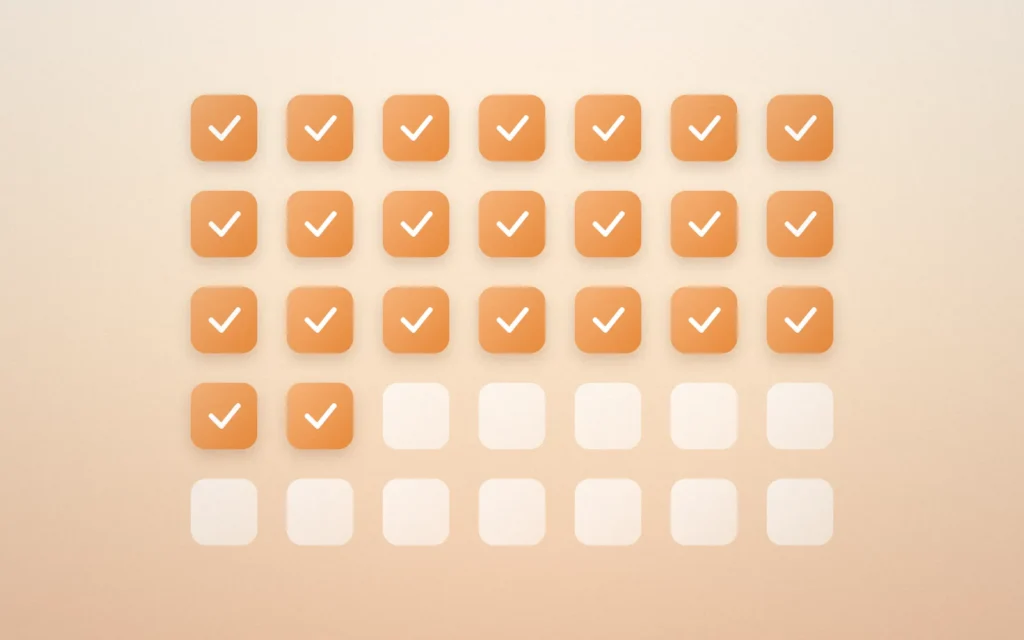
The hardest part of meditation is often remembering to do it. These tips help practice become a habit.
- Start tiny. Two minutes a day is a great start. You can always do more.
- Link it to an existing habit. “After I make my morning tea, I sit for two minutes.”
- Same time, same place. A regular spot becomes a cue.
- Make it easy. Leave a cushion out, or keep the timer on your home screen.
- Track gently. A record of your sessions shows progress. Missing a day is fine; just begin again.
- Notice the benefits. After each session, take a moment to notice how you feel.
Make it obvious
Habits form more easily when there is a clear cue. Choose one: after brushing your teeth, after your morning tea, or when you sit down at your desk. Put a cushion or chair in the same place every day, so the spot itself becomes a reminder. You can also add a calendar reminder.
Make it easy
- Start tiny: two minutes is enough. You can always do more.
- Remove friction: have your timer ready, phone on silent and seat in place.
- Have a backup: on busy days, three slow breaths still count.
Make it satisfying
- Tick off each day in the practice log or a printable 30-day calendar.
- Notice one small benefit after each sit, even if it is just “I sat”.
- Try a 7-day or 30-day challenge.
Getting back on track
Everyone misses days. The most important habit is not perfection but returning. If you miss a day, avoid missing two in a row. If you miss a week, go back to two minutes and build up again. Our practice log keeps your streak going if you miss a single day, because one gap should never undo your progress.
A four-week habit plan
- Week 1: two minutes, same time, same place.
- Week 2: three to five minutes. Keep the same cue.
- Week 3: try a guided practice or a body scan twice in the week.
- Week 4: choose your “minimum” (for example, five minutes) and your “ideal” (for example, fifteen).
Common questions
How long does it take to form a habit?
It varies a lot from person to person. Think in terms of weeks and months rather than days, and focus on showing up.
Morning or evening?
Whichever you can keep. Mornings are often easier to protect from interruptions.
Key points
- Link meditation to something you already do every day.
- Start tiny and keep a backup plan for busy days.
- Never miss twice: return quickly after a gap.
Try it now: make a 7-day plan
Then join a 7-day or 30-day challenge, or download the 30-day practice calendar.