Aartis and chalisas
An aarti is a song sung while a lamp is waved before the deity, usually at the end of puja. A chalisa is a hymn of forty verses. Here are the best-loved ones, each with words, meaning and audio.1
Aartis
- HanumanAarti Kije Hanuman Lala KiThe aarti to Hanuman sung after the Hanuman Chalisa, especially on Tuesdays and Saturdays.
- DurgaJai Ambe Gauri (Durga aarti)The best-known Hindi aarti to the goddess Durga (Ambe), sung every evening of Navratri.
- GaneshaJai Ganesh DevaThe best-known Hindi aarti to Ganesha, sung at the start of puja and throughout Ganesh Chaturthi.
- VishnuOm Jai Jagdish HareThe most widely sung aarti in Hindu homes and temples, addressed to Vishnu as Jagdish, “lord of the universe”.
- LakshmiOm Jai Lakshmi MataThe Lakshmi aarti sung at Diwali Lakshmi Puja and in many homes on Fridays.
- ShivaOm Jai Shiv OmkaraThe best-known Hindi aarti to Shiva, praising him as Omkara and as one with Brahma and Vishnu.
- GaneshaSukhakarta Dukhaharta (Marathi Ganesh aarti)The Ganesha aarti sung in almost every Maharashtrian home and Ganesh pandal, with the refrain “Jai Dev Jai Dev Jai Mangalmurti”.
Chalisas
- DurgaDurga ChalisaForty verses in praise of Durga, the Divine Mother who protects her devotees, recited especially during Navratri.
- GaneshaGanesh ChalisaForty verses in praise of Ganesha, the remover of obstacles and giver of wisdom, recited especially on Wednesdays and at Ganesh Chaturthi.
- HanumanHanuman ChalisaForty verses (“chalisa” means forty) in praise of Hanuman, the devoted servant of Rama. It is one of the most widely recited…
- LakshmiLakshmi ChalisaForty verses in praise of Lakshmi, the goddess of wellbeing and prosperity, recited especially on Fridays and at Diwali.
- ShivaShiv ChalisaForty verses in praise of Shiva, the compassionate protector, recited daily by many devotees and especially on Mondays and Maha Shivaratri.
How aarti is done
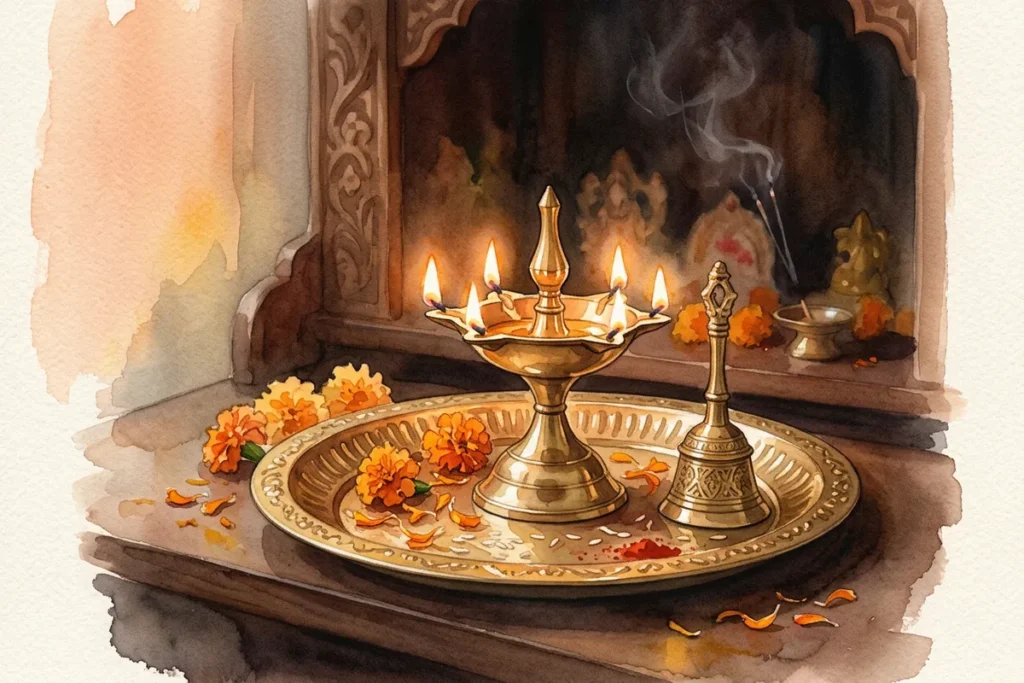
A lamp with ghee or camphor is waved in circles before the murti while everyone sings and a bell is rung. Afterwards, people pass their hands over the flame and touch their eyes and head, taking in the blessing.1
Wording varies
Aartis are living songs. Wording differs a little between families, regions and printed books, so you may know a slightly different version.1
What you need
- A plate (thali) with a lamp: a ghee diya or a piece of camphor.
- A small bell, and flowers or rice grains if you wish.
- The words of the aarti, from a book or this site.
When aarti is done
Many temples perform aarti several times a day, often at dawn and at dusk. At home, families commonly sing aarti at the end of a puja, on festival days and at the close of a celebration. River aartis, such as those on the ghats of Varanasi and Haridwar, draw large crowds every evening.12
Well-loved aartis
Om Jai Jagdish Hare, Sukhakarta Dukhaharta, Jai Ganesh Deva, Om Jai Shiv Omkara, Om Jai Lakshmi Mata, Jai Ambe Gauri and Aarti Kije Hanuman Lala Ki. Many families close with Karpura Gauram.1
Chalisas
A chalisa has forty verses (chaupais), usually with opening and closing couplets, in Awadhi or Hindi. The best known is the Hanuman Chalisa, attributed to Tulsidas. Others include the Shiv, Ganesh, Durga and Lakshmi chalisas. Devotees often recite one daily or on the deity’s weekday.3
Sources
Hindu traditions are many and varied; families and teachers may explain these ideas differently. Last reviewed 19 November 2026.