Hindu, Maharashtra
Gauri Avahan (Gauri Ganpati)
Also called Gauri Ganpati, Jyeshtha Gauri, Mahalakshmi Gauri
In Maharashtra, Gauri, often understood as Parvati or Lakshmi, is welcomed into the home during Ganeshotsav, as Ganesha’s mother visiting him. Images or masks of Gauri are installed, dressed in saris and jewellery, worshipped with a feast on the second day, and bid farewell on the third.
Why it is celebrated
It honours the goddess as a beloved daughter returning to her parents’ home, bringing prosperity.
What people do
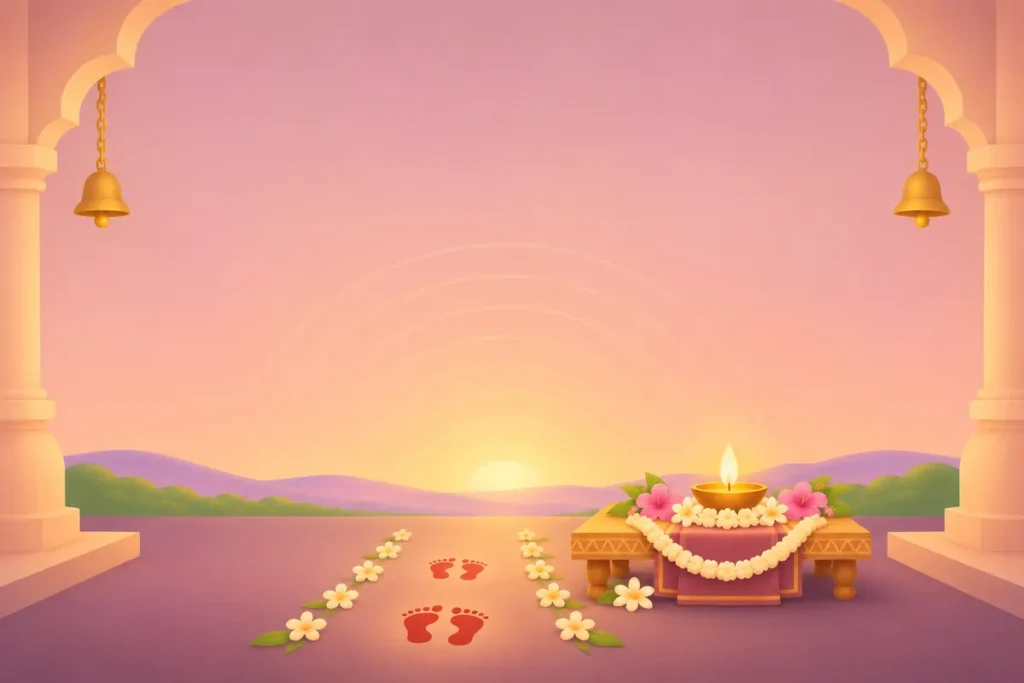
- Avahan: welcoming Gauri with footprints drawn from the door
- Pujan: a festive meal and haldi-kumkum gathering for women
- Visarjan: farewell on the third day
- Each family follows its own tradition of images
Joining in for the first time
- Women often invite friends for haldi-kumkum; accept the turmeric and kumkum mark
Three days
- Avahan: Gauri is welcomed into the home. Women draw small footprints in rangoli or kumkum from the doorway to the place of worship, and the images are carried in while the women ask the goddess where she has stepped and what she has brought.
- Pujan: on the second day the main puja is held, with a large festive meal, often including puran poli and many vegetables.
- Visarjan: on the third day the goddess is given a farewell with a thread tied to the household and her images are immersed or put away.
Many forms
Every family follows its own tradition. Some install metal masks dressed in saris and jewellery, some use painted images, some worship pots topped with leaves, and some use smooth river stones. Many families welcome two Gauris, often called Jyeshtha and Kanishtha, the elder and the younger.
Haldi-kumkum
On the day of the puja, women invite friends and neighbours for haldi-kumkum, applying turmeric and vermilion to each other and exchanging small gifts. The festival falls during Ganeshotsav, as Gauri visits her son Ganesha. See also Hartalika Teej.
Questions people ask
Is Gauri the same as Parvati?
Many families see her as Parvati; others as Lakshmi or as two sisters, Jyeshtha and Kanishtha.
Read next
Sources
Customs differ between families, communities and regions. This page describes common practice; your family or temple may do things differently.