Hindu, western Odisha
Nuakhai
Also called Nuakhai Parab, Nuakhai Juhar
Nuakhai, “eating the new rice”, is the harvest festival of western Odisha. The first grain of the season is offered to the goddess Samaleswari at Sambalpur and to family deities, and then eaten together. Younger family members greet elders with “Nuakhai Juhar” and receive blessings.
Why it is celebrated
It gives thanks for the new rice crop and brings scattered families home.
What people do
- Offering nabanna (new rice) to Samaleswari and family deities at an auspicious time
- Family meal of the new rice
- Nuakhai Juhar: greeting elders
- Dalkhai and other folk dances
Joining in for the first time
- “Nuakhai Juhar” is the greeting
The first rice
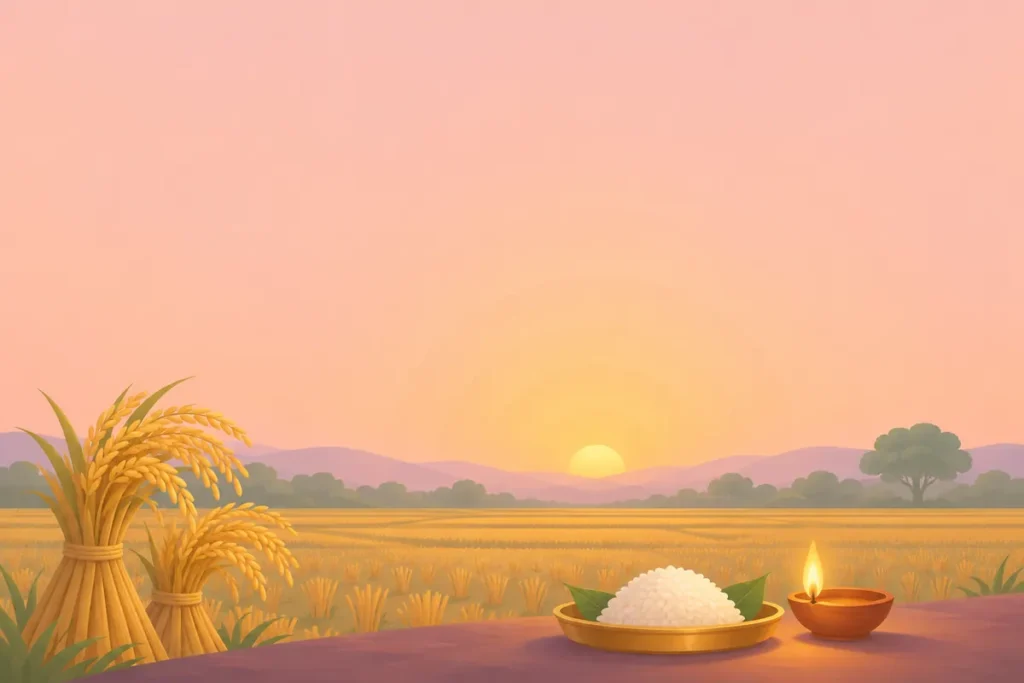
Nuakhai is timed by priests, and at the chosen moment the new rice, often cooked as a sweet dish, is first offered to the goddess Samaleswari at her temple in Sambalpur and then to the family deities at home. Only after the offering do families eat the new rice together, usually with many dishes, including traditional cakes.
Nuakhai Juhar
After the meal, younger family members bow to elders and greet them with “Nuakhai Juhar”, receiving blessings and sometimes gifts. Families who live far away travel home for the day, and Odia communities in other cities and abroad hold community Nuakhai gatherings.
Songs and dances
Evenings bring folk songs and dances of western Odisha, such as Dalkhai, Rasarkeli and Sambalpuri dance, with traditional drums. The festival shows gratitude to the land and the farmers. See also Ganesh Chaturthi, the day before, and Pongal, another harvest festival.
Questions people ask
Where is it most celebrated?
Western Odisha, especially Sambalpur, Bargarh and Balangir, and among Odia communities elsewhere.
Read next
Sources
Customs differ between families, communities and regions. This page describes common practice; your family or temple may do things differently.