Hindu (Shakta and Tantric traditions), Assam
Ambubachi Mela
Also called Ameti, Ambubasi
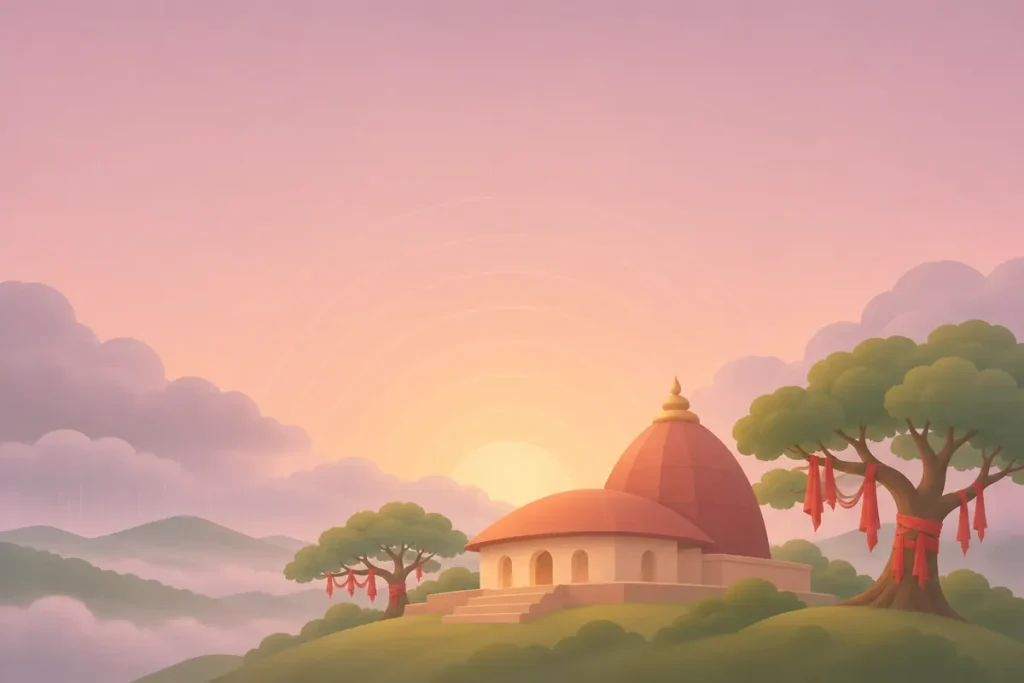
Ambubachi Mela is held at the Kamakhya temple on Nilachal hill in Guwahati, one of the most important Shakti Peethas. The goddess is believed to undergo her yearly menstrual cycle, so the temple closes for three days and reopens on the fourth, when pilgrims receive pieces of cloth as blessings.
Why it is celebrated
It celebrates the goddess as the creative, life-giving power of the earth, renewed with the monsoon.
The stories behind it
Sati and Kamakhya
When Sati gave up her life, Shiva carried her body across the world in grief. Vishnu’s discus divided it, and the places where her body parts fell became Shakti Peethas. Kamakhya is said to be where her yoni fell, so the goddess is worshipped there as the source of creation.
What people do
- The temple closes for three days
- Pilgrims, sadhus and tantrikas gather on the hill
- Reopening on the fourth day; prasad of red cloth (raktabastra) and water
- Farming work pauses in parts of Assam
Joining in for the first time
- Huge crowds gather; follow the temple’s queue arrangements
Kamakhya and the Shakti Peethas
The Shakti Peethas are temples where, according to the Puranas, parts of the goddess Sati’s body fell after Shiva carried her through the world in grief. Kamakhya, on Nilachal hill in Guwahati, is one of the most important. Its inner shrine has no image: the goddess is worshipped as a natural rock cleft kept moist by an underground spring.
The four days
During the festival, the temple doors are closed for three days while the goddess is believed to rest. Large numbers of pilgrims, sadhus and tantric practitioners camp on and around the hill. On the fourth day the temple is cleaned and reopened, and devotees queue for darshan and receive pieces of red cloth and sacred water as prasad. In parts of Assam, farmers traditionally pause ploughing and planting during these days.
A celebration of fertility
Many people see the festival as honouring the creative power of the earth and of women. If you visit, expect large crowds and long queues, dress modestly and follow the guidance of temple volunteers. See Devi and Durga.
Questions people ask
Why does the temple close?
The goddess is believed to be resting during her cycle.
Read next
Sources
Customs differ between families, communities and regions. This page describes common practice; your family or temple may do things differently.