Nepali, all communities
Asar Pandhra (National Paddy Day)
Also called Ropain Diwas, Asar 15, Dahi Chiura Khane Din
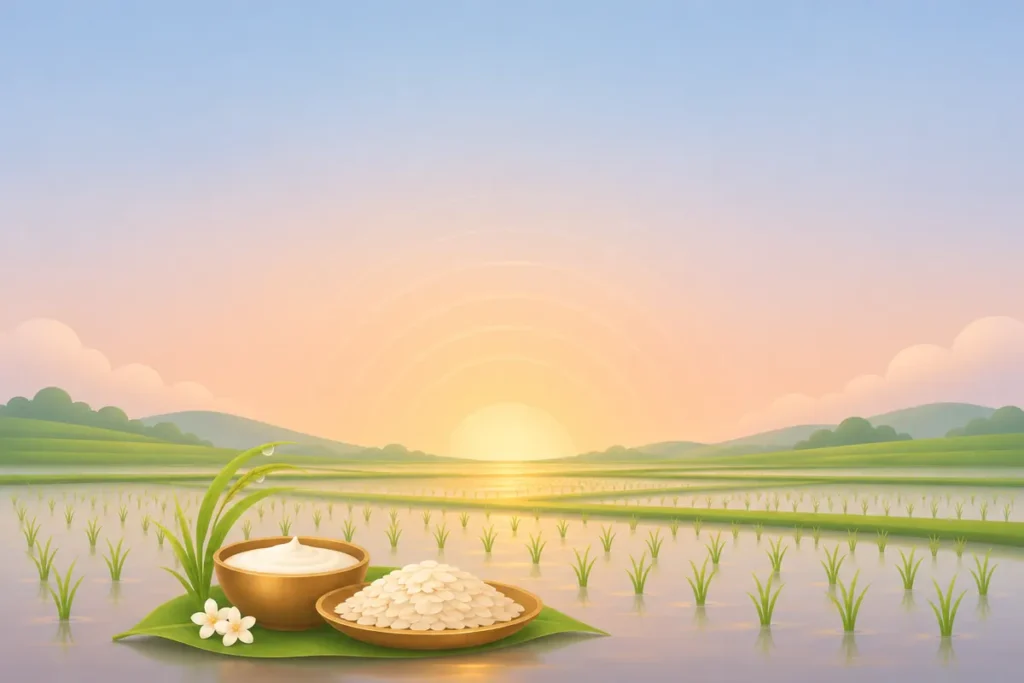
Asar 15 is Nepal’s National Paddy Day, when farmers plant rice in the monsoon-soaked fields. It is a day of mud, song and celebration: people plant seedlings together, sing asare songs, splash each other in the paddies, and eat beaten rice (chiura) with curd (dahi).
Why it is celebrated
Rice is the staple food of Nepal, and the day celebrates farmers and the start of the planting season.
It is now officially National Paddy Day, honouring agriculture across the country.
What people do
- Planting rice seedlings together in flooded fields
- Singing traditional asare songs
- Playing in the mud
- Eating dahi chiura
Joining in for the first time
- Visitors are often welcome to join planting in village fields; expect to get muddy
A day for planting
In Nepal, most rice is planted in the early monsoon, and Asar 15 is the traditional day to transplant seedlings into the flooded paddies. The government has named it National Paddy Day to honour farmers and the importance of rice to the country’s food and culture.
Songs in the mud
As they plant, farmers sing asare songs, traditional work songs that keep the rhythm of the planting and tease and encourage each other. Today many city families and students join in for the day, splashing in the mud and planting a few rows, and festivals with music are held near the Kathmandu valley.
Dahi chiura
The meal of the day is dahi chiura: beaten rice with thick curd, often with a little sugar or banana, a simple, cooling dish suited to work in the fields. Nepali communities abroad sometimes mark the day with a shared dahi chiura meal. See also Nepali New Year and Dashain.
Questions people ask
Is it a religious festival?
It is a cultural and agricultural celebration for all Nepalis.
Read next
Sources
Customs differ between families, communities and regions. This page describes common practice; your family or temple may do things differently.