Also available in: हिन्दी · ગુજરાતી
When we are busy or stressed, breathing often becomes quick and shallow, high in the chest. Belly breathing (sometimes called diaphragmatic breathing) simply means letting the breath move lower and more slowly. It is the starting point for almost every breathing practice on this site.
Find your breath
- Sit or lie down comfortably.
- Place one hand on your chest and one on your belly.
- Breathe normally for a few breaths. Which hand moves more?
Let it move lower
- Breathe in gently through your nose and let your belly rise into your lower hand.
- Let the hand on your chest stay fairly still.
- Breathe out slowly and feel your belly fall.
- Continue for two to five minutes. Keep it soft; there is no need for big breaths.
Tips
- Lying down with your knees bent makes it easier to feel at first.
- Loosen a tight belt or waistband.
- Once it feels natural, try it sitting at your desk or on the bus.
Where to go next
When belly breathing feels comfortable, try the calm breath or box breathing.
Why the belly breath matters
The diaphragm is a dome-shaped muscle under your lungs. When it moves down, your belly gently expands and air flows in. When we are tense, we tend to breathe with the muscles of the upper chest, neck and shoulders instead. That kind of breathing is fine in short bursts, but if it becomes a habit it can leave the shoulders tight and the breath fast and shallow.
Belly breathing simply invites the diaphragm to do more of the work. Most people find it feels slower, quieter and more settled. It is also the foundation of almost every other practice on this site, from box breathing to yoga nidra.
A five-day practice plan
- Day 1, lying down: two minutes with one hand on your chest and one on your belly. Just notice which hand moves more.
- Day 2, a book on the belly: lie down and rest a light book on your belly. Watch it rise and fall for three minutes.
- Day 3, sitting: sit upright on a chair and repeat the hands-on exercise for three minutes.
- Day 4, slowing down: keep the belly movement and let each out-breath be a little longer than the in-breath.
- Day 5, everyday moments: take five belly breaths while the kettle boils, at a red light or before you open your email.
Common difficulties
- “My belly won’t move.” Lie down with your knees bent, or try lying on your front with your forehead on your hands. You will feel the breath press your belly into the floor.
- “I feel like I’m not getting enough air.” Take smaller, softer breaths. Belly breathing is about where the breath moves, not about breathing more.
- “My chest still rises.” That is fine. A little chest movement is natural, especially towards the end of an in-breath.
- Feeling dizzy: you may be breathing too deeply or too quickly. Return to your normal breath and try again more gently.
Common questions
How long until it feels natural?
For many people, a few minutes a day for a week or two is enough for it to start feeling familiar. Short, regular practice works better than one long session.
Should I breathe through my nose or mouth?
Through the nose, if you can. It warms the air and naturally slows the breath. If your nose is blocked, breathe gently through your mouth.
Can children do it?
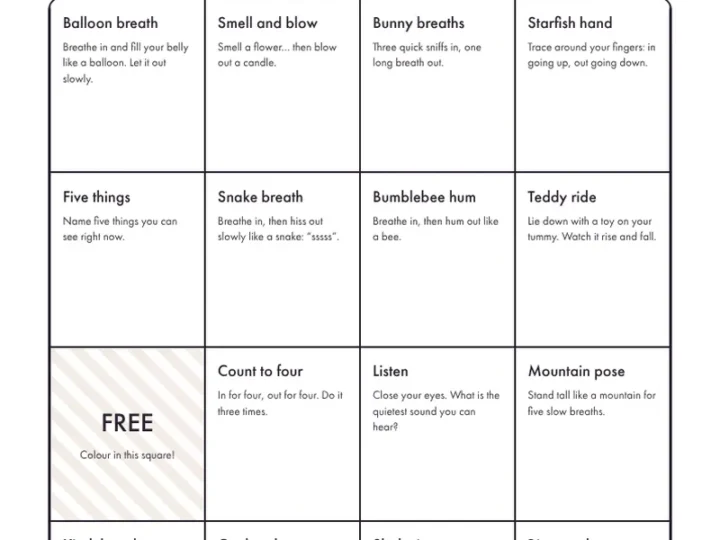
Yes. Children often enjoy placing a soft toy on their belly and giving it a ride up and down. See the kids calm corner for more ideas.
Key points
- Let the belly rise as you breathe in and fall as you breathe out.
- Keep it soft: there is no need for big breaths.
- Practise lying down first, then sitting, then in everyday moments.
Try it now: breathe along with the glowing circle
General wellbeing information, not medical advice. If you have a health condition, are pregnant or feel unwell, talk to a qualified professional.