Tai Ahom, Assam
Me-Dam-Me-Phi
Also called Me-Dam-Me-Phi
Me-Dam-Me-Phi is the ancestor-worship festival of the Tai Ahom people of Assam. “Me” means offering, “Dam” the ancestors and “Phi” the gods. Families and communities make offerings to departed ancestors and to deities, and remember the Ahom heritage.
Why it is celebrated
Ancestors are believed to watch over and protect their descendants, and they are honoured with offerings and prayers.
What people do
- Community and household offerings to ancestors (Dam) and gods (Phi)
- Gatherings and cultural programmes
- Prayers led by traditional priests (Deodhai, Mohan and Bailung)
Joining in for the first time
- Public programmes are held across Upper Assam
What the name means
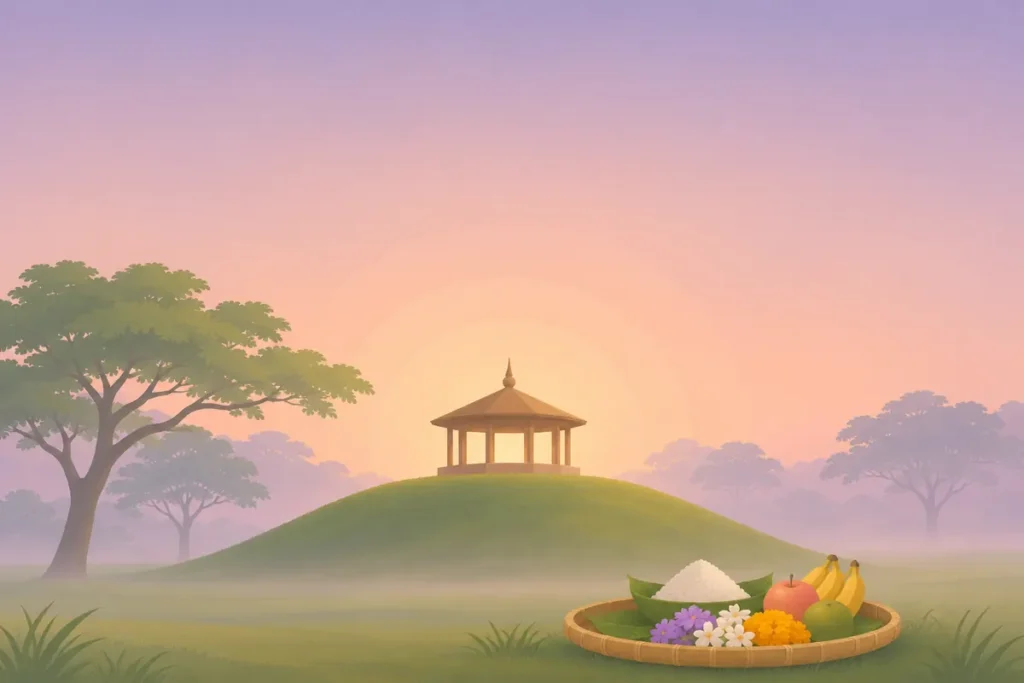
In the Tai Ahom language, Me means offering, Dam means ancestors and Phi means gods. The festival honours departed ancestors, who are believed to watch over their families, and the gods of the Ahom tradition. Offerings of food, rice beer in some communities, flowers and lamps are made at household and community altars.
The Ahom heritage
The Ahoms came from the Tai region of present-day Myanmar and southern China in the thirteenth century and ruled the Ahom kingdom in Assam for about six hundred years. Ancestor worship was an important part of their tradition, and Me-Dam-Me-Phi keeps it alive.
How it is observed
Traditional priests, the Deodhai, Mohan and Bailung, lead prayers. Communities hold public gatherings, cultural programmes and meetings about Tai Ahom language and heritage, and 31 January is a state holiday in Assam. See also Magh Bihu.
Questions people ask
Is it a public holiday?
Yes, it is a state holiday in Assam.
Read next
Sources
Customs differ between families, communities and regions. This page describes common practice; your family or temple may do things differently.