Newar, Kathmandu valley
Ghanta Karna
Also called Gathemangal, Gathe Mugah
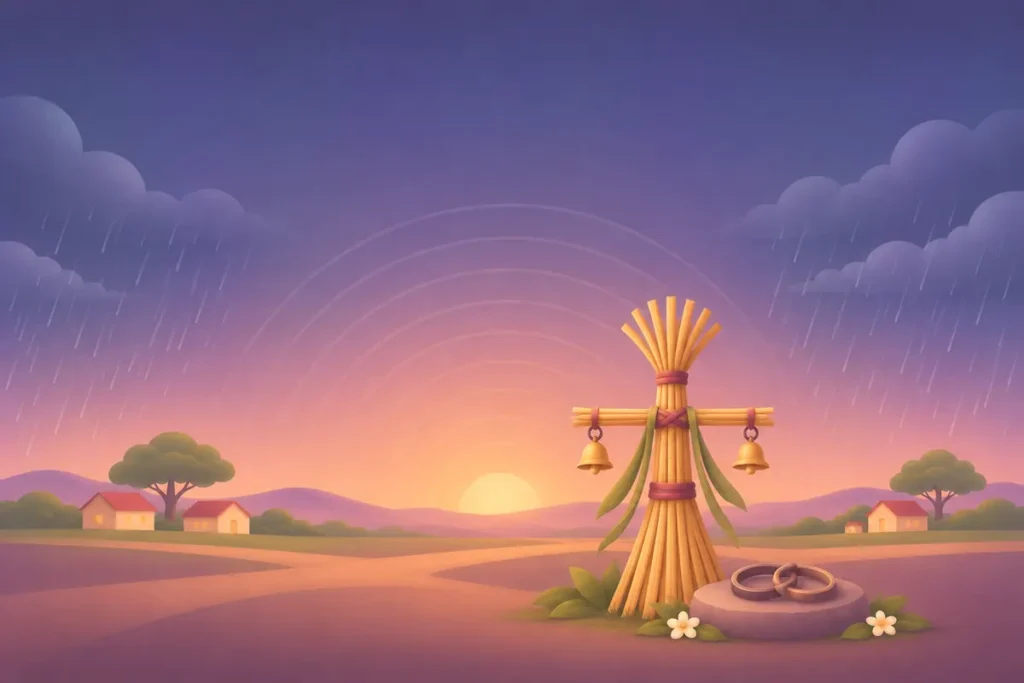
Ghanta Karna is a Newar festival to drive away evil after the rice planting. Children build effigies of the demon Ghanta Karna at crossroads and collect money from passers-by; in the evening the effigy is dragged to a river and burned or thrown away. People wear iron rings for protection.
Why it is celebrated
The festival symbolically clears away harmful spirits and illness at the height of the monsoon, when disease was once common.
The stories behind it
The demon with bells
Ghanta Karna, “bell-ears”, was a demon who wore bells on his ears so he would never hear the name of God. Local legend says a frog tricked him into a well, where the people killed him. His effigy is burned to remember the end of evil.
What people do
- Building effigies from reeds at crossroads
- Children collect tolls from passers-by
- Burning or discarding the effigy at night
- Wearing iron rings and placing three-legged figures at doorways for protection
Joining in for the first time
- Children will ask passers-by for small coins; it is part of the fun
The demon with bells
Newar tradition tells of Ghanta Karna, a demon who wore bells in his ears so that he would never hear the name of God, and who troubled the people of the valley. He was tricked by a frog and fell into a deep well, where people stoned him and later dragged his body away. The festival re-enacts his defeat and the driving out of evil.
The effigies
During the day, children build effigies of Ghanta Karna from reeds, straw and leaves at crossroads, and stretch ropes across the street to ask passers-by for small coins. In the evening, a man painted as the demon may sit on the effigy as it is dragged to the river, where it is burned or thrown away.
Protection
Families hang small three-legged figures or nail iron at their doorways to keep evil spirits away, and many people wear iron rings for protection. The festival comes after the rice planting, as families prepare for the festivals of the coming months, such as Janai Purnima and Gai Jatra.
Questions people ask
Why iron rings?
Iron is traditionally believed to ward off evil spirits.
Read next
Sources
Customs differ between families, communities and regions. This page describes common practice; your family or temple may do things differently.