Uses your device’s built-in voice.
Self-massage with oil
A massage with warm oil, abhyanga, is one of the best-known parts of the Ayurvedic day. The Charaka Samhita recommends it regularly, with special care for the head and feet Charaka, Sutra 5/81–92.
What the texts say
- Whole body: regular massage is said to keep the skin smooth, calm vata and help the body cope with strain and age Charaka, Sutra 5/85–89.
- Head: oiling the scalp is linked with fewer headaches, healthy hair and better sleep Charaka, Sutra 5/81–83.
- Feet: foot massage is said to ease tiredness and stiffness and prevent cracked heels Charaka, Sutra 5/90–92.
Choosing an oil
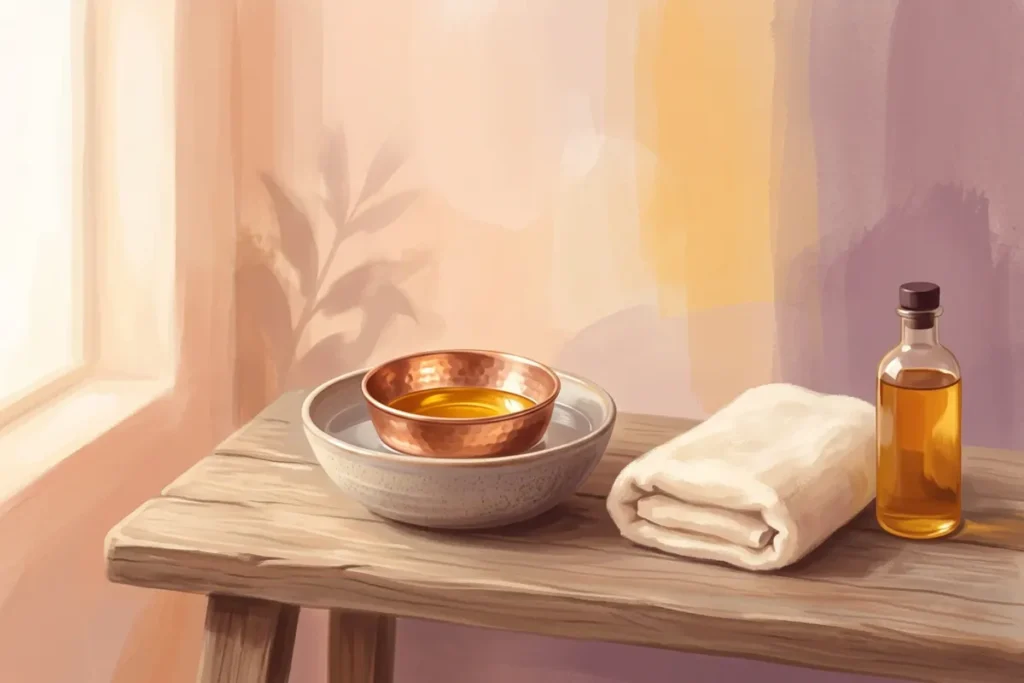
Sesame oil is the traditional choice; the texts describe sesame as oily and warming, and calming for vata Charaka, Sutra 27/30. Many people today use lighter coconut or sunflower oil in hot weather. Use plain, cold-pressed oil, not essential oils on their own.
How to do it (5–15 minutes)
- Warm a few tablespoons of oil by standing the bottle in a cup of hot water. Test it on your wrist.
- Sit somewhere warm on an old towel.
- Start with the scalp, using your fingertips in small circles.
- Massage the face, ears and neck gently.
- Use long strokes on the arms and legs, and circles on the joints.
- Use gentle clockwise circles on the belly, and long strokes on the chest.
- Finish with the feet, taking a little extra time.
- Rest for a few minutes, then have a warm shower.
Short on time? Just do the scalp and feet.
When to skip it
- On broken, sunburnt, infected or irritated skin.
- When you have a fever or feel unwell.
- Straight after a meal.
Sources
- Massage therapy: what you need to know, NIH NCCIH
- Matrashiteeya Adhyaya (right quantity and daily regimen), Charaka Samhita, Sutra 5
- Annapanavidhi Adhyaya (food and drink), Charaka Samhita, Sutra 27
Last reviewed 18 November 2026. Satsang Space shares general wellbeing information, not medical advice.