The murti
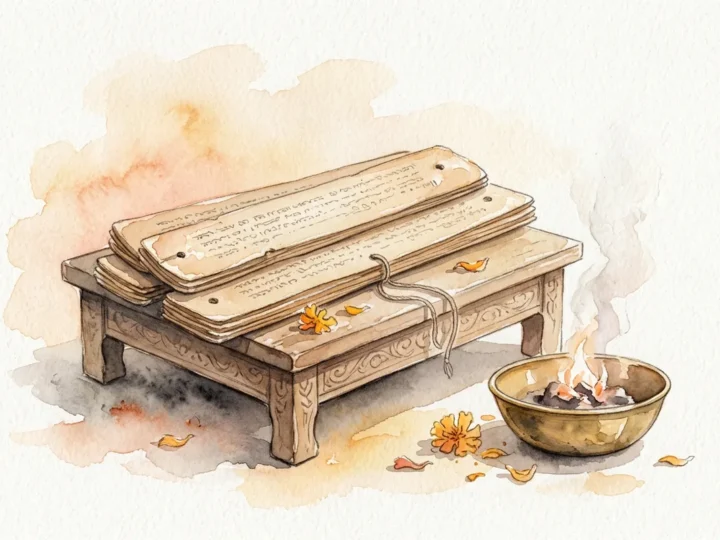
After a consecration ceremony, the murti is treated as a place where the divine is present. Priests bathe, dress and offer food to it and wave lamps before it.2
Darshan
The heart of a visit is darshan: seeing the deity, and being seen. Many people also walk clockwise around the shrine and receive prasad, blessed food.1
Simple etiquette
- Take off your shoes before entering.
- Dress modestly.
- Ask before taking photos; many temples do not allow them inside.
- Receive prasad with your right hand, or both hands.
Customs differ a little from temple to temple, so follow what others do or ask a volunteer.1
What a temple is for
For Hindus, the temple is a home for the deity, whose presence is invoked in a consecrated image (murti). Devotees come for darshan, which means seeing the deity and being seen, to make offerings, to pray, and to join festivals, classes and community meals.
Parts of a temple
- The inner sanctum (garbhagriha): literally “womb chamber”, a small, often dim room housing the main murti.
- The tower (shikhara or vimana): rising above the sanctum, symbolising a sacred mountain.
- The hall (mandapa): where worshippers gather, sing and watch ceremonies.
- The gateway towers (gopurams): in many south Indian temples, tall, richly carved gateways mark the entrances.
- Bells: devotees often ring a bell on entering.
What happens in a temple
- Puja: priests bathe, dress and offer food, flowers and incense to the deity at set times.
- Arti: a ceremony in which lamps are waved before the deity while devotional songs are sung. Visitors may be invited to pass their hands over the flame and touch their eyes.
- Pradakshina: walking clockwise around the shrine as an act of devotion.
- Prasad: food that has been offered to the deity is shared as a blessing.
Visiting respectfully
- Remove your shoes before entering; there is usually a shoe rack.
- Dress modestly, covering shoulders and knees. Some temples ask visitors to cover their heads.
- Walk quietly and follow the lead of others, or ask a volunteer.
- Ask before taking photographs; photography is often not allowed near the sanctum.
- Accept prasad with your right hand or both hands.
- Some temples ask that only members of the faith enter the inner sanctum; respect any signs.
Before you go
- Check visiting times on the temple’s website; many close in the middle of the day.
- Festival days are wonderful but crowded.
- Many temples offer guided visits for schools and groups.
Sources
Hindu traditions are many and varied; families and teachers may explain these ideas differently. Last reviewed 19 November 2026.