Hindu, Gujarat
Randhan Chhath
Also called Randhan Chhathh
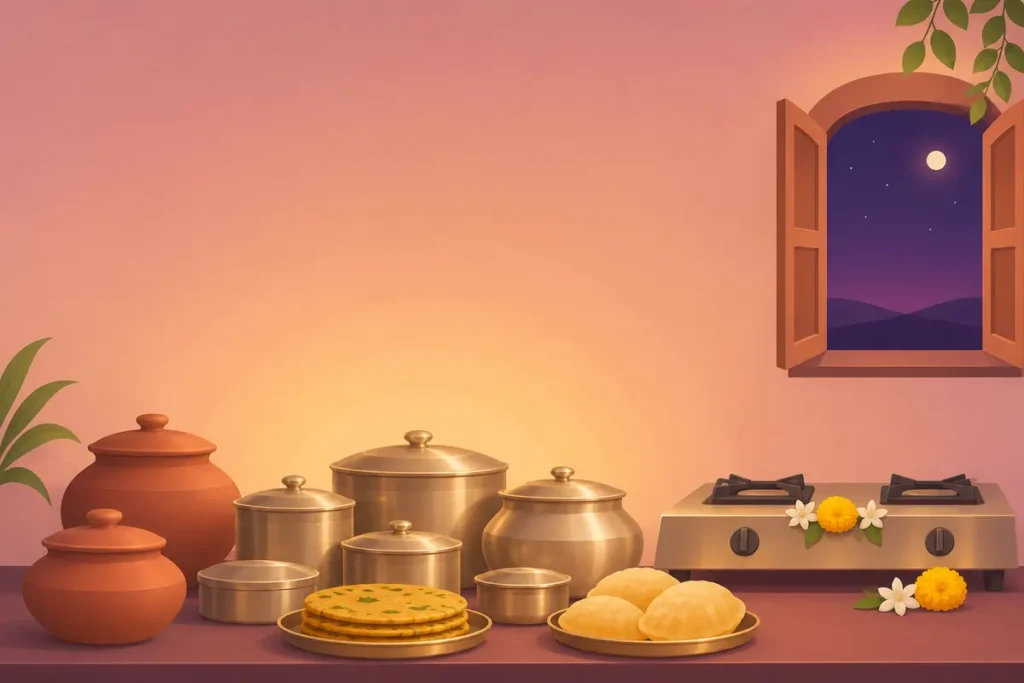
Randhan Chhath, “the cooking sixth”, is a Gujarati cooking day. Families cook a large spread of dishes to eat cold the next day, Sheetala Satam, when no fire is lit in the kitchen in honour of Sheetala Mata. At night the stove is cleaned and worshipped.
Why it is celebrated
It prepares for Sheetala Satam, when the hearth rests so the goddess Sheetala, the “cool one”, can be honoured.
What people do
- Cooking many dishes in advance
- Cleaning and worshipping the stove at night
- Sharing food with neighbours
Joining in for the first time
- If you visit a Gujarati home around this time, expect a feast of cold dishes the next day
What is cooked
Gujarati families spend the day cooking enough for the next day, when no fire will be lit. Common dishes include thepla, puri, dry vegetables, khichdi, sweets such as mohanthal and sukhdi, farsan (savoury snacks) and pickles, chosen because they keep well. Neighbours and relatives often share dishes with each other.
Worshipping the stove
Late at night, after the cooking is done, the stove is cleaned and decorated, sometimes with a small rangoli, and worshipped with kumkum, flowers and a lamp. The stove is then allowed to rest through the next day, in honour of Sheetala Mata, the goddess of cooling.
Sheetala Satam
On the next day, Sheetala Satam, families worship Sheetala Mata and eat the cold food prepared on Randhan Chhath. In Gujarat these days fall in Shravan, near Janmashtami.
Questions people ask
Why cook a day early?
So that the kitchen fire is not lit on Sheetala Satam.
Read next
Sources
Customs differ between families, communities and regions. This page describes common practice; your family or temple may do things differently.