The great Hindu epics, the Ramayana and the Mahabharata, along with stories from the Puranas and fables such as the Panchatantra, have been told to children for many centuries. They are full of adventure, courage, friendship and difficult choices, and they open up conversations about values. This guide offers ideas for sharing them at home.
The Ramayana
Traditionally attributed to the sage Valmiki, the Ramayana tells the story of Prince Rama, his wife Sita and his brother Lakshmana. Exiled to the forest for fourteen years, they face many adventures. Sita is kidnapped by Ravana, the ten-headed king of Lanka, and Rama, helped by Hanuman and an army of monkeys and bears, rescues her. Their return home is remembered at Diwali.
Good themes for children: loyalty, keeping promises, friendship (Hanuman), courage and doing what is right even when it is hard.
The Mahabharata
Traditionally attributed to the sage Vyasa, the Mahabharata is one of the longest poems in the world. It tells of the rivalry between two families of cousins, the Pandavas and the Kauravas, and includes the Bhagavad Gita. Some of its episodes involve war and complex adult themes, so choose child-friendly retellings.
Good episodes for children: Arjuna’s archery lesson and his focus on the bird’s eye, Ekalavya’s dedication, the Pandavas’ friendship with Krishna, and stories about honesty and fairness.
Stories from the Puranas and fables
- Stories of young Krishna in Vrindavan, such as lifting Govardhan Hill.
- Stories of Ganesha, such as the race around the world.
- The story of Prahlada, told at Holi.
- The Panchatantra, a collection of animal fables about wisdom and good judgement.
Choosing versions by age
- Ages 3–6: short picture-book retellings focused on one episode, with lots of pictures.
- Ages 7–10: illustrated story collections and comic-book versions.
- Ages 11 and over: fuller retellings that explore difficult choices and different points of view.
Questions to talk about together
- Which character did you like best, and why?
- Was that a good choice? What else could they have done?
- How do you think the character felt?
- Have you ever had to be brave, or keep a promise that was hard to keep?
Bringing stories to life
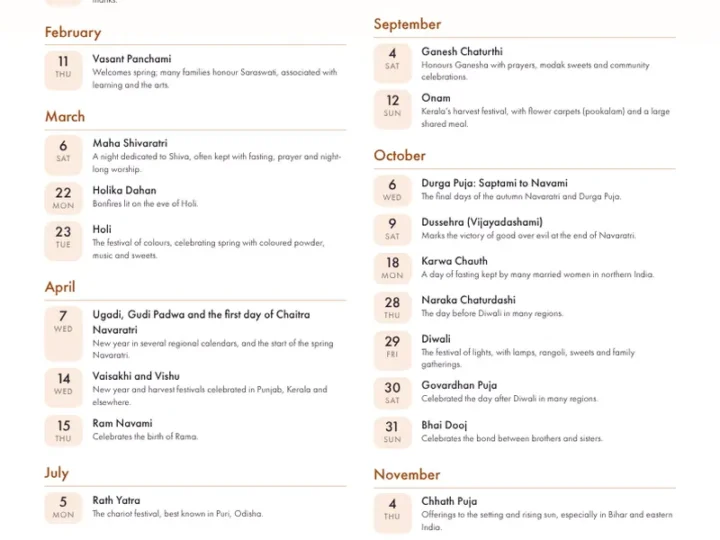
- Tell the story of each festival as it arrives.
- Act out scenes with toys or simple costumes.
- Draw a favourite scene, or make a rangoli at Diwali.
Key points
- The epics and Puranas are rich in adventure and values.
- Choose age-appropriate retellings.
- Talk about choices, feelings and what the characters teach us.