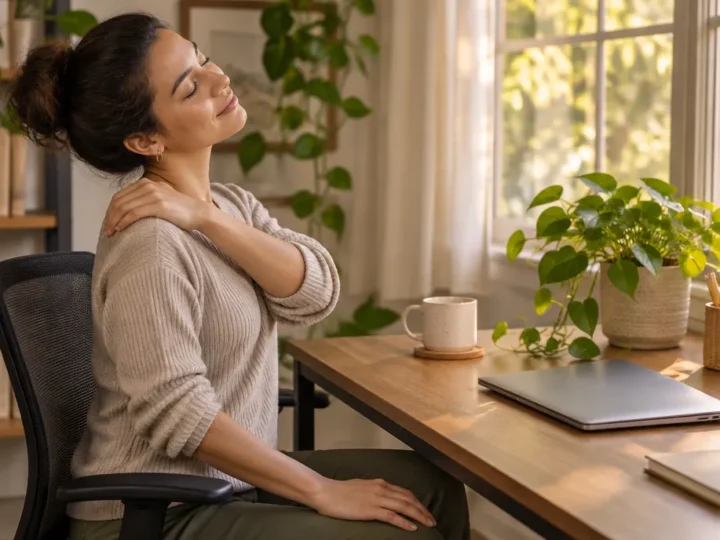
Long hours of sitting can leave the back feeling stiff. These gentle movements are a kind way to move the spine. Go slowly, breathe and stay well within what feels comfortable.
Four movements
- Cat–cow (1 minute). On hands and knees, arch your back as you breathe in and round it as you breathe out.
- Child’s pose (1 minute). Sit back towards your heels and rest your forehead down.
- Knees to chest (1 minute). Lie on your back and hug your knees gently, rocking a little side to side.
- Lying twist (1 minute each side). On your back, let both bent knees fall slowly to one side, then the other.
Important
Stop if any movement causes pain, numbness or tingling. If you have back pain that is severe, follows an injury, or does not improve, see a doctor or physiotherapist before doing yoga.
Why backs get stiff
Long hours sitting, little variety in movement, stress and poor sleep can all leave the back feeling tight. Gentle, regular movement often helps the back feel more comfortable. The aim is not to stretch hard, but to move often and kindly.
A daily five-minute routine
- Knee hugs (1 minute): lie on your back and hug your knees, rocking gently.
- Pelvic tilts (1 minute): knees bent, gently press your lower back into the floor, then release.
- Cat–cow (1 minute): slow, on hands and knees or seated.
- Child’s pose (1 minute): with knees wide and a cushion under your chest if you like.
- Lying twist (30 seconds each side): knees falling gently to one side.
Everyday habits that help
- Stand up and move every 30–60 minutes during desk work.
- Take short walks; walking is gentle on the back.
- Notice when you hold tension in your shoulders and jaw, and let it go.
- Try the desk stretches between tasks.
When to get help
See a doctor or physiotherapist if back pain is severe, follows a fall or injury, spreads down a leg, comes with numbness, tingling or weakness, or does not improve after a few weeks. Seek urgent medical care for back pain with loss of bladder or bowel control, numbness around the groin, or fever.
Common questions
Should I stretch through the pain?
No. Gentle stretching should feel comfortable. Pain is a signal to ease off.
Which poses should I avoid?
Deep forward folds and strong twists may not suit a sore back. Stay with gentle movements and ask a qualified professional if unsure.
Key points
- Move gently and often.
- Comfort is the guide: never push into pain.
- Get professional advice for severe or lasting pain.
Try it now: browse the yoga pose library
General wellbeing information, not medical advice. If you have a health condition, are pregnant or feel unwell, talk to a qualified professional.