The supreme person
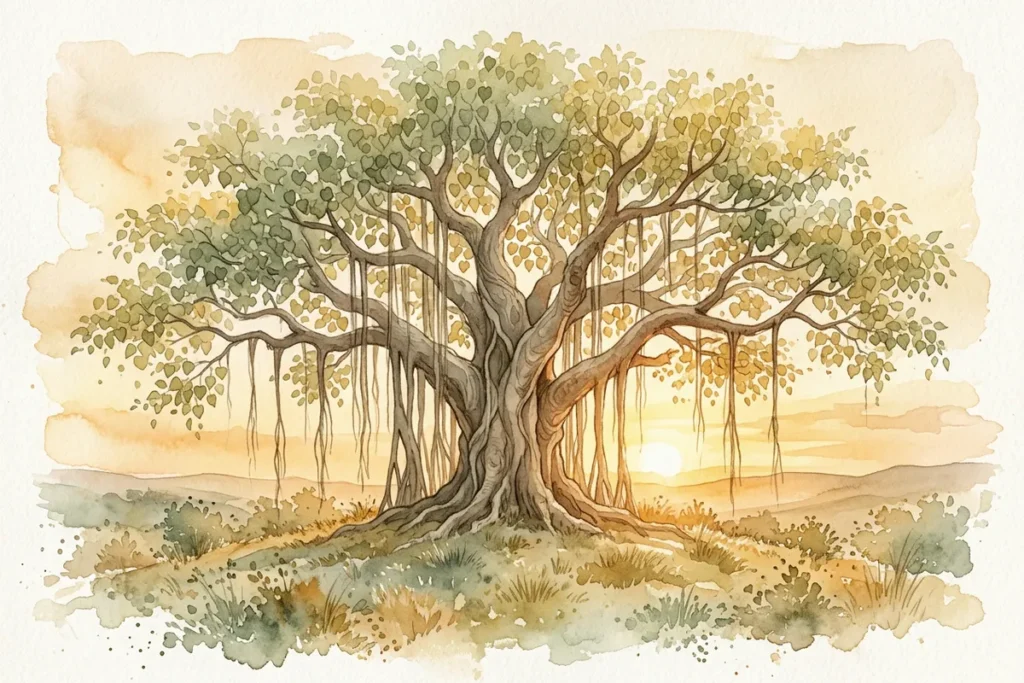
The world as a great tree, and the Divine seated in every heart.
Besant's title: The Yoga of Attaining the Supreme Spirit
This chapter in short
Krishna describes the world as an eternal ashvattha tree, with its roots above and branches below; its leaves are the Vedic hymns (15.1). It is to be cut down with the strong axe of non-attachment (15.3). A part of himself becomes the living spirit in each being (15.7).
The light of the sun, the moon and fire comes from him (15.12). He is seated in the hearts of all, and from him come memory and wisdom (15.15). Beyond the perishable and the imperishable, he is known as the Supreme Spirit (15.16–18).
This summary was written by Satsang Space to help you follow the chapter. The verses below are the text itself.
Verses to remember
ममैवांशो जीवलोके जीवभूतः सनातनः ।
मनःषष्ठानीन्द्रियाणि प्रकृतिस्थानि कर्षति ॥
mamaivāṃśo jīvaloke jīvabhūtaḥ sanātanaḥ
manaḥṣaṣṭhānīndriyāṇi prakṛtisthāni karṣati
A portion of Mine own Self, transformed in the world of life into an immortal Spirit, draweth round itself the senses of which the mind is the sixth, veiled in matter.
सर्वस्य चाहं हृदि सन्निविष्टो मत्तः स्मृतिर्ज्ञानमपोहनं च ।
वेदैश्च सर्वैरहमेव वेद्यो वेदान्तकृद्वेदविदेव चाहम् ॥
sarvasya cāhaṃ hṛdi sanniviṣṭo mattaḥ smṛtirjñānamapohanaṃ ca
vedaiśca sarvairahameva vedyo vedāntakṛdvedavideva cāham
And I am seated in the hearts of all, and from Me memory and wisdom and their absence. And that which is to be known in all the Vedas am I; and I indeed the Veda-knower and the author of the Vedanta.
Verse 15.1
श्रीभगवानुवाच ।
ऊर्ध्वमूलमधःशाखमश्वत्थं प्राहुरव्ययम् ।
छन्दांसि यस्य पर्णानि यस्तं वेद स वेदवित् ॥
śrībhagavānuvāca
ūrdhvamūlamadhaḥśākhamaśvatthaṃ prāhuravyayam
chandāṃsi yasya parṇāni yastaṃ veda sa vedavit
The Blessed Lord said: With roots above, branches below, the Asvattha is said to be indestructible; the leaves of it are hymns; he who knoweth it is a Veda-knower.
Verse 15.2
अधश्चोर्ध्वं प्रसृतास्तस्य शाखाः गुणप्रवृद्धा विषयप्रवालाः ।
अधश्च मूलान्यनुसन्ततानि कर्मानुबन्धीनि मनुष्यलोके ॥
adhaścordhvaṃ prasṛtāstasya śākhāḥ guṇapravṛddhā viṣayapravālāḥ
adhaśca mūlānyanusantatāni karmānubandhīni manuṣyaloke
Downwards and upwards spread the branches of it, nourished by the qualities; the objects of the senses its buds; and its roots grow downwards, the bonds of action in the world of men.
Verse 15.3
न रूपमस्येह तथोपलभ्यते नान्तो न चादिर्न च संप्रतिष्ठा ।
अश्वत्थमेनं सुविरूढमूलमसङ्गशस्त्रेण दृढेन छित्त्वा ॥
na rūpamasyeha tathopalabhyate nānto na cādirna ca saṃpratiṣṭhā
aśvatthamenaṃ suvirūḍhamūlamasaṅgaśastreṇa dṛḍhena chittvā
Nor here may be acquired knowledge of its form, nor its end, nor its origin, nor its rooting-place; this strongly rooted Asvattha having been cut down by the unswerving weapon of non-attachment,
Verse 15.4
ततः पदं तत्परिमार्गितव्यम् यस्मिन्गता न निवर्तन्ति भूयः ।
तमेव चाद्यं पुरुषं प्रपद्ये यतः प्रवृत्तिः प्रसृता पुराणी ॥
tataḥ padaṃ tatparimārgitavyam yasmingatā na nivartanti bhūyaḥ
tameva cādyaṃ puruṣaṃ prapadye yataḥ pravṛttiḥ prasṛtā purāṇī
That path beyond may be sought, treading which there is no return. I go indeed to that Primal Man, whence the ancient energy forth-streamed.
Verse 15.5
निर्मानमोहा जितसङ्गदोषाः अध्यात्मनित्या विनिवृत्तकामाः ।
द्वन्द्वैर्विमुक्ताः सुखदुःखसंज्ञै- र्गच्छन्त्यमूढाः पदमव्ययं तत् ॥
nirmānamohā jitasaṅgadoṣāḥ adhyātmanityā vinivṛttakāmāḥ
dvandvairvimuktāḥ sukhaduḥkhasaṃjñai- rgacchantyamūḍhāḥ padamavyayaṃ tat
Without pride and delusion, victorious over the vice of attachment, dwelling constantly in the Self, desire pacified, liberated from the pairs of opposites known as pleasure and pain, they tread, undeluded, that indestructible path.
Verse 15.6
न तद्भासयते सूर्यो न शशाङ्को न पावकः ।
यद्गत्वा न निवर्तन्ते तद्धाम परमं मम ॥
na tadbhāsayate sūryo na śaśāṅko na pāvakaḥ
yadgatvā na nivartante taddhāma paramaṃ mama
Nor doth the sun lighten there, nor moon, nor fire; having gone thither they return not; that is My supreme abode.
Verse 15.7
ममैवांशो जीवलोके जीवभूतः सनातनः ।
मनःषष्ठानीन्द्रियाणि प्रकृतिस्थानि कर्षति ॥
mamaivāṃśo jīvaloke jīvabhūtaḥ sanātanaḥ
manaḥṣaṣṭhānīndriyāṇi prakṛtisthāni karṣati
A portion of Mine own Self, transformed in the world of life into an immortal Spirit, draweth round itself the senses of which the mind is the sixth, veiled in matter.
Verse 15.8
शरीरं यदवाप्नोति यच्चाप्युत्क्रामतीश्वरः ।
गृहित्वैतानि संयाति वायुर्गन्धानिवाशयात् ॥
śarīraṃ yadavāpnoti yaccāpyutkrāmatīśvaraḥ
gṛhitvaitāni saṃyāti vāyurgandhānivāśayāt
When the Lord acquireth a body and when He abandoneth it, He seizeth these and goeth with them, as the wind takes fragrances from their retreats
Verse 15.9
श्रोत्रं चक्षुः स्पर्शनं च रसनं घ्राणमेव च ।
अधिष्ठाय मनश्चायं विषयानुपसेवते ॥
śrotraṃ cakṣuḥ sparśanaṃ ca rasanaṃ ghrāṇameva ca
adhiṣṭhāya manaścāyaṃ viṣayānupasevate
Enshrined in the ear, the eye, the touch, the taste and the smell, and in the mind also, He enjoyeth the objects of the senses
Verse 15.10
उत्क्रामन्तं स्थितं वापि भुञ्जानं वा गुणान्वितम् ।
विमूढा नानुपश्यन्ति पश्यन्ति ज्ञानचक्षुषः ॥
utkrāmantaṃ sthitaṃ vāpi bhuñjānaṃ vā guṇānvitam
vimūḍhā nānupaśyanti paśyanti jñānacakṣuṣaḥ
The deluded do not perceive (Him) when He departeth or stayeth or enjoyeth, swayed by the qualities; the wisdom-eyed perceive.
Verse 15.11
यतन्तो योगिनश्चैनं पश्यन्त्यात्मन्यवस्थितम् ।
यतन्तोऽप्यकृतात्मानो नैनं पश्यन्त्यचेतसः ॥
yatanto yoginaścainaṃ paśyantyātmanyavasthitam
yatanto'pyakṛtātmāno nainaṃ paśyantyacetasaḥ
Yogîs also, struggling, perceive Him, established in the Self; but though struggling, the unintelligent perceive Him not, their selves untrained.
Verse 15.12
यदादित्यगतं तेजो जगद्भासयतेऽखिलम् ।
यच्चन्द्रमसि यच्चाग्नौ तत्तेजो विद्धि मामकम् ॥
yadādityagataṃ tejo jagadbhāsayate'khilam
yaccandramasi yaccāgnau tattejo viddhi māmakam
That splendour issuing from the sun that enlighteneth the whole world, that which is in the moon and in fire, that splendour know as from Me.
Verse 15.13
गामाविश्य च भूतानि धारयाम्यहमोजसा ।
पुष्णामि चौषधीः सर्वाः सोमो भूत्वा रसात्मकः ॥
gāmāviśya ca bhūtāni dhārayāmyahamojasā
puṣṇāmi cauṣadhīḥ sarvāḥ somo bhūtvā rasātmakaḥ
Permeating the soil, I support beings by my vital energy, and having become the delicious Soma I nourish all plants.
Verse 15.14
अहं वैश्वानरो भूत्वा प्राणिनां देहमाश्रितः ।
प्राणापानसमायुक्तः पचाम्यन्नं चतुर्विधम् ॥
ahaṃ vaiśvānaro bhūtvā prāṇināṃ dehamāśritaḥ
prāṇāpānasamāyuktaḥ pacāmyannaṃ caturvidham
I, having become the Fire of Life, take possession of the bodies of breathing things, and united with the life-breaths, I digest the four kinds of food.
Verse 15.15
सर्वस्य चाहं हृदि सन्निविष्टो मत्तः स्मृतिर्ज्ञानमपोहनं च ।
वेदैश्च सर्वैरहमेव वेद्यो वेदान्तकृद्वेदविदेव चाहम् ॥
sarvasya cāhaṃ hṛdi sanniviṣṭo mattaḥ smṛtirjñānamapohanaṃ ca
vedaiśca sarvairahameva vedyo vedāntakṛdvedavideva cāham
And I am seated in the hearts of all, and from Me memory and wisdom and their absence. And that which is to be known in all the Vedas am I; and I indeed the Veda-knower and the author of the Vedanta.
Verse 15.16
द्वाविमौ पुरुषौ लोके क्षरश्चाक्षर एव च ।
क्षरः सर्वाणि भूतानि कूटस्थोऽक्षर उच्यते ॥
dvāvimau puruṣau loke kṣaraścākṣara eva ca
kṣaraḥ sarvāṇi bhūtāni kūṭastho'kṣara ucyate
There are two Energies in this world, the destructible and the indestructible; the destructible is all beings, the unchanging is called the indestructible.
Verse 15.17
उत्तमः पुरुषस्त्वन्यः परमात्मेत्युदाहृतः ।
यो लोकत्रयमाविश्य बिभर्त्यव्यय ईश्वरः ॥
uttamaḥ puruṣastvanyaḥ paramātmetyudāhṛtaḥ
yo lokatrayamāviśya bibhartyavyaya īśvaraḥ
The highest Energy is verily Another, declared as the Supreme Self, He who, pervading all, sustaineth the three worlds, the indestructible Lord.
Verse 15.18
यस्मात्क्षरमतीतोऽहमक्षरादपि चोत्तमः ।
अतोऽस्मि लोके वेदे च प्रथितः पुरुषोत्तमः ॥
yasmātkṣaramatīto'hamakṣarādapi cottamaḥ
ato'smi loke vede ca prathitaḥ puruṣottamaḥ
Since I excel the destructible, and am more excellent also than the indestructible, in the world and in the Veda I am proclaimed the Supreme Spirit.
Verse 15.19
यो मामेवमसंमूढो जानाति पुरुषोत्तमम् ।
स सर्वविद्भजति मां सर्वभावेन भारत ॥
yo māmevamasaṃmūḍho jānāti puruṣottamam
sa sarvavidbhajati māṃ sarvabhāvena bhārata
He who undeluded knoweth Me thus as the Supreme Spirit, he, all-knowing, worshippeth Me with his whole being, O Bhârata.
Verse 15.20
इति गुह्यतमं शास्त्रमिदमुक्तं मयाऽनघ ।
एतद्बुध्वा बुद्धिमान् स्यात्कृतकृत्यश्च भारत ॥
iti guhyatamaṃ śāstramidamuktaṃ mayā'nagha
etadbudhvā buddhimān syātkṛtakṛtyaśca bhārata
Thus by Me this most secret teaching hath been told O sinless one. This known, he hath become illuminated and hath finished his work, O Bhârata.
Read the whole Gita in 21 days →
Sources
- The Bhagavad-Gita, translated by Annie Besant (4th edition, 1922), on Wikisource. The Sanskrit text and the English translation are copied word for word from this edition. Besant's footnotes are left out.
- The transliteration is made from the Sanskrit using the standard IAST system.
Annie Besant's translation was first published in 1895 and is in the public domain. Teachers and traditions explain the Gita in many ways; the summaries here only describe what the verses say.