Festivals are at the heart of Hindu life. They mark the seasons, retell sacred stories, honour particular deities and bring families and communities together with food, music, prayer and colour. India alone has hundreds of regional festivals; this guide introduces the best known.
How festival dates work
Most Hindu festivals follow a lunisolar calendar, in which months are based on the moon and adjusted to keep pace with the solar year. Many fall on a particular lunar day (tithi), such as a full moon or new moon. A few, such as Makar Sankranti, follow the sun and fall on nearly the same date each year.
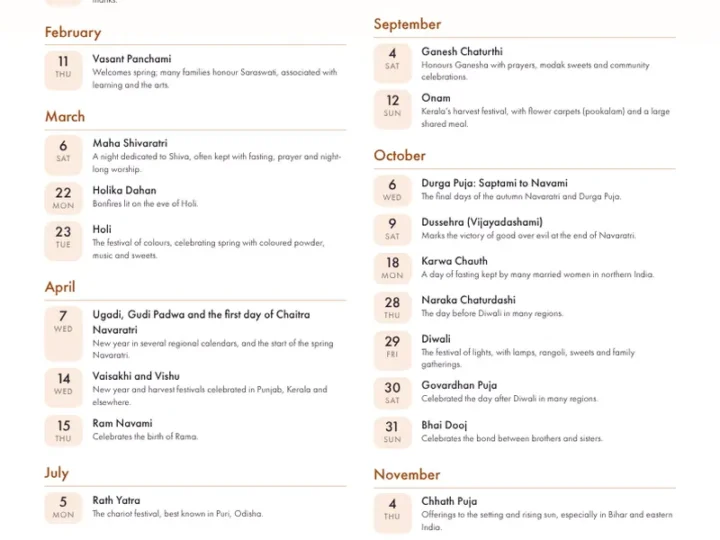
Hindu festivals follow a lunisolar calendar, so their dates in the Western calendar change every year and can differ between regions. See the festival calendar for the coming year, and check with your local temple.
Major festivals through the year
- Makar Sankranti and Pongal (January): harvest festivals marking the sun’s northward journey, with kites, sesame sweets and, in Tamil Nadu, the sweet rice dish pongal.
- Vasant Panchami (January–February): welcomes spring; many honour Saraswati, associated with learning and the arts.
- Maha Shivaratri (February–March): a night of fasting, prayer and vigil dedicated to Shiva.
- Holi (February–March): the festival of colours and the arrival of spring.
- Ram Navami (March–April): celebrates the birth of Rama.
- Raksha Bandhan (August): sisters tie a protective thread (rakhi) on their brothers’ wrists.
- Krishna Janmashtami (August–September): celebrates the birth of Krishna, often with fasting and midnight worship.
- Ganesh Chaturthi (August–September): honours Ganesha, remover of obstacles.
- Navaratri and Dussehra (September–October): nine nights honouring the Goddess, ending with the victory of good over evil.
- Diwali (October–November): the festival of lights.
Regional celebrations
Many festivals are especially important in particular regions: Onam in Kerala, Durga Puja in Bengal, Bihu in Assam, Chhath Puja in Bihar, Ugadi and Gudi Padwa as new year festivals in the south and west, and Rath Yatra in Puri, Odisha. Hindus around the world also celebrate these festivals, often adapting them to local seasons and communities.
What festivals usually include
- Worship (puja) at home and in temples.
- Special foods and sweets, often shared with neighbours.
- Retelling the stories behind the festival.
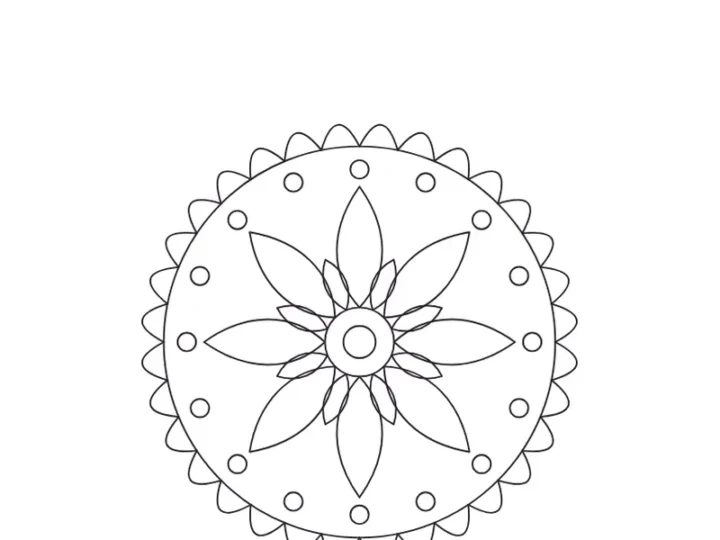
- Decorations such as rangoli, flowers and lamps. Try our rangoli maker.
- Fasting on some days, and feasting on others.
Joining in as a visitor
- Many temples and community centres welcome visitors at festival times.
- Ask about dress, shoes and photography before you go.
- Bring a small gift of sweets or fruit if visiting a family.
Key points
- Festivals mark seasons, stories and deities, and bring people together.
- Most follow the lunar calendar, so dates change each year.
- Celebrations vary widely between regions and communities.