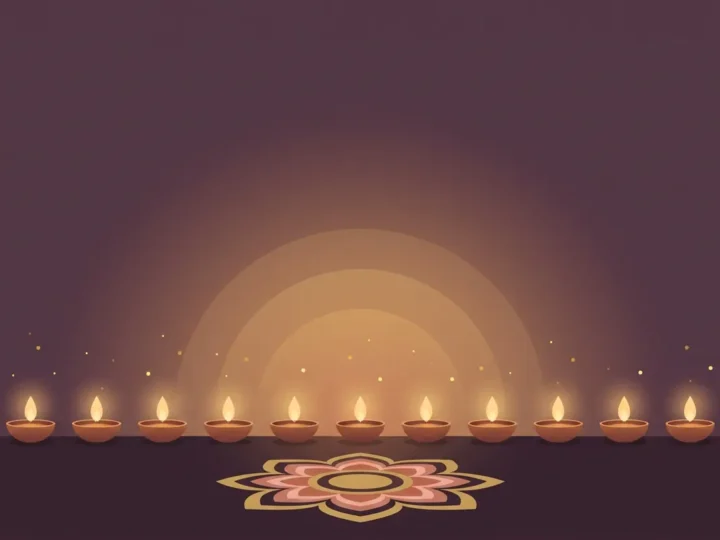
Hindu; also kept by Jains as Dhanyateras
Dhanteras
Also called Dhanatrayodashi, Dhantrayodashi, Dhanvantari Jayanti
Dhanteras opens the five days of Diwali. It honours Lakshmi, the goddess of prosperity, and Dhanvantari, the physician of the gods, so it is a day for both wealth and good health. Many families buy something new for the home, often gold, silver or a steel or brass pot.
Why it is celebrated
The name joins dhana, “wealth”, with teras, “the thirteenth day”. It welcomes prosperity into the home at the start of the festival season and asks for health for the year ahead.
Because Dhanvantari is said to have risen from the churning of the ocean carrying a pot of amrit (the nectar of immortality), the day is also kept as National Ayurveda Day in India.
The stories behind it
Dhanvantari and the churning of the ocean
In the Puranas the gods and demons churn the cosmic ocean to find amrit. Among the treasures that rise from the waters is Dhanvantari, holding a pot of the nectar. Many people worship him on Dhanteras for health and long life.
The lamp for Yama
A popular folk story tells of a young prince whose death by snakebite was foretold for the fourth night after his wedding. His wife kept him awake with stories and songs, and piled gold and silver at the door with lamps all around. Yama, the lord of death, came as a snake, was dazzled by the light and left at dawn. This is why many families light a lamp facing south, the direction of Yama, on this evening (Yamadeepdaan).
What people do
- Cleaning the house and decorating the entrance with rangoli and lamps
- Buying gold, silver, coins or new utensils, thought to bring good fortune
- Evening Lakshmi puja, and in many homes worship of Kubera and Dhanvantari
- Lighting a lamp outside the house facing south for Yama
- Business families often begin preparing their account books for the new year
Across India and beyond
A key shopping day before the new year; Lakshmi puja at home and in shops
Markets stay open late for gold and utensil buying
Kept as the first day of Tihar, Kaag Tihar
Joining in for the first time
- Buying even a small steel spoon or a new lamp keeps the spirit of the day
- Lighting a few diyas at dusk is a simple way to take part
- Wishing people “Happy Dhanteras” is common
What people buy, and why
Buying something new on Dhanteras is believed to welcome Lakshmi into the home. Gold and silver coins and jewellery are popular, but many families buy a new steel, brass or copper pot or spoon, a broom (linked with sweeping away poverty) or simple kitchen items. The purchase is often placed before Lakshmi during the evening puja. There is no need to spend much: the custom is about a fresh start.
A lamp for Yama
In the evening many families light a single lamp, often a four-wicked clay lamp, outside the main door facing south, the direction linked with Yama, the god of death. It is a prayer that no family member will meet an untimely death. The story behind it tells of a young prince whose wife saved him on the night of his predicted death by surrounding him with lamps and gold and telling stories until dawn.
Dhanvantari and good health
Dhanvantari, the physician of the gods, is said to have risen from the churning of the ocean carrying a pot of amrit. Many families see the day as a reminder that health is the first wealth. The next day is Naraka Chaturdashi, followed by Diwali.
Questions people ask
Do I have to buy gold?
No. The idea is to bring something new and useful into the home. Many people buy a utensil, a broom or a lamp.
Why a lamp facing south?
South is linked with Yama, and the lamp is a prayer for protection from untimely death.
Read next
Sources
Customs differ between families, communities and regions. This page describes common practice; your family or temple may do things differently.