Hindu, North India
Ahoi Ashtami
Also called Ahoi Aathe
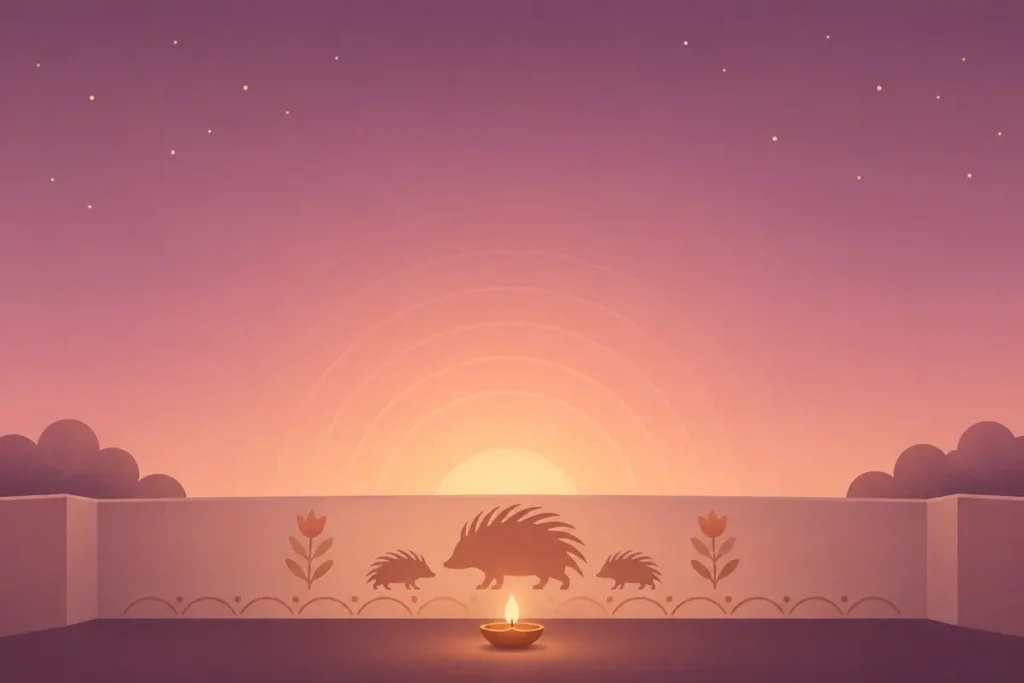
On Ahoi Ashtami, mothers fast for the well-being of their children and worship Ahoi Mata, often drawn on the wall with a porcupine and her cubs. The fast is broken after seeing the stars in the evening.
Why it is celebrated
It is a mother’s prayer for her children’s health and long life.
The stories behind it
The porcupine cub
A woman digging soil for her house accidentally killed a porcupine cub. Grieving, she prayed to Ahoi Mata, fasted and repented, and her own children, whom she had lost, were restored to her.
What people do
- Drawing Ahoi Mata on the wall
- Fasting until the stars appear
- Listening to the Ahoi story
- Offering water to the stars
Joining in for the first time
- Women often gather for the story in the evening
The porcupine cub
The story tells of a woman who, while digging soil to repair her home before Diwali, accidentally killed a porcupine cub. Soon afterwards, misfortune came to her own children. Full of regret, she fasted and prayed to Ahoi Mata, a form of the goddess, and drew the porcupine and cubs on the wall. Pleased by her sincerity, the goddess blessed her family again.
Drawing Ahoi Mata
On the day, mothers draw or paint Ahoi Mata on a wall or paper, often with eight corners (for ashtami), a porcupine with cubs, and sometimes stars and the moon. Printed posters are also common. In the evening, the family gathers before the image with a pot of water, grain and sweets, and the story is read.
At starlight
When the first stars appear, mothers offer water to them and then break the fast, often with halwa and puri. The day falls about a week before Diwali and four days after Karwa Chauth.
Questions people ask
Why the stars and not the moon?
By tradition the fast ends at the sight of the stars.
Read next
Sources
Customs differ between families, communities and regions. This page describes common practice; your family or temple may do things differently.