The vision of the universal form
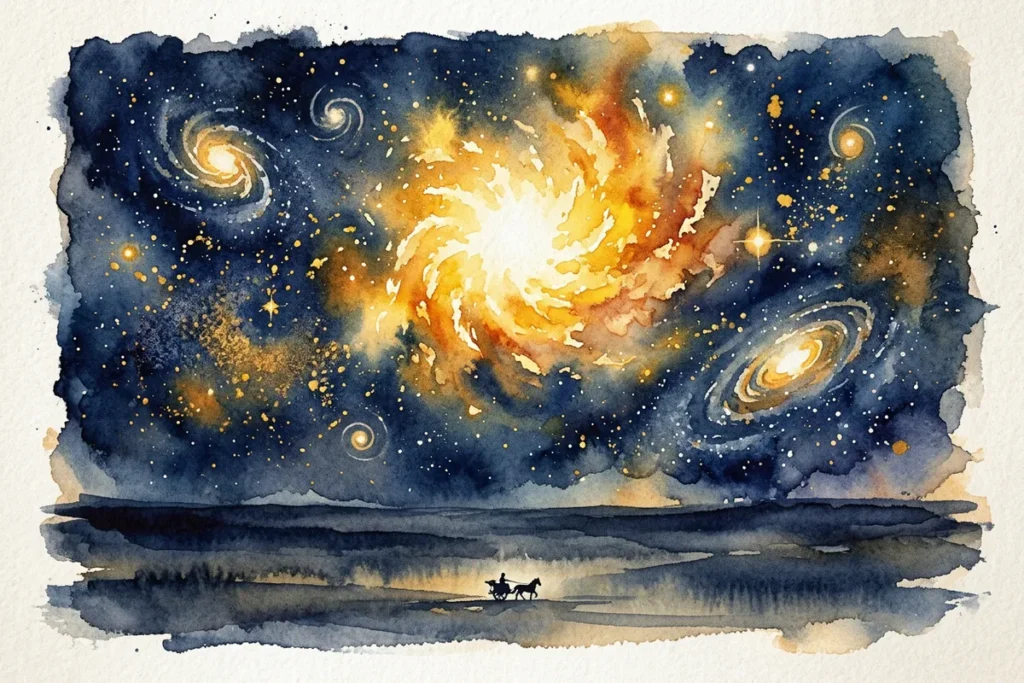
Arjuna sees the whole universe in Krishna, and is afraid.
Besant's title: The Yoga of the Vision of the Universal Form
This chapter in short
Arjuna asks to see Krishna's divine form (11.3–4). Krishna gives him divine sight, because ordinary eyes cannot see it (11.8). Sanjaya says the splendour was like a thousand suns rising together in the sky (11.12). Arjuna sees all the worlds and all beings in Krishna's body, and then sees the warriors of both armies rushing into fearful mouths (11.26–27).
Krishna says he is Time, which destroys the worlds, and that the warriors are already overcome; Arjuna should be only the outward cause (11.32–33). Trembling, Arjuna bows down, asks forgiveness for having treated Krishna only as a friend, and asks to see him again in his four-armed form (11.41–46). Krishna takes his gentle form once more (11.50) and says he can be seen in this way only through devotion (11.54).
This summary was written by Satsang Space to help you follow the chapter. The verses below are the text itself.
Verses to remember
दिवि सूर्यसहस्रस्य भवेद्युगपदुत्थिता ।
यदि भाः सदृशी सा स्याद्भासस्तस्य महात्मनः ॥
divi sūryasahasrasya bhavedyugapadutthitā
yadi bhāḥ sadṛśī sā syādbhāsastasya mahātmanaḥ
If the splendour of a thousand suns were to blaze out together in the sky, that might resemble the glory of that Mahâtman.
भक्त्या त्वनन्यया शक्य अहमेवंविधोऽर्जुन ।
ज्ञातुं द्रष्टुं च तत्त्वेन प्रवेष्टुं च परन्तप ॥
bhaktyā tvananyayā śakya ahamevaṃvidho'rjuna
jñātuṃ draṣṭuṃ ca tattvena praveṣṭuṃ ca parantapa
But by devotion to Me alone I may thus be perceived, Arjuna, and known and seen in essence, and entered, O Parantapa.
Verse 11.1
अर्जुन उवाच ।
मदनुग्रहाय परमं गुह्यमध्यात्मसंज्ञितम् ।
यत्त्वयोक्तं वचस्तेन मोहोऽयं विगतो मम ॥
arjuna uvāca
madanugrahāya paramaṃ guhyamadhyātmasaṃjñitam
yattvayoktaṃ vacastena moho'yaṃ vigato mama
Arjuna said: This word of the supreme Secret concerning the Self, Thou hast spoken out of compassion; by this my delusion is taken away.
Verse 11.2
भवाप्ययौ हि भूतानां श्रुतौ विस्तरशो मया ।
त्वत्तः कमलपत्राक्ष माहात्म्यमपि चाव्ययम् ॥
bhavāpyayau hi bhūtānāṃ śrutau vistaraśo mayā
tvattaḥ kamalapatrākṣa māhātmyamapi cāvyayam
The production and destruction of beings have been heard by me in detail from Thee, O Lotus-eyed, and also Thy imperishable greatness.
Verse 11.3
एवमेतद्यथाऽऽत्थ त्वमात्मानं परमेश्वर ।
द्रष्टुमिच्छामि ते रूपमैश्वरं पुरुषोत्तम ॥
evametadyathā''ttha tvamātmānaṃ parameśvara
draṣṭumicchāmi te rūpamaiśvaraṃ puruṣottama
O supreme Lord, even as Thou describest Thyself, O best of beings, I desire to see Thy Form omnipotent.
Verse 11.4
मन्यसे यदि तच्छक्यं मया द्रष्टुमिति प्रभो ।
योगेश्वर ततो मे त्वं दर्शयात्मानमव्ययम् ॥
manyase yadi tacchakyaṃ mayā draṣṭumiti prabho
yogeśvara tato me tvaṃ darśayātmānamavyayam
If Thou thinkest that by me It can be seen, O Lord, Lord of Yoga, then show me Thine imperishable Self.
Verse 11.5
श्रीभगवानुवाच ।
पश्य मे पार्थ रूपाणि शतशोऽथ सहस्रशः ।
नानाविधानि दिव्यानि नानावर्णाकृतीनि च ॥
śrībhagavānuvāca
paśya me pārtha rūpāṇi śataśo'tha sahasraśaḥ
nānāvidhāni divyāni nānāvarṇākṛtīni ca
The Blessed Lord said: Behold, O Pârtha, a Form of Me, a hundredfold, a thousandfold, various in kind, divine, various in colours and shapes.
Verse 11.6
पश्यादित्यान्वसून्रुद्रानश्विनौ मरुतस्तथा ।
बहून्यदृष्टपूर्वाणि पश्याश्चर्याणि भारत ॥
paśyādityānvasūnrudrānaśvinau marutastathā
bahūnyadṛṣṭapūrvāṇi paśyāścaryāṇi bhārata
Behold the Âdityas, the Vasus, the Rudras, the two Ashvins and also the Maruts; behold many marvels never seen ere this, O Bhârata.
Verse 11.7
इहैकस्थं जगत्कृत्स्नं पश्याद्य सचराचरम् ।
मम देहे गुडाकेश यच्चान्यद्द्रष्टुमिच्छसि ॥
ihaikasthaṃ jagatkṛtsnaṃ paśyādya sacarācaram
mama dehe guḍākeśa yaccānyaddraṣṭumicchasi
Here, to-day, behold the whole universe, movable and immovable, standing in one in My body, O Gudâkesha, with aught else thou desirest to see.
Verse 11.8
न तु मां शक्यसे द्रष्टुमनेनैव स्वचक्षुषा ।
दिव्यं ददामि ते चक्षुः पश्य मे योगमैश्वरम् ॥
na tu māṃ śakyase draṣṭumanenaiva svacakṣuṣā
divyaṃ dadāmi te cakṣuḥ paśya me yogamaiśvaram
But verily thou art not able to behold Me with these thine eyes; the divine eye I give unto thee. Behold My sovereign Yoga.
Verse 11.9
सञ्जय उवाच ।
एवमुक्त्वा ततो राजन् महायोगेश्वरो हरिः ।
दर्शयामास पार्थाय परमं रूपमैश्वरम् ॥
sañjaya uvāca
evamuktvā tato rājan mahāyogeśvaro hariḥ
darśayāmāsa pārthāya paramaṃ rūpamaiśvaram
Sanjaya said: Having thus spoken, O King, the great Lord of Yoga, Hari, showed to Pârtha His supreme Form as Lord.
Verse 11.10
अनेकवक्त्रनयनमनेकाद्भुतदर्शनम् ।
अनेकदिव्याभरणं दिव्यानेकोद्यतायुधम् ॥
anekavaktranayanamanekādbhutadarśanam
anekadivyābharaṇaṃ divyānekodyatāyudham
With many mouths and eyes, with many visions of marvel, with many divine ornaments, with many upraised divine weapons;
Verse 11.11
दिव्यमाल्याम्बरधरं दिव्यगन्धानुलेपनम् ।
सर्वाश्चर्यमयं देवमनन्तं विश्वतोमुखम् ॥
divyamālyāmbaradharaṃ divyagandhānulepanam
sarvāścaryamayaṃ devamanantaṃ viśvatomukham
Wearing divine necklaces and vestures, anointed with divine unguents, the God all-marvellous, boundless, with face turned everywhere.
Verse 11.12
दिवि सूर्यसहस्रस्य भवेद्युगपदुत्थिता ।
यदि भाः सदृशी सा स्याद्भासस्तस्य महात्मनः ॥
divi sūryasahasrasya bhavedyugapadutthitā
yadi bhāḥ sadṛśī sā syādbhāsastasya mahātmanaḥ
If the splendour of a thousand suns were to blaze out together in the sky, that might resemble the glory of that Mahâtman.
Verse 11.13
तत्रैकस्थं जगत्कृत्स्नं प्रविभक्तमनेकधा ।
अपश्यद्देवदेवस्य शरीरे पाण्डवस्तदा ॥
tatraikasthaṃ jagatkṛtsnaṃ pravibhaktamanekadhā
apaśyaddevadevasya śarīre pāṇḍavastadā
There Pândava beheld the whole universe, divided into manifold parts, standing in one in the body of the Deity of Deities.
Verse 11.14
ततः स विस्मयाविष्टो हृष्टरोमा धनञ्जयः ।
प्रणम्य शिरसा देवं कृताञ्जलिरभाषत ॥
tataḥ sa vismayāviṣṭo hṛṣṭaromā dhanañjayaḥ
praṇamya śirasā devaṃ kṛtāñjalirabhāṣata
Then he, Dhananjaya, overwhelmed with astonishment, his hair upstanding, bowed down his head to the Shining One, and with joined palms spake.
Verse 11.15
अर्जुन उवाच ।
पश्यामि देवांस्तव देव देहे सर्वांस्तथा भूतविशेषसङ्घान् ।
ब्रह्माणमीशं कमलासनस्थमृषींश्च सर्वानुरगांश्च दिव्यान् ॥
arjuna uvāca
paśyāmi devāṃstava deva dehe sarvāṃstathā bhūtaviśeṣasaṅghān
brahmāṇamīśaṃ kamalāsanasthamṛṣīṃśca sarvānuragāṃśca divyān
Arjuna said: Within Thy Form, O God, the Gods I see, All grades of beings with distinctive marks; Brahma, the Lord, upon His lotus-throne, The Rishis all, and Serpents, the Divine.
Verse 11.16
अनेकबाहूदरवक्त्रनेत्रम् पश्यामि त्वां सर्वतोऽनन्तरूपम् ।
नान्तं न मध्यं न पुनस्तवादिम् पश्यामि विश्वेश्वर विश्वरूप ॥
anekabāhūdaravaktranetram paśyāmi tvāṃ sarvato'nantarūpam
nāntaṃ na madhyaṃ na punastavādim paśyāmi viśveśvara viśvarūpa
With mouths, eyes, arms, breasts multitudinous, I see Thee everywhere, unbounded Form. Beginning, middle, end, nor source of Thee, Infinite Lord, infinite Form, I find;
Verse 11.17
किरीटिनं गदिनं चक्रिणं च तेजोराशिं सर्वतो दीप्तिमन्तम् ।
पश्यामि त्वां दुर्निरीक्ष्यं समन्ताद् दीप्तानलार्कद्युतिमप्रमेयम् ॥
kirīṭinaṃ gadinaṃ cakriṇaṃ ca tejorāśiṃ sarvato dīptimantam
paśyāmi tvāṃ durnirīkṣyaṃ samantād dīptānalārkadyutimaprameyam
Shining, a mass of splendour everywhere, With discus, mace, tiara, I behold: Blazing as fire, as sun dazzling the gaze, From all sides in the sky, immeasurable.
Verse 11.18
त्वमक्षरं परमं वेदितव्यम् त्वमस्य विश्वस्य परं निधानम् ।
त्वमव्ययः शाश्वतधर्मगोप्ता सनातनस्त्वं पुरुषो मतो मे ॥
tvamakṣaraṃ paramaṃ veditavyam tvamasya viśvasya paraṃ nidhānam
tvamavyayaḥ śāśvatadharmagoptā sanātanastvaṃ puruṣo mato me
Lofty beyond all thought, unperishing, Thou treasure-house supreme, all-immanent; Eternal Dharma's changeless Guardian, Thou; As immemorial Man I think of Thee.
Verse 11.19
अनादिमध्यान्तमनन्तवीर्य- मनन्तबाहुं शशिसूर्यनेत्रम् ।
पश्यामि त्वां दीप्तहुताशवक्त्रम् स्वतेजसा विश्वमिदं तपन्तम् ॥
anādimadhyāntamanantavīrya- manantabāhuṃ śaśisūryanetram
paśyāmi tvāṃ dīptahutāśavaktram svatejasā viśvamidaṃ tapantam
Nor source, nor midst, nor end; infinite force, Unnumbered arms, the sun and moon Thine eyes I see Thy face, as sacrificial fire Blazing, its splendour burneth up the worlds.
Verse 11.20
द्यावापृथिव्योरिदमन्तरं हि व्याप्तं त्वयैकेन दिशश्च सर्वाः ।
दृष्ट्वाऽद्भुतं रूपमुग्रं तवेदम् लोकत्रयं प्रव्यथितं महात्मन् ॥
dyāvāpṛthivyoridamantaraṃ hi vyāptaṃ tvayaikena diśaśca sarvāḥ
dṛṣṭvā'dbhutaṃ rūpamugraṃ tavedam lokatrayaṃ pravyathitaṃ mahātman
By Thee alone are filled the earth, the heavens, And all the regions that are stretched between; The triple worlds sink down, O mighty One, Before Thine awful manifested Form.
Verse 11.21
अमी हि त्वां सुरसङ्घा विशन्ति केचिद्भीताः प्राञ्जलयो गृणन्ति ।
स्वस्तीत्युक्त्वा महर्षिसिद्धसङ्घाः स्तुवन्ति त्वां स्तुतिभिः पुष्कलाभिः ॥
amī hi tvāṃ surasaṅghā viśanti kecidbhītāḥ prāñjalayo gṛṇanti
svastītyuktvā maharṣisiddhasaṅghāḥ stuvanti tvāṃ stutibhiḥ puṣkalābhiḥ
To Thee the troops of Suras enter in, Some with joined palms in awe invoking Thee; Banded Maharshis, Siddhas, cry: "All hail"! Chanting Thy praises with resounding songs.
Verse 11.22
रुद्रादित्या वसवो ये च साध्याः विश्वेऽश्विनौ मरुतश्चोष्मपाश्च ।
गन्धर्वयक्षासुरसिद्धसङ्घाः वीक्षन्ते त्वां विस्मिताश्चैव सर्वे ॥
rudrādityā vasavo ye ca sādhyāḥ viśve'śvinau marutaścoṣmapāśca
gandharvayakṣāsurasiddhasaṅghāḥ vīkṣante tvāṃ vismitāścaiva sarve
Rudras, Vasus, Sâdhyas and Adityas, Vishvas, the Ashvins, Maruts, Ushmapas, Gandharvas, Yakshas, Siddhas, Asuras, In wondering multitudes beholding Thee.
Verse 11.23
रूपं महत्ते बहुवक्त्रनेत्रम् महाबाहो बहुबाहूरुपादम् ।
बहूदरं बहुदंष्ट्राकरालम् दृष्ट्वा लोका प्रव्यथितास्तथाऽहम् ॥
rūpaṃ mahatte bahuvaktranetram mahābāho bahubāhūrupādam
bahūdaraṃ bahudaṃṣṭrākarālam dṛṣṭvā lokā pravyathitāstathā'ham
Thy mighty Form, with many mouths and eyes, Long armed, with thighs and feet innumerate, Vast-bosomed, set with many fearful teeth, The worlds see terror-struck, as also I.
Verse 11.24
नभः स्पृशं दीप्तमनेकवर्णम् व्यात्ताननं दीप्तविशालनेत्रम् ।
दृष्ट्वा हि त्वां प्रव्यथितान्तरात्मा धृतिं न विन्दामि शमं च विष्णो ॥
nabhaḥ spṛśaṃ dīptamanekavarṇam vyāttānanaṃ dīptaviśālanetram
dṛṣṭvā hi tvāṃ pravyathitāntarātmā dhṛtiṃ na vindāmi śamaṃ ca viṣṇo
Radiant, Thou touchest heaven, rainbow-hued, With opened mouths and shining vast-orbed eyes. My inmost self is quaking, having seen, My strength is withered, Vishnu, and my peace.
Verse 11.25
दंष्ट्राकरालानि च ते मुखानि दृष्ट्वैव कालानलसन्निभानि ।
दिशो न जाने न लभे च शर्म प्रसीद देवेश जगन्निवास ॥
daṃṣṭrākarālāni ca te mukhāni dṛṣṭvaiva kālānalasannibhāni
diśo na jāne na labhe ca śarma prasīda deveśa jagannivāsa
Like Time's destroying flames I see Thy teeth, Upstanding, spread within expanded jaws; Nought know I anywhere, no shelter find; Mercy, O God! re of all the worlds!
Verse 11.26
अमी च त्वां धृतराष्ट्रस्य पुत्राः सर्वे सहैवावनिपालसङ्घैः ।
भीष्मो द्रोणः सूतपुत्रस्तथाऽसौ सहास्मदीयैरपि योधमुख्यैः ॥
amī ca tvāṃ dhṛtarāṣṭrasya putrāḥ sarve sahaivāvanipālasaṅghaiḥ
bhīṣmo droṇaḥ sūtaputrastathā'sau sahāsmadīyairapi yodhamukhyaiḥ
The sons of Dhṛitarâshtra, and with them The multitude of all these kings of earth, Bhîshma, and Drona, Sûta's royal son, And all the noblest warriors of our hosts,
Verse 11.27
वक्त्राणि ते त्वरमाणा विशन्ति दंष्ट्राकरालानि भयानकानि ।
केचिद्विलग्ना दशनान्तरेषु संदृश्यन्ते चूर्णितैरुत्तमाङ्गैः ॥
vaktrāṇi te tvaramāṇā viśanti daṃṣṭrākarālāni bhayānakāni
kecidvilagnā daśanāntareṣu saṃdṛśyante cūrṇitairuttamāṅgaiḥ
Into Thy gaping mouths they hurrying rush, Tremendous-toothed and terrible to see; Some caught within the gaps between Thy teeth Are seen, their heads to powder crushed and ground.
Verse 11.28
यथा नदीनां बहवोऽम्बुवेगाः समुद्रमेवाभिमुखा द्रवन्ति ।
तथा तवामी नरलोकवीराः विशन्ति वक्त्राण्यभिविज्वलन्ति ॥
yathā nadīnāṃ bahavo'mbuvegāḥ samudramevābhimukhā dravanti
tathā tavāmī naralokavīrāḥ viśanti vaktrāṇyabhivijvalanti
As river-floods impetuously rush, Hurling their waters into ocean's lap, So fling themselves into Thy flaming mouths, In haste, these mighty men, these lords of earth.
Verse 11.29
यथा प्रदीप्तं ज्वलनं पतङ्गाः विशन्ति नाशाय समृद्धवेगाः ।
तथैव नाशाय विशन्ति लोका- स्तवापि वक्त्राणि समृद्धवेगाः ॥
yathā pradīptaṃ jvalanaṃ pataṅgāḥ viśanti nāśāya samṛddhavegāḥ
tathaiva nāśāya viśanti lokā- stavāpi vaktrāṇi samṛddhavegāḥ
As moths with quickened speed will headlong fly Into a flaming light, to fall destroyed, So also these, in haste precipitate, Enter within Thy mouths destroyed to fall.
Verse 11.30
लेलिह्यसे ग्रसमानः समन्ता- ल्लोकान्समग्रान्वदनैर्ज्वलद्भिः ।
तेजोभिरापूर्य जगत्समग्रम् भासस्तवोग्राः प्रतपन्ति विष्णो ॥
lelihyase grasamānaḥ samantā- llokānsamagrānvadanairjvaladbhiḥ
tejobhirāpūrya jagatsamagram bhāsastavogrāḥ pratapanti viṣṇo
On every side, all-swallowing, fiery-tongued, Thou lickest up mankind, devouring all; The glory filleth space: the universe Is burning, Vishnu, with Thy blazing rays.
Verse 11.31
आख्याहि मे को भवानुग्ररूपो नमोऽस्तु ते देववर प्रसीद ।
विज्ञातुमिच्छामि भवन्तमाद्यम् न हि प्रजानामि तव प्रवृत्तिम् ॥
ākhyāhi me ko bhavānugrarūpo namo'stu te devavara prasīda
vijñātumicchāmi bhavantamādyam na hi prajānāmi tava pravṛttim
Reveal Thy Self; what awful Form art Thou? I worship Thee! Have mercy, God supreme! Thine inner Being I am fain to know; This Thy forth-streaming Life bewilders me.
Verse 11.32
श्रीभगवानुवाच ।
कालोऽस्मि लोकक्षयकृत्प्रवृद्धो लोकान्समाहर्तुमिह प्रवृत्तः ।
ऋतेऽपि त्वां न भविष्यन्ति सर्वे येऽवस्थिताः प्रत्यनीकेषु योधाः ॥
śrībhagavānuvāca
kālo'smi lokakṣayakṛtpravṛddho lokānsamāhartumiha pravṛttaḥ
ṛte'pi tvāṃ na bhaviṣyanti sarve ye'vasthitāḥ pratyanīkeṣu yodhāḥ
Time am I, laying desolate the world, Made manifest on earth to slay mankind! Not one of all these warriors ranged for strife Escapeth death; thou shalt alone survive.
Verse 11.33
तस्मात्त्वमुत्तिष्ठ यशो लभस्व जित्वा शत्रून्भुङ्क्ष्व राज्यं समृद्धम् ।
मयैवैते निहताः पूर्वमेव निमित्तमात्रं भव सव्यसाचिन् ॥
tasmāttvamuttiṣṭha yaśo labhasva jitvā śatrūnbhuṅkṣva rājyaṃ samṛddham
mayaivaite nihatāḥ pūrvameva nimittamātraṃ bhava savyasācin
Therefore stand up! win for thyself renown, Conquer thy foes, enjoy the wealth filled realm, By Me they are already overcome, Be thou the outward cause, left-handed one.
Verse 11.34
द्रोणं च भीष्मं च जयद्रथं च कर्णं तथाऽन्यानपि योधवीरान् ।
मया हतांस्त्वं जहि मा व्यथिष्ठाः युद्ध्यस्व जेतासि रणे सपत्नान् ॥
droṇaṃ ca bhīṣmaṃ ca jayadrathaṃ ca karṇaṃ tathā'nyānapi yodhavīrān
mayā hatāṃstvaṃ jahi mā vyathiṣṭhāḥ yuddhyasva jetāsi raṇe sapatnān
Drona and Bhîshma and Jayadratha, Karna, and all the other warriors here, Are slain by Me. Destroy them fearlessly. Fight! thou shalt crush thy rivals in the field.
Verse 11.35
सञ्जय उवाच ।
एतच्छ्रुत्वा वचनं केशवस्य कृताञ्जलिर्वेपमानः किरीटी ।
नमस्कृत्वा भूय एवाह कृष्णम् सगद्गदं भीतभीतः प्रणम्य ॥
sañjaya uvāca
etacchrutvā vacanaṃ keśavasya kṛtāñjalirvepamānaḥ kirīṭī
namaskṛtvā bhūya evāha kṛṣṇam sagadgadaṃ bhītabhītaḥ praṇamya
Sanjaya said: Having heard these words of Keshava, he who weareth a diadem, with joined palms, quaking and prostrating himself, spake again to Krishna, stammering with fear, casting down his face.
Verse 11.36
अर्जुन उवाच ।
स्थाने हृषीकेश तव प्रकीर्त्या जगत्प्रहृष्यत्यनुरज्यते च ।
रक्षांसि भीतानि दिशो द्रवन्ति सर्वे नमस्यन्ति च सिद्धसङ्घाः ॥
arjuna uvāca
sthāne hṛṣīkeśa tava prakīrtyā jagatprahṛṣyatyanurajyate ca
rakṣāṃsi bhītāni diśo dravanti sarve namasyanti ca siddhasaṅghāḥ
Arjuna said: Hrishîkesha! in Thy magnificence Rightly the world rejoiceth, hymning Thee; The Râkshasas to every quarter fly In fear; the hosts of Siddhas prostrate fall.
Verse 11.37
कस्माच्च ते न नमेरन्महात्मन् गरीयसे ब्रह्मणोऽप्यादिकर्त्रे ।
अनन्त देवेश जगन्निवास त्वमक्षरं सदसत्तत्परं यत् ॥
kasmācca te na nameranmahātman garīyase brahmaṇo'pyādikartre
ananta deveśa jagannivāsa tvamakṣaraṃ sadasattatparaṃ yat
How should they otherwise, O loftiest Self! First Cause! Brahmâ Himself less great than Thou. Infinite, God of Gods, home of all worlds, Unperishing, Sat, Asat, That supreme!
Verse 11.38
त्वमादिदेवः पुरुषः पुराणस्त्वमस्य विश्वस्य परं निधानम् ।
वेत्ताऽसि वेद्यं च परं च धाम त्वया ततं विश्वमनन्तरूप ॥
tvamādidevaḥ puruṣaḥ purāṇastvamasya viśvasya paraṃ nidhānam
vettā'si vedyaṃ ca paraṃ ca dhāma tvayā tataṃ viśvamanantarūpa
First of the Gods, most ancient Man Thou art. Supreme receptacle of all that lives; Knower and known, the dwelling-place on high; In Thy vast Form the universe is spread.
Verse 11.39
वायुर्यमोऽग्निर्वरुणः शशाङ्कः प्रजापतिस्त्वं प्रपितामहश्च ।
नमो नमस्तेऽस्तु सहस्रकृत्वः पुनश्च भूयोऽपि नमो नमस्ते ॥
vāyuryamo'gnirvaruṇaḥ śaśāṅkaḥ prajāpatistvaṃ prapitāmahaśca
namo namaste'stu sahasrakṛtvaḥ punaśca bhūyo'pi namo namaste
Thou art Vâyu and Yama, Agni, moon, Varuna, Father, Grandsire of all; Hail, hail to Thee! a thousand times all hail! Hail unto Thee! again, again all hail!
Verse 11.40
नमः पुरस्तादथ पृष्ठतस्ते नमोऽस्तु ते सर्वत एव सर्व ।
अनन्तवीर्यामितविक्रमस्त्वम् सर्वं समाप्नोषि ततोऽसि सर्वः ॥
namaḥ purastādatha pṛṣṭhataste namo'stu te sarvata eva sarva
anantavīryāmitavikramastvam sarvaṃ samāpnoṣi tato'si sarvaḥ
Prostrate in front of Thee, prostrate behind; Prostrate on every side to Thee, O All. In power boundless, measureless in strength, Thou holdest all: then Thou Thyself art All.
Verse 11.41
सखेति मत्वा प्रसभं यदुक्तम् हे कृष्ण हे यादव हे सखेति ।
अजानता महिमानं तवेदम् मया प्रमादात्प्रणयेन वापि ॥
sakheti matvā prasabhaṃ yaduktam he kṛṣṇa he yādava he sakheti
ajānatā mahimānaṃ tavedam mayā pramādātpraṇayena vāpi
If, thinking Thee but friend, importunate, O Krishna! or O Yâdava! O friend! I cried, unknowing of Thy majesty, And careless in the fondness of my love;
Verse 11.42
यच्चावहासार्थमसत्कृतोऽसि विहारशय्यासनभोजनेषु ।
एकोऽथवाऽप्यच्युत तत्समक्षम् तत्क्षामये त्वामहमप्रमेयम् ॥
yaccāvahāsārthamasatkṛto'si vihāraśayyāsanabhojaneṣu
eko'thavā'pyacyuta tatsamakṣam tatkṣāmaye tvāmahamaprameyam
If jesting I irreverence showed to Thee, At play, reposing, sitting or at meals, Alone, O sinless One, or with my friends, Forgive my error, O Thou boundless One.
Verse 11.43
पिताऽसि लोकस्य चराचरस्य त्वमस्य पूज्यश्च गुरुर्गरीयान् ।
न त्वत्समोऽस्त्यभ्यधिकः कुतोऽन्यो लोकत्रयेऽप्यप्रतिमप्रभावः ॥
pitā'si lokasya carācarasya tvamasya pūjyaśca gururgarīyān
na tvatsamo'styabhyadhikaḥ kuto'nyo lokatraye'pyapratimaprabhāvaḥ
Father of worlds, of all that moves and stands, Worthier of reverence than the Guru's self, There is none like to Thee. Who passeth Thee? Pre-eminent Thy power in all the worlds.
Verse 11.44
तस्मात्प्रणम्य प्रणिधाय कायम् प्रसादये त्वामहमीशमीड्यम् ।
पितेव पुत्रस्य सखेव सख्युः प्रियः प्रियायार्हसि देव सोढुम् ॥
tasmātpraṇamya praṇidhāya kāyam prasādaye tvāmahamīśamīḍyam
piteva putrasya sakheva sakhyuḥ priyaḥ priyāyārhasi deva soḍhum
Therefore I fall before Thee; with my body I worship as it fitting; bless Thou me. As father with the son, as friend with friend, With the beloved as lover, bear with me.
Verse 11.45
अदृष्टपूर्वं हृषितोऽस्मि दृष्ट्वा भयेन च प्रव्यथितं मनो मे ।
तदेव मे दर्शय देव रूपम् प्रसीद देवेश जगन्निवास ॥
adṛṣṭapūrvaṃ hṛṣito'smi dṛṣṭvā bhayena ca pravyathitaṃ mano me
tadeva me darśaya deva rūpam prasīda deveśa jagannivāsa
I have seen that which none hath seen before, My heart is glad, yet faileth me for fear; Show me, O God, Thine other Form again— Mercy, O God of Gods, home of all worlds—
Verse 11.46
किरीटिनं गदिनं चक्रहस्तमिच्छामि त्वां द्रष्टुमहं तथैव ।
तेनैव रूपेण चतुर्भुजेन सहस्रबाहो भव विश्वमूर्ते ॥
kirīṭinaṃ gadinaṃ cakrahastamicchāmi tvāṃ draṣṭumahaṃ tathaiva
tenaiva rūpeṇa caturbhujena sahasrabāho bhava viśvamūrte
Diademed, mace and discus in Thy hand. Again I fain would see Thee as before; Put on again Thy four-armed shape, O Lord, O thousand-armed, of forms innumerate.
Verse 11.47
श्रीभगवानुवाच ।
मया प्रसन्नेन तवार्जुनेदम् रूपं परं दर्शितमात्मयोगात् ।
तेजोमयं विश्वमनन्तमाद्यम् यन्मे त्वदन्येन न दृष्टपूर्वम् ॥
śrībhagavānuvāca
mayā prasannena tavārjunedam rūpaṃ paraṃ darśitamātmayogāt
tejomayaṃ viśvamanantamādyam yanme tvadanyena na dṛṣṭapūrvam
The Blessed Lord said: Arjuna, by My favour thou hast seen, This loftiest Form by yoga's self revealed! Radiant, all-penetrating, endless, first, That none except thyself hath ever seen.
Verse 11.48
न वेदयज्ञाध्ययनैर्न दानैर्न च क्रियाभिर्न तपोभिरुग्रैः ।
एवंरूपः शक्य अहं नृलोके द्रष्टुं त्वदन्येन कुरुप्रवीर ॥
na vedayajñādhyayanairna dānairna ca kriyābhirna tapobhirugraiḥ
evaṃrūpaḥ śakya ahaṃ nṛloke draṣṭuṃ tvadanyena kurupravīra
Nor sacrifice, nor Vedas, alms, nor works, Nor sharp austerity, nor study deep, Can win the vision of this Form for man, Foremost of Kurus, thou alone hast seen.
Verse 11.49
मा ते व्यथा मा च विमूढभावो दृष्ट्वा रूपं घोरमीदृङ्ममेदम् ।
व्यपेतभीः प्रीतमनाः पुनस्त्वम् तदेव मे रूपमिदं प्रपश्य ॥
mā te vyathā mā ca vimūḍhabhāvo dṛṣṭvā rūpaṃ ghoramīdṛṅmamedam
vyapetabhīḥ prītamanāḥ punastvam tadeva me rūpamidaṃ prapaśya
Be not bewildered, be thou not afraid, Because thou hast beheld this awful Form; Cast fear away, and let thy heart rejoice; Behold again Mine own familiar shape.
Verse 11.50
सञ्जय उवाच ।
इत्यर्जुनं वासुदेवस्तथोक्त्वा स्वकं रूपं दर्शयामास भूयः ।
आश्वासयामास च भीतमेनम् भूत्वा पुनः सौम्यवपुर्महात्मा ॥
sañjaya uvāca
ityarjunaṃ vāsudevastathoktvā svakaṃ rūpaṃ darśayāmāsa bhūyaḥ
āśvāsayāmāsa ca bhītamenam bhūtvā punaḥ saumyavapurmahātmā
Sanjaya said: Vâsudeva, having thus spoken to Arjuna, again manifested His own Form, and consoled the terrified one, the Mahâtman again assuming a gentle form.
Verse 11.51
अर्जुन उवाच ।
दृष्ट्वेदं मानुषं रूपं तव सौम्यं जनार्दन ।
इदानीमस्मि संवृत्तः सचेताः प्रकृतिं गतः ॥
arjuna uvāca
dṛṣṭvedaṃ mānuṣaṃ rūpaṃ tava saumyaṃ janārdana
idānīmasmi saṃvṛttaḥ sacetāḥ prakṛtiṃ gataḥ
Arjuna said: Beholding again Thy gentle human Form, O Janârdana, I am now collected, and am restored to my own nature.
Verse 11.52
श्रीभगवानुवाच ।
सुदुर्दर्शमिदं रूपं दृष्टवानसि यन्मम ।
देवा अप्यस्य रूपस्य नित्यं दर्शनकाङ्क्षिणः ॥
śrībhagavānuvāca
sudurdarśamidaṃ rūpaṃ dṛṣṭavānasi yanmama
devā apyasya rūpasya nityaṃ darśanakāṅkṣiṇaḥ
The Blessed Lord said: This Form of Mine beholden by thee is very hard to see. Verily the Shining Ones ever long to behold this form.
Verse 11.53
नाहं वेदैर्न तपसा न दानेन न चेज्यया ।
शक्य एवंविधो द्रष्टुं दृष्टवानसि मां यथा ॥
nāhaṃ vedairna tapasā na dānena na cejyayā
śakya evaṃvidho draṣṭuṃ dṛṣṭavānasi māṃ yathā
Nor can I be seen as thou hast seen Me by the Vedas, nor by austerities, nor by alms, or by offerings;
Verse 11.54
भक्त्या त्वनन्यया शक्य अहमेवंविधोऽर्जुन ।
ज्ञातुं द्रष्टुं च तत्त्वेन प्रवेष्टुं च परन्तप ॥
bhaktyā tvananyayā śakya ahamevaṃvidho'rjuna
jñātuṃ draṣṭuṃ ca tattvena praveṣṭuṃ ca parantapa
But by devotion to Me alone I may thus be perceived, Arjuna, and known and seen in essence, and entered, O Parantapa.
Verse 11.55
मत्कर्मकृन्मत्परमो मद्भक्तः सङ्गवर्जितः ।
निर्वैरः सर्वभूतेषु यः स मामेति पाण्डव ॥
matkarmakṛnmatparamo madbhaktaḥ saṅgavarjitaḥ
nirvairaḥ sarvabhūteṣu yaḥ sa māmeti pāṇḍava
He who doeth actions for Me, whose supreme good I am, My devotee, freed from attachment without hatred of any being, he cometh unto Me, O Pândava.
Read the whole Gita in 21 days →
Sources
- The Bhagavad-Gita, translated by Annie Besant (4th edition, 1922), on Wikisource. The Sanskrit text and the English translation are copied word for word from this edition. Besant's footnotes are left out.
- The transliteration is made from the Sanskrit using the standard IAST system.
Annie Besant's translation was first published in 1895 and is in the public domain. Teachers and traditions explain the Gita in many ways; the summaries here only describe what the verses say.