
Hindu
Ram Navami
Also called Rama Navami, Sri Rama Navami
Ram Navami celebrates the birth of Rama, the seventh avatar of Vishnu and hero of the Ramayana. Temples hold readings of the Ramayana, bhajans and a celebration at midday, the time of Rama’s birth. In the South it is also celebrated as the wedding of Rama and Sita.
Why it is celebrated
Rama is honoured as the ideal of dharma: a righteous king, faithful husband and devoted son. His birthday is a day to remember his life and values.
In Ayodhya, his birthplace, it is one of the year’s greatest celebrations.
The stories behind it
The birth of Rama
King Dasharatha of Ayodhya had no children. He performed a great sacrifice and received a sacred dish of payasam, which he shared among his queens. Kaushalya gave birth to Rama at midday on the ninth day of Chaitra; Kaikeyi to Bharata, and Sumitra to Lakshmana and Shatrughna.
What people do
- Fasting until midday or all day
- Readings of the Ramayana or Ramcharitmanas, often over the nine days of Navratri
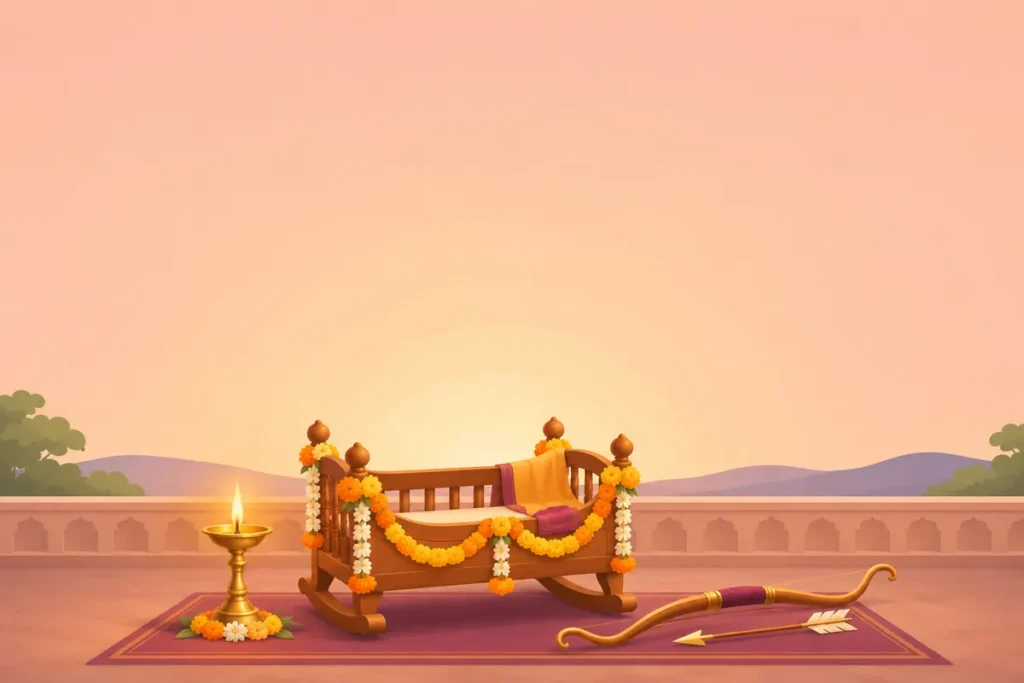
- Placing a small image of baby Rama in a cradle at noon
- Sita Rama Kalyanam (wedding) in South Indian temples, especially Bhadrachalam
- Processions (shobha yatras) and pandal programmes
Joining in for the first time
- Temples welcome visitors for the noon celebration; arrive early
- Taste the panakam if offered; it is a cooling prasad
Questions people ask
Why noon?
Tradition holds that Rama was born at midday.
Read next
Sources
Customs differ between families, communities and regions. This page describes common practice; your family or temple may do things differently.