Uses your device’s built-in voice.

Hindu, Nepal
Kushe Aunsi (Father’s Day, Nepal)
Also called Buwa ko Mukh Herne Din, Gokarna Aunsi
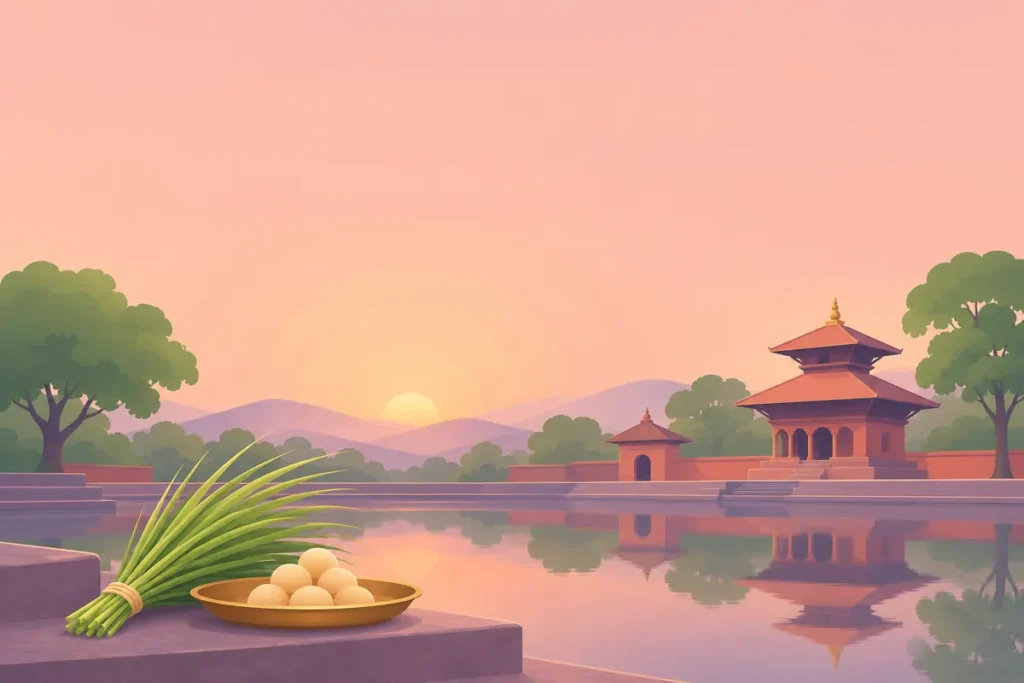
Kushe Aunsi is Nepal’s Father’s Day, “the day of seeing the father’s face”. Children visit their fathers with sweets and gifts and receive blessings. Those whose fathers have passed away perform shraddha rites, often at the Gokarneshwar temple near Kathmandu. Kusha grass, used in rituals for the year, is collected on this day.
Why it is celebrated
It honours fathers, living and departed, and the gratitude children owe them.
Kusha grass collected on this day is believed to be especially pure for rituals.
What people do
- Visiting fathers with sweets, clothes and gifts
- Shraddha and offerings at Gokarneshwar for departed fathers
- Collecting kusha grass
Joining in for the first time
- A visit or a call to your father is the heart of the day
Questions people ask
Is there a Mother’s Day too?
Yes, Mata Tirtha Aunsi, in the month of Baisakh.
Read next
Sources
Customs differ between families, communities and regions. This page describes common practice; your family or temple may do things differently.