Also available in: ગુજરાતી · हिन्दी
If you need help now. In Australia call Lifeline on 13 11 14 (24 hours), Beyond Blue on 1300 22 4636, or Kids Helpline on 1800 55 1800 (ages 5 to 25). In an emergency call 000. Outside Australia, find a free helpline in your country.
When we feel anxious, breathing often speeds up and moves high into the chest. Health services describe this as over-breathing: it isn’t dangerous in itself, but it can cause dizziness, tingling and breathlessness, and leave you feeling on edge. Slowing the breath down, especially the out-breath, is one of the simplest ways to help your body settle.
Technique 1: the 4-2-6 calming breath
This is the rhythm recommended by the Western Australian Department of Health’s HealthyWA service.
- Sit or lie comfortably and place a hand on your belly.
- Breathe in gently through your nose for a count of 4.
- Hold for 2.
- Breathe out slowly for 6, then pause briefly before the next breath.
- If that feels too long, start with 3 in, 1 hold and 4 out.
Practise once or twice a day when you are calm, so it is familiar when you need it.
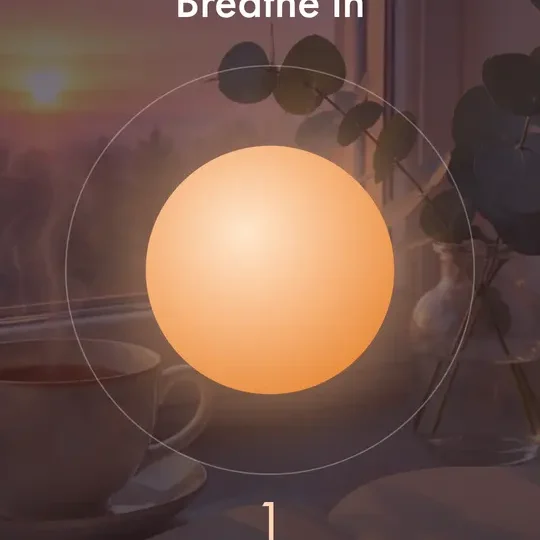
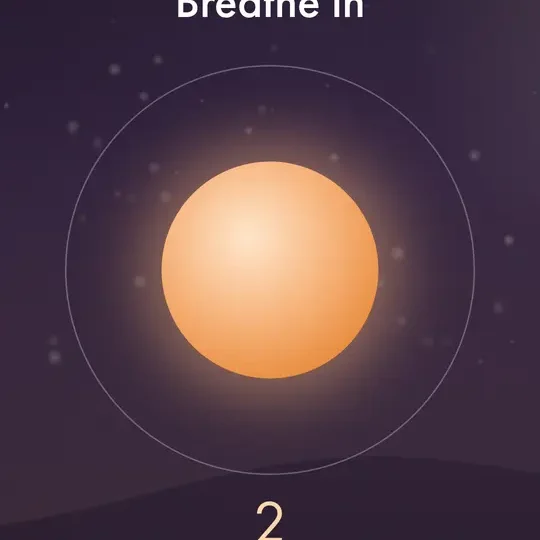
Breathe along with the glowing circle
Technique 2: the physiological sigh
Take a normal breath in through the nose, then a second short “top-up” breath in, and finally a long, slow breath out through the mouth. Repeat for one to five minutes.
In a small 2023 Stanford study, people who practised this “cyclic sighing” for five minutes a day for a month reported a bigger lift in mood than people who practised mindfulness meditation. Both groups felt less anxious. The researchers note the study was small and exploratory.
Technique 3: box breathing
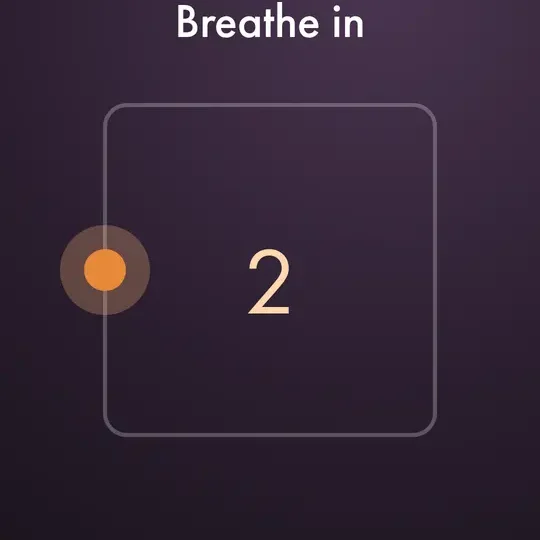
Breathe in for 4, hold for 4, breathe out for 4, hold for 4. Picture tracing the four sides of a square. Many people find the steady counting gives a racing mind something to hold on to. Read the full box breathing guide.
Use the breath trainer with your own counts
Tips for anxious moments
- Keep it gentle. Slow does not mean big. Forced, deep breaths can make dizziness worse.
- Lengthen the out-breath. If you remember only one thing, make the out-breath longer than the in-breath.
- Ground yourself as well. Name five things you can see and four things you can hear.
- Practise when calm. A skill rehearsed on good days is easier to use on hard ones.
When breathing exercises aren’t enough
Breathing techniques are a helpful tool, not a treatment for an anxiety disorder. If anxiety is getting in the way of work, school, sleep or relationships, or you are having panic attacks, see your GP. In Australia your GP can create a Mental Health Treatment Plan, which gives you Medicare rebates for sessions with a psychologist.
General wellbeing information, not medical advice. If you have a health condition, are pregnant, or are unsure whether a practice is right for you, talk to your doctor or another health professional.
Frequently asked questions
What is the best breathing exercise for anxiety?
There is no single best exercise. A simple, well-supported option is to breathe in for 4, hold for 2 and breathe out for 6, keeping the breath gentle. The key is making the out-breath longer than the in-breath.
How quickly do breathing exercises work?
Many people feel calmer within a few minutes. Regular daily practice, even five minutes, makes the technique easier to use when you feel anxious.
Can breathing exercises make anxiety worse?
Breathing too deeply or forcefully can cause dizziness or tingling. Keep breaths soft and slow, and stop if you feel light-headed. If a technique makes you more anxious, try grounding with your senses instead.
Where can I get help for anxiety in Australia?
Start with your GP. For immediate support, call Lifeline on 13 11 14 or Beyond Blue on 1300 22 4636. In an emergency, call 000.