Also available in: ગુજરાતી · हिन्दी
A fable from the Panchatantra, retold for children in our own words. The Panchatantra is an ancient Indian collection of animal stories traditionally attributed to the scholar Vishnu Sharma. This story comes from Book 1: The loss of friends.
In a great forest lived a proud and greedy lion. Every day he hunted far more animals than he could ever eat, until the whole forest lived in fear.
The animals met and made a plan. “Great king,” they said, “stay in your den, and each day one of us will come to you.” The lion liked the idea of not having to hunt, so he agreed.
One day it was the turn of a small hare. He walked slowly, thinking hard, and arrived very late. The lion roared, “Why are you late? And why so small?”
“Forgive me, Your Majesty,” said the hare. “Five of us set out, but another lion stopped us. He ate the others and said he is the true king of this forest.”
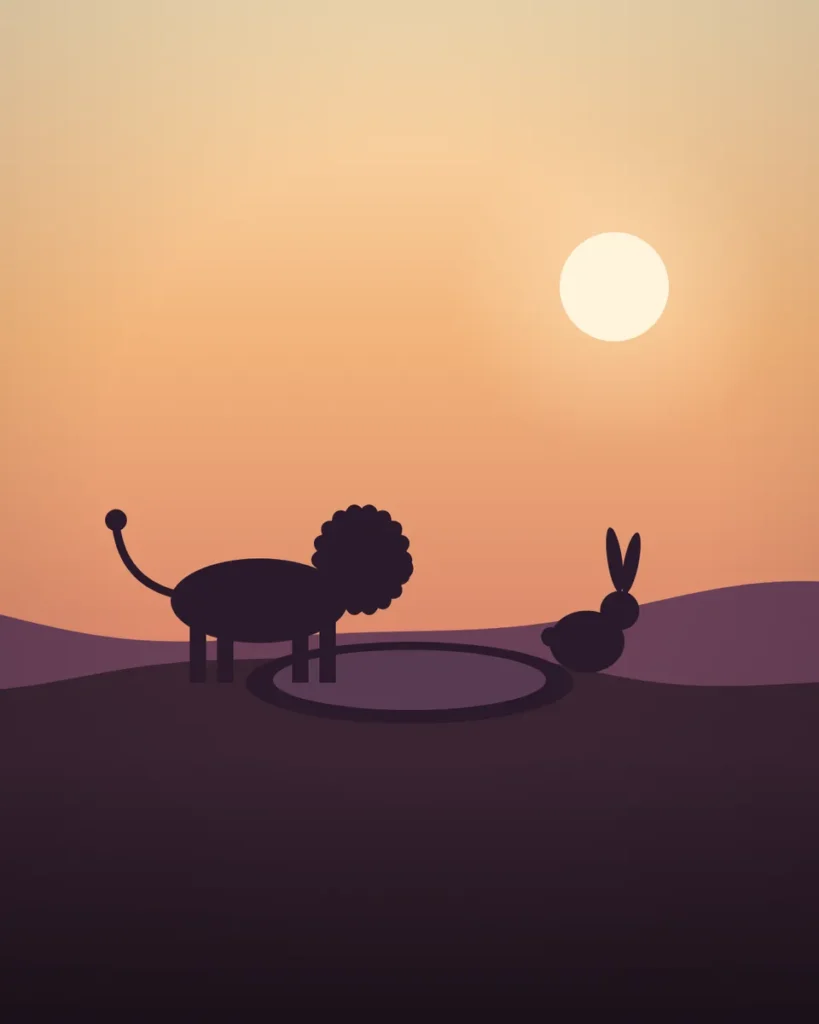
“Another king?” the lion growled. “Show him to me!” The hare led him to a deep old well. “He lives down there.” The lion looked in and saw an angry lion staring back.
He roared, and the well roared back. In a fury the lion leapt in to fight, and that was the end of him. The little hare hopped home with the good news, and the forest was peaceful again.
The moral of the story
Clever thinking can be stronger than size or strength.
Talk about it
- Why did the hare walk slowly?
- What did the lion really see in the well?
- When have you solved a problem by thinking instead of rushing?
Tips for reading aloud
- Use a different voice for each animal.
- Pause before the turning point and ask, “What do you think happens next?”
- Open the picture book and press Read to me to hear it read aloud, with the pages turning by themselves.
More fables: the Panchatantra bookshelf.