- “I have to empty my mind.” No one can switch thoughts off. Meditation is noticing thoughts and gently returning your attention.
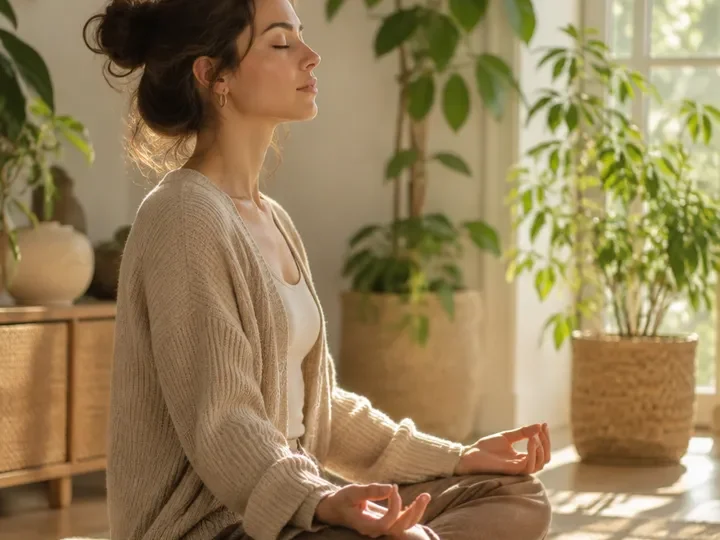
- “I need to sit cross-legged.” A chair works perfectly. Lying down is fine too.
- “It takes hours.” A few minutes a day is a good practice.
- “I am bad at it.” Every time you notice your mind has wandered and come back, you are doing it right.
- “It is only for calm people.” It is for anyone, and busy minds often benefit most.
- “You must be religious.” Meditation is found in many traditions and can also be practised in a completely practical way.
- “It should always feel relaxing.” Sometimes it feels restless or boring. That is part of it too.
Five more myths
“I need to sit cross-legged on the floor.”
A chair works perfectly well. What matters is being upright, comfortable and steady.
“Meditation means feeling peaceful all the time.”
Some sits feel calm; others feel restless or emotional. All of them count. Over time, many people find they recover more quickly from stress, but every session is different.
“I don’t have time.”
Two minutes is a real practice. Many people meditate while the kettle boils or before getting out of bed.
“Meditation is about escaping from life.”
Most forms of meditation are about being more present with life as it is, including the difficult parts.
“If I fall asleep, I’ve failed.”
Your body may simply need rest. Next time, try sitting more upright or practising earlier in the day.
What meditation can and can’t do
Many people find regular meditation helps them feel calmer, notice their thoughts and feelings sooner, and respond rather than react. It is not a cure for health conditions and is not a replacement for medical or psychological care. If you live with anxiety, depression or trauma, meditation can sometimes bring up difficult feelings; practising with a qualified teacher or alongside professional support can help.
A simple way to begin
- Sit comfortably and set a timer for two minutes.
- Feel the breath where it is clearest.
- When your mind wanders, notice and come back.
- Repeat tomorrow.
For a guided start, see how to start meditating or use the meditation timer.
Key points
- There is no need to empty your mind, sit on the floor or meditate for long.
- Every sit counts, calm or restless.
- Meditation supports wellbeing, but it is not a substitute for professional care.
Try it now: read the beginner questions