Also available in: हिन्दी · ગુજરાતી
You don’t need special clothes, a quiet house or hours of free time. Meditation can begin with two minutes and one simple instruction: rest your attention on your breath, and come back when your mind wanders.
A two-minute practice
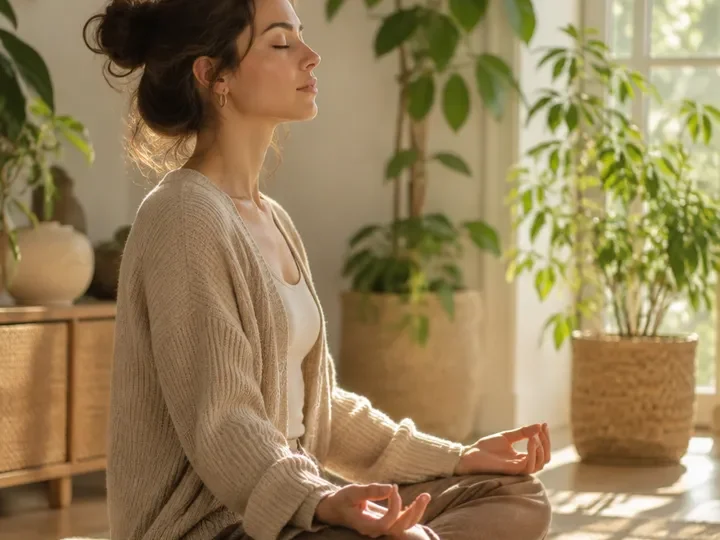
- Sit comfortably on a chair or cushion, with your back upright but not stiff.
- Close your eyes, or rest your gaze on the floor a little ahead of you.
- Notice the breath where you feel it most clearly: the nose, the chest or the belly.
- When a thought pulls you away, and it will, notice it kindly and return to the breath.
- When the timer ends, take one deeper breath and notice how you feel.
Making it a habit
- Link it to something you already do, like your morning tea.
- Keep it short at first: doing it regularly matters more than doing it for long.
- Use the free 7-day starter to guide your first week.
Common questions
My mind won’t stop thinking. Am I doing it wrong? No. Noticing that your mind has wandered, and coming back, is the practice itself.
What time of day is best? Whenever you can be consistent. Many people find mornings easiest.
What meditation is, and isn’t
Meditation is not about stopping your thoughts or reaching a special state. It is the simple practice of placing your attention somewhere, such as the breath, noticing when it drifts, and bringing it back. Each return is like one repetition at the gym. The more you practise, the easier it tends to become to notice where your attention is during the rest of your day.
Your first month
- Week 1: two minutes a day, at the same time each day.
- Week 2: five minutes. Try the meditation timer with a gentle bell.
- Week 3: try different anchors: sounds, the feeling of your hands, or counting breaths.
- Week 4: ten minutes, or two five-minute sits a day. Notice which time of day suits you best.
Choosing a place and time
- Place: anywhere you can sit undisturbed for a few minutes. A chair is perfectly fine.
- Time: straight after waking, after a shower, or at lunch. Linking it to an existing habit helps you remember.
- Posture: upright and comfortable. See how to sit for meditation.
What you might notice
- A busy mind. That is normal and does not mean you are doing it wrong.
- Restlessness or itchiness. You can move mindfully, then return to stillness.
- Sleepiness. Try sitting more upright, opening your eyes slightly or meditating earlier in the day.
- Moments of calm, even if brief. Enjoy them without trying to hold on.
More questions
Do I need an app or a teacher?
No, although guidance can help. Our free tools offer timers, guided body scans and breathing guides. If you want to go deeper, a local class or qualified teacher can be valuable.
Is it better to meditate longer or more often?
More often. Five minutes every day usually helps more than thirty minutes once a week.
What if I miss a day?
Just begin again the next day. Our practice log forgives one missed day in your streak for exactly this reason.
Key points
- Rest your attention on the breath and come back when it drifts.
- Start with two minutes and build slowly.
- Consistency matters more than length.
General wellbeing information, not medical advice. If you live with anxiety, depression or trauma, meditation can feel different; consider learning with a qualified teacher or health professional.