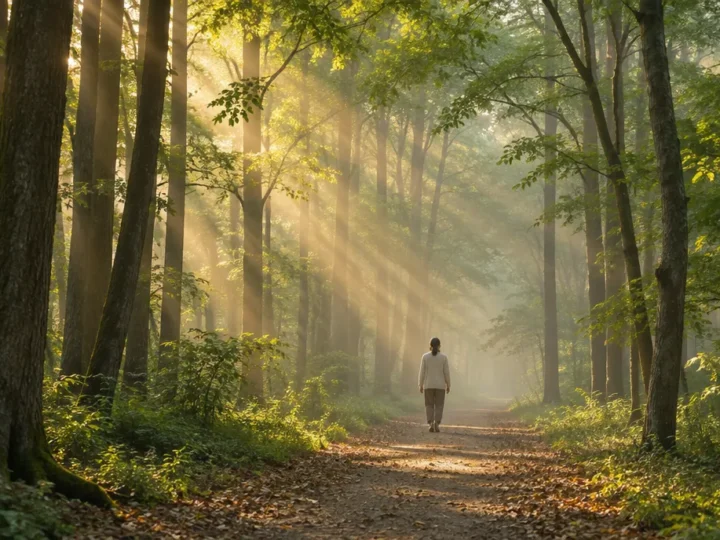
A gratitude walk combines two things that many people find helpful: gentle movement outdoors and noticing what is good. You simply walk and look for things to appreciate as you go.
How to do it (10–20 minutes)
- Choose a route you know, so you don’t need to think about directions.
- Walk at a relaxed pace and take a few slow breaths.
- Look for small things you can appreciate: a tree in blossom, a friendly face, the smell of coffee, warm sun on your back.
- When you notice one, pause for a moment and let yourself enjoy it.
- You might silently say “thank you”, or simply “this is good”.
- Towards the end, think of one person you are grateful for, and why.
When it feels hard
On difficult days, gratitude can feel forced. That’s okay. Start very small: a comfortable pair of shoes, a breath of fresh air. You don’t have to feel grateful for everything, or pretend that problems aren’t real.
Keep what you noticed
When you get home, add one or two things to your gratitude jar. On a tough day, you can pick a note at random and read it again.
Read more in starting a gratitude practice.
Ideas to notice
- Something beautiful: a flower, a cloud, light on water.
- Something useful: a bench, a bus stop, a clean footpath.
- Something kind: a smile, a door held open.
- Something your body can do: walk, breathe, feel the breeze.
Common questions
Can I do it with children?
Yes. Make it a treasure hunt: who can spot five things to be thankful for?
What if the weather is bad?
Notice the rain on your umbrella, a warm coat or the cosy feeling of coming home.
Key points
- Walk slowly and look for small good things.
- Pause to enjoy each one.
- Keep what you noticed in a jar or journal.